


The Great Fire of London is infamous for being one of the largest and most destructive urban fires in history, leaving 70,000 people homeless and reducing 10,000 buildings to ashes, including the iconic Old St Paul's Cathedral. This catastrophic event, which occurred in September 1666, would forever change the landscape of London and pave the way for a new era of architecture and rebuilding.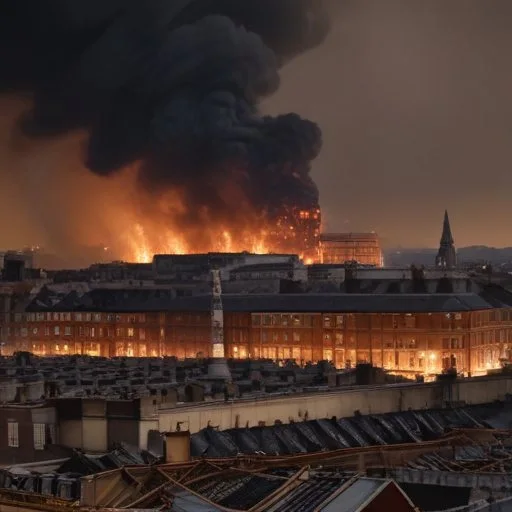
The fire began on September 2, 1666, at a small bakery on Pudding Lane, near the River Thames. In the early hours of the morning, a careless mistake by the bakery's owner, Thomas Farrinor, ignited a spark that would soon engulf the entire city. Strong easterly winds fanned the flames, spreading the fire rapidly throughout London's narrow, wooden streets.
As the fire raged unchecked, panicked citizens fled to the outskirts of the city, watching in horror as their homes, businesses, and livelihoods went up in smoke. The flames consumed everything in their path, including famous landmarks, historic buildings, and irreplaceable artifacts. The heat was so intense that it melted the bells of St Paul's Cathedral, causing them to crash to the ground.
The fire finally subsided on September 5, 1666, leaving behind a smoldering landscape of rubble and ash. The extent of the destruction was staggering, with entire neighborhoods and districts reduced to nothing more than charred remains. The once-thriving city was now a desolate wasteland, with thousands of people left homeless and without livelihoods.
In the aftermath of the fire, King Charles II appointed a commission to oversee the rebuilding of London. Sir Christopher Wren, a renowned architect, was tasked with designing a new St Paul's Cathedral, which would become an iconic symbol of the city's resilience and determination. Wren's majestic design would not only surpass its predecessor but also redefine the city's architecture, paving the way for a new era of building and innovation.
The Great Fire of London led to significant changes in building codes and fire safety regulations, ensuring that such a disaster would never occur again. The fire also spurred the development of new building materials, such as brick and stone, and the use of wider, more accessible streets.
The Great Fire of London may have been a devastating event, but it also presented an opportunity for rebirth and renewal. The fire cleared the way for a new era of architecture, innovation, and progress, shaping the city into the vibrant, thriving metropolis it is today.
Though the Great Fire of London was a tragedy of immense proportions, it ultimately led to the creation of a more resilient, vibrant, and beautiful city – a testament to the power of human determination and ingenuity.
The Great Fire of London had a profound impact on the city's cultural landscape. The destruction of iconic landmarks and historic buildings led to a renewed sense of national identity and a desire to rebuild and restore the city to its former glory.
In the aftermath of the fire, artists and writers were inspired to create works that reflected the tragedy and its effects on the city. Poets such as John Dryden and John Evelyn wrote about the fire, while artists like Robert Hubert and anonymous engravers created vivid depictions of the devastation.
The fire also led to a resurgence in public performance and entertainment. Theatres, which had been closed due to the Puritan influences of the Commonwealth period, began to reopen, and the fire itself became a popular subject for plays and performances.

Sir Christopher Wren: The Visionary Architect
Sir Christopher Wren, one of the most renowned architects of his time, was tasked with rebuilding London after the Great Fire. Wren's vision for the city was revolutionary, and his designs would go on to shape the London skyline for centuries to come.
Wren's masterpiece, the new St Paul's Cathedral, was a testament to his innovative approach to architecture. The building's grandeur and beauty showcased Wren's ability to balance form and function, and its iconic dome would become a symbol of London's resilience and determination.
The Great Fire of London not only destroyed buildings and homes but also had a significant impact on the city's ecosystem. The intense heat from the fire destroyed entire habitats, and the ash and debris contaminated waterways and soil.
The fire also led to changes in the city's urban planning and infrastructure. The rebuilding of London included the installation of new sewage systems, improved waste management, and the creation of public parks and green spaces.
While the fire was devastating, it also presented an opportunity to rebuild and create a more sustainable and environmentally conscious city. The lessons learned from the fire continue to influence urban planning and development to this day.

The Great Fire of London was a catalyst for political change in the city. The fire led to the establishment of a commission to oversee the rebuilding of London, which was headed by King Charles II himself.
The commission's recommendations led to significant reforms in building codes, firefighting services, and urban planning. The fire also marked a shift in power from the monarchy to the government, as the state began to take a more active role in urban development and management.
A Detailed Account of the Fire's Progression
The Great Fire of London began on September 2, 1666, at a small bakery on Pudding Lane. However, it wasn't until the early hours of September 3 that the fire began to spread rapidly, fueled by strong easterly winds.
By September 4, the fire had engulfed much of the city, with flames reaching as high as 100 feet. The heat was so intense that it melted the bells of St Paul's Cathedral, causing them to crash to the ground.
The fire finally subsided on September 5, leaving behind a smoldering landscape of rubble and ash. The extent of the destruction was staggering, with entire neighborhoods and districts reduced to nothing more than charred remains.