


On September 10, 1974, Guinea-Bissau made history by declaring its independence from Portugal, ending nearly five centuries of colonial rule. This momentous occasion marked the culmination of a long and brutal struggle for freedom, led by visionary leaders and ordinary citizens who refused to be silenced.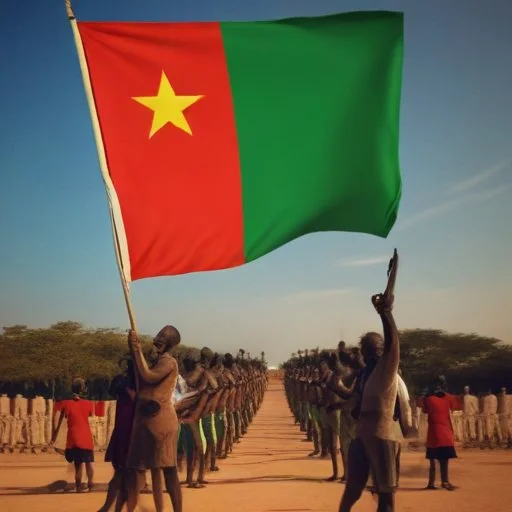
The roots of the independence movement date back to the 19th century, when Portugal first established its colonial presence in Guinea-Bissau. However, it was not until the mid-20th century that the movement gained momentum. The catalyst for change was the emergence of the African Party for the Independence of Guinea and Cape Verde (PAIGC), a revolutionary movement founded by Amílcar Cabral, a charismatic leader and influential thinker.
The PAIGC's campaign for independence was met with fierce resistance from the Portuguese authorities, who responded with brutal force to quell the uprising. The resulting conflict, which lasted from 1963 to 1974, claimed the lives of thousands of Guineans and Portuguese soldiers. Despite the odds, the PAIGC persisted, drawing inspiration from Cabral's vision of a united and independent Guinea-Bissau.
Amílcar Cabral's role in the liberation movement cannot be overstated. His leadership, strategic thinking, and unwavering commitment to the cause inspired a generation of Guineans to take up arms against their colonial oppressors. Tragically, Cabral's life was cut short in 1973, when he was assassinated by Portuguese agents. However, his legacy lived on, galvanizing the movement and paving the way for Guinea-Bissau's independence.
On September 10, 1974, the PAIGC declared Guinea-Bissau's independence, marking a new era for the nation. The declaration was met with jubilation across the country, as Guineans celebrated their hard-won freedom. The event was attended by international dignitaries, including African leaders and representatives from the Soviet Union and China.
Guinea-Bissau's independence had far-reaching consequences for the African continent and the world at large. The event marked a significant milestone in the African liberation movement, inspiring other countries to demand their freedom from colonial rule. Within Guinea-Bissau, independence brought about a new era of self-determination, as the country began to build its own institutions, economy, and culture.
The independence movement had a profound impact on Guinea-Bissau's cultural landscape. The PAIGC's emphasis on national identity and self-reliance helped to revive traditional practices, music, and art. The country's independence also led to a resurgence of interest in its rich cultural heritage, as Guineans sought to reclaim their history and forge a new national identity.
This brave new world was not without its challenges, but for Guinea-Bissau's people, the taste of freedom was sweet indeed.
Guinea-Bissau's independence marked a significant revival of traditional practices, as the country sought to reconnect with its rich cultural heritage. The PAIGC's emphasis on national identity and self-reliance helped to promote traditional music, art, and dance. The government established cultural centers and institutions to preserve and promote the country's cultural heritage.
The revival of traditional practices also led to a renewed interest in traditional medicine, as Guineans sought to reclaim their indigenous knowledge and practices. This led to the development of a unique blend of traditional and modern medicine, which has become an integral part of Guinea-Bissau's healthcare system.
Amílcar Cabral was born on September 12, 1924, in Bafatá, Guinea-Bissau. His early life was marked by poverty and hardship, but he was driven by a passion for learning and a desire to make a difference. Cabral's parents instilled in him a strong sense of nationalism and a desire for independence, which would shape his future goals.
Cabral's education took him to Portugal, where he studied agronomy and became exposed to Marxist-Leninist ideology. This exposure would influence his later work and shape the PAIGC's revolutionary approach to independence.
The PAIGC's campaign for independence was not limited to armed struggle. The movement also waged a diplomatic campaign to garner international support and recognition for Guinea-Bissau's right to self-determination. The PAIGC established relationships with African nations and socialist countries, which provided crucial diplomatic and military support.
The diplomatic campaign culminated in the recognition of Guinea-Bissau's independence by the United Nations in 1974, a significant milestone in the country's path to independence.
Guinea-Bissau's independence had far-reaching implications for the region and the world. The event inspired other African nations to demand their independence from colonial powers, marking a significant shift in the global balance of power.
The independence of Guinea-Bissau also led to a realignment of global alliances, as socialist countries and African nations forged new relationships and alliances. The event marked a significant milestone in the Cold War, as the Soviet Union and China expanded their influence in Africa.
Historians have long debated the role of Amílcar Cabral in Guinea-Bissau's independence movement. Some have portrayed Cabral as a charismatic leader and visionary, while others have viewed him as a tactician who adapted to changing circumstances.
Recent scholarship has sought to reinterpret Cabral's role, placing greater emphasis on his ability to unite disparate factions and forge a common purpose. This reinterpretation has shed new light on the complexities of the independence movement and Cabral's enduring legacy.