


In the early hours of January 17, 1991, the skies above Iraq burst into a frenzy of aerial activity as coalition forces launched Operation Desert Storm, a massive campaign to liberate Kuwait from Saddam Hussein's grip. This historic event marked the first major combat sortie for the F117 Nighthawk, the world's first operational stealth fighter, which would change the face of modern warfare forever.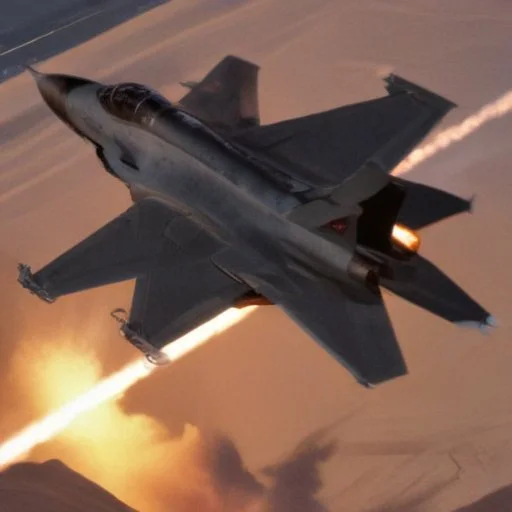
In August 1990, Saddam Hussein's Iraqi forces invaded Kuwait, sparking an international outcry. The United Nations Security Council condemned the invasion, and a coalition of 34 nations, led by the United States, set out to free Kuwait from Iraqi occupation.
The F117 Nighthawk, developed by Lockheed Skunk Works, was a radical innovation in military aviation. Its unique design, featuring a triangular shape and radar-absorbing materials, made it virtually invisible to enemy radar. The F117's debut in Operation Desert Storm marked the first time stealth technology was used in combat, revolutionizing the way wars would be fought in the future.
As the F117's were taking to the skies, LCDR Scott Speicher, flying his FA-18C Hornet from VFA-81, was shot down by a MiG-25. Speicher, a decorated naval aviator, became the first American casualty of the war. His bravery and sacrifice will never be forgotten.
Operation Desert Storm was a resounding success, with coalition forces liberating Kuwait and inflicting significant damage on Iraqi military infrastructure. The war marked a turning point in the use of stealth technology and paved the way for its integration into modern military strategies.
Operation Desert Storm will forever be remembered as a testament to bravery, innovation, and international cooperation. The war's impact on modern warfare is still felt today, with stealth technology playing a critical role in military operations around the world.
As we reflect on this pivotal moment in history, we honor the sacrifices of those who fought and died in Operation Desert Storm, and recognize the importance of continued investment in cutting-edge military technology.
We hope you enjoyed this journey through the history of Operation Desert Storm. Stay tuned for more fascinating stories and insights into the world of military history!
Despite being a swift and decisive victory, Operation Desert Storm was not without its challenges. One of the major difficulties faced by coalition forces was the harsh desert environment. The scorching heat, sandstorms, and limited infrastructure posed significant logistical hurdles. Additionally, the Iraqi military's use of Scud missiles and biological weapons threatened to escalate the conflict. However, through a combination of advanced technology, precision bombing, and strategic planning, the coalition was able to overcome these obstacles and achieve their objectives.
A often overlooked aspect of the war was the role of special operations forces. Teams of elite operatives, such as the US Navy SEALs and Army Rangers, conducted covert missions behind enemy lines, including sabotage, reconnaissance, and direct action. These operations played a crucial role in disrupting Iraqi command and control structures, and paved the way for the ground war.

General Norman Schwarzkopf Jr., the commander of US Central Command, was instrumental in planning and executing Operation Desert Storm. A decorated veteran of the Vietnam War, Schwarzkopf brought a wealth of experience and strategic acumen to the operation. His innovative approach to battlespace management, which emphasized speed, maneuverability, and precision, proved highly effective in outflanking and defeating the Iraqi military.
Born in 1934, Schwarzkopf graduated from the US Military Academy at West Point and went on to earn a master's degree in engineering from the University of Southern California. He served in various command positions throughout his career, including as the commander of the 24th Mechanized Infantry Division during the invasion of Grenada.
The cultural impact of Operation Desert Storm was far-reaching and multifaceted. The war marked a turning point in the representation of military conflicts in the media, with 24-hour news coverage and live broadcasts from the battlefield becoming the norm. This phenomenon, dubbed the "CNN effect," had a profound influence on the way wars are reported and perceived by the public.
The war also had a significant impact on popular culture, with numerous films, books, and music albums inspired by the conflict. The war's themes of patriotism, duty, and sacrifice resonated with the American public, and contributed to a renewed sense of national pride and purpose.

Operation Desert Storm showcased the devastating effectiveness of stealth technology in modern warfare. The F117 Nighthawk's ability to evade detection and deliver precision bombs on high-value targets revolutionized the way air campaigns are conducted. The war demonstrated the importance of investing in cutting-edge military technology, and accelerated the development of new stealth platforms, such as the B-2 Spirit bomber.
The conflict also highlighted the importance of electronic warfare and cyber warfare capabilities. Coalition forces used advanced electronic warfare assets to disrupt Iraqi command and control systems, while also conducting cyber operations to disable enemy air defenses.
The Gulf War Air Power Survey, a comprehensive study conducted by the US Air Force, provides a fascinating glimpse into the tactics and strategies employed during Operation Desert Storm. The study, which consisted of five volumes and over 3,000 pages, analyzed the effectiveness of various air campaigns, including the coalition's bombing campaign against Iraqi air defenses.
The study's findings, which were declassified in the late 1990s, offer a wealth of insight into the war's operational and tactical aspects. They include details on the targeting process, bombs and missiles used, and the role of special operations forces.