


The United Nations Security Council's decision to impose a global trade embargo on Iraq in response to its invasion of Kuwait in 1990 marked a pivotal moment in international relations. This bold move, sparked by Saddam Hussein's brazen act of aggression, was a rare display of unity among nations, with 13 out of 15 council members voting in favor of the embargo.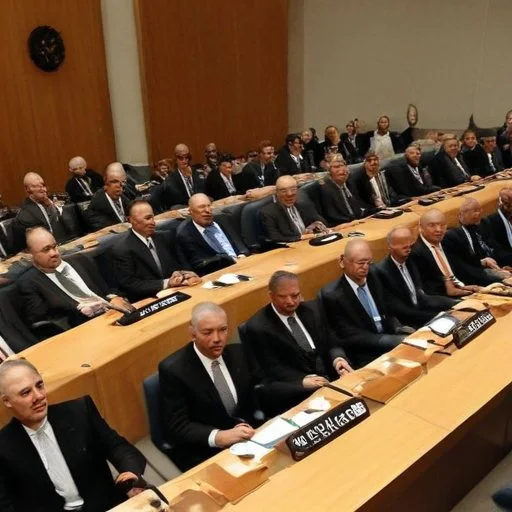
In the aftermath of the Iran-Iraq War, Saddam Hussein's regime was struggling to rebuild. Iraq's economy was crippled by war debts, and the country's oil production was stagnating. Meanwhile, Kuwait, with its significant oil reserves, became an attractive target for Hussein's expansionist ambitions. On August 2, 1990, Iraqi forces stormed across the border, sparking international outrage and setting the stage for the Gulf War.
| Date | Event |
|---|---|
| August 2, 1990 | Iraq invades Kuwait |
| August 6, 1990 | UN Security Council adopts Resolution 661, imposing trade embargo on Iraq |
| January 17, 1991 | Multinational coalition launches Operation Desert Storm to liberate Kuwait |
The trade embargo, which prohibited the importation of Iraqi oil and the export of goods to Iraq, had a crippling effect on the country's economy. The embargo led to:
The Gulf War and the subsequent trade embargo marked a significant shift in international relations. The UN's decisive action against Iraq demonstrated the effectiveness of collective action in response to aggression, setting a precedent for future international crises.
The Gulf War and the embargo had far-reaching cultural and social implications. The war sparked a surge in anti-war protests and activism, while the embargo led to increased scrutiny of the global oil industry's role in perpetuating conflicts.
"This is not a war about oil; it's a war about freedom." - General Norman Schwarzkopf Jr.
The Gulf War and the trade embargo draw parallels with other instances of international intervention, such as the 1999 Kosovo War and the 2011 Libyan intervention. These events highlight the complexities of humanitarian intervention and the challenges of balancing national interests with international obligations.
Kuwaiti citizens, forced to flee their homeland, recalled the horror of witnessing their country being overrun by Iraqi forces. "I saw my neighbors, my friends, being killed in the streets," said one refugee. "It was a nightmare that I can never forget."
The Gulf War and the trade embargo paved the way for future international interventions, including the 2003 invasion of Iraq. The legacy of this event continues to shape global politics, highlighting the importance of collective action in response to aggression.

This visual timeline illustrates the key events leading up to and during the Gulf War, as well as the subsequent trade embargo and its aftermath.
The Gulf War and the trade embargo serve as a cautionary tale about the dangers of unchecked aggression and the importance of international cooperation. As the global political landscape continues to evolve, the lessons of the Gulf War will remain relevant, warning us against the perils of isolationism and the need for collective action in the face of aggression.
The bravery and resilience of the Kuwaiti people, who fought to reclaim their homeland, serve as a testament to the power of human spirit. Their story inspires us to stand up against injustice and to defend freedom and democracy.
The 1990 Gulf War and the subsequent trade embargo on Iraq share similarities with other international interventions. One notable parallel is the 1999 Kosovo War, where NATO forces intervened to stop ethnic cleansing by Serbian forces. Both conflicts highlight the complexities of humanitarian intervention and the challenges of balancing national interests with international obligations.
Another comparable event is the 2011 Libyan intervention, where international forces intervened to protect civilians from the Libyan regime. Like the Gulf War, these interventions demonstrated the importance of collective action in response to aggression and the need for a coordinated international response to crises.
In each of these instances, the international community grappled with the question of when to intervene and how to balance humanitarian concerns with national interests. These conflicts serve as important case studies for understanding the complexities of international intervention and the challenges of promoting global stability.

Saddam Hussein, the Iraqi dictator behind the invasion of Kuwait, was a complex figure driven by a mix of ambition, paranoia, and nationalist fervor. Born in 1937, Hussein rose to power through the Iraqi Ba'ath Party, becoming President in 1979.
Hussein's rule was marked by brutal suppression of dissent, human rights abuses, and a hyper-militarized state. His aggressive expansionist policies, including the Iran-Iraq War, had devastating consequences for the region.
Despite his brutal reputation, Hussein was also known for his charisma and ability to inspire loyalty among his followers. However, his increasing paranoia and isolation contributed to his downfall, as he became out of touch with reality and failed to anticipate the international response to his invasion of Kuwait.
The Gulf War and the subsequent trade embargo on Iraq had far-reaching economic consequences for the region and beyond. The embargo led to a 90% decline in Iraq's oil exports, crippling the country's economy.
The war also had a significant impact on the global oil market, leading to a spike in oil prices and a subsequent recession in many countries. The economic costs of the war were estimated to be around $100 billion, making it one of the costliest conflicts of the 20th century.
In addition, the war disrupted trade and commerce in the region, leading to widespread unemployment and poverty. The economic fallout of the Gulf War serves as a reminder of the devastating consequences of conflict and the importance of diplomacy in resolving international disputes.
The Gulf War had a significant impact on popular culture, inspiring a wave of anti-war protests and activism. The war also sparked a renewed interest in Middle Eastern studies and Islamic culture.
The war's influence can be seen in film, literature, and music of the time, with many artists using the conflict as a backdrop for exploring themes of war, identity, and social justice.
In addition, the Gulf War marked a turning point in war reporting, with CNN's 24-hour coverage revolutionizing the way conflicts are covered in the media. The war's cultural legacy serves as a reminder of the power of the media in shaping public opinion and influencing international relations.
The Gulf War took place against a backdrop of shifting global geopolitics. The end of the Cold War had created a power vacuum in the Middle East, allowing regional powers like Iraq to pursue more aggressive expansionist policies.
The war also highlighted the importance of the Middle East as a vital region for global energy security, with the oil-rich Gulf states playing a critical role in the global economy.
Furthermore, the war marked a significant shift in the global balance of power, with the United States emerging as the sole superpower. The Gulf War's geopolitical context serves as a reminder of the complex and ever-changing nature of international relations.