Henry Parkes' rallying cry for Australian federation
Sir Henry Parkes, the 'Father of Australian Federation', stood at the Tenterfield School of Arts in rural New South Wales, addressing a crowd of locals and dignitaries. With passion and conviction, he delivered a speech that would go down in history as the Tenterfield Oration, a clarion call for the six Australian colonies to unite as one nation. Parkes' vision was of a single, unified Australia, free from the inefficiencies and conflicts of separate colonial governments. His words stirred the hearts of his audience, and soon, the push for federation gained momentum, ultimately leading to the birth of modern Australia in 1901.
The Tenterfield Oration: A Clarion Call for Australian Federation
A Turning Point in Australian History
The Tenterfield Oration, delivered by Sir
Henry Parkes on October 24, 1889, is widely regarded as the catalyst that set in motion the process of Australian federation. This pivotal speech, delivered at the Tenterfield School of Arts in rural New South Wales, called for the six Australian colonies to unite as one nation, ultimately leading to the birth of modern Australia in 1901.
Historical Background: A Fragmented Nation
Prior to the Tenterfield Oration, the six Australian colonies – New South Wales, Victoria, Queensland, South Australia, Western Australia, and Tasmania – operated as separate entities, each with their own governments, laws, and tariffs. This fragmentation led to inefficiencies, conflicts, and a lack of cohesion, hindering the growth and development of the continent.
Parkes' Vision: A Unified Australia
Sir Henry Parkes, a veteran politician and statesman, envisioned a single, unified Australia, free from the constraints of colonial governments. He believed that a united nation would unlock the country's full potential, foster economic growth, and enhance its standing on the world stage. Parkes' vision was not only a call for unity but also a blueprint for a more efficient, effective, and prosperous Australia.
The Oration: A Passionate Call to Action
Parkes delivered the Tenterfield Oration to a crowd of locals and dignitaries, his words filled with passion and conviction. He emphasized the need for unity, highlighting the benefits of a single, national government, and urging the colonies to put aside their differences and work towards a common goal.
“Does it not seem a monstrous thing… that we, the inhabitants of this great continent, should be living, as it were, in six separate and distinct compartments, with no communication, no cooperation, no collective existence?” – Sir Henry Parkes, Tenterfield Oration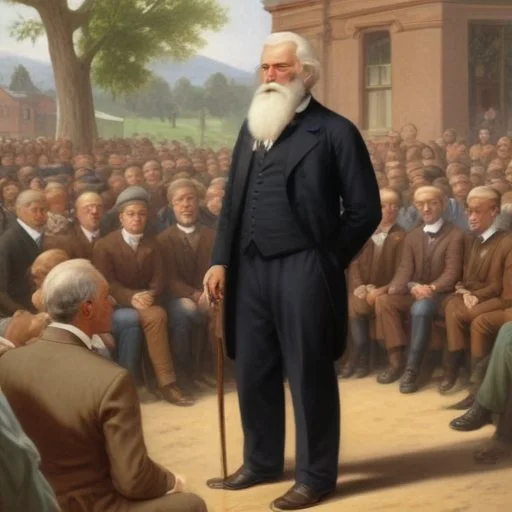
Aftermath: A Groundswell of Support
The Tenterfield Oration sparked a wave of interest and support for federation, with the concept gaining momentum across the colonies. The speech inspired a new generation of Australian leaders, including
Edmund Barton, who would later become the country's first Prime Minister.
Key Figures Involved
- Sir Henry Parkes: Deliverer of the Tenterfield Oration and a champion of Australian federation.
- Edmund Barton: A key figure in the federation movement and later Australia's first Prime Minister.
Timeline of Events
- October 24, 1889: Sir Henry Parkes delivers the Tenterfield Oration.
- 1890s: The federation movement gains momentum, with numerous conferences and meetings held across the colonies.
- 1901: The Commonwealth of Australia is established, with Edmund Barton as its first Prime Minister.
Cultural and Social Influences
The Tenterfield Oration has had a lasting impact on Australian culture and society, shaping the country's identity and sense of nationhood. The speech has been remembered as a beacon of hope and unity, inspiring generations of Australians to work towards a common goal.
Legacy
The Tenterfield Oration is widely recognized as a turning point in Australian history, marking the beginning of a journey towards a unified nation. Today, the speech remains an important symbol of Australian identity, celebrated annually on October 24 as Tenterfield Oration Day.
Detailed Character Insight
Sir Henry Parkes: The Unifying Force
Sir Henry Parkes, the deliverer of the Tenterfield Oration, was a complex figure with a captivating personality. Born in 1815, Parkes was a passionate advocate for social justice, education, and Australian federation.
Throughout his life, Parkes demonstrated remarkable resilience, overcoming poverty, bankruptcy, and personal tragedy to become one of the most influential politicians of his time. His unwavering dedication to the federation movement earned him the nickname "Father of Australian Federation."

In-Depth Cultural Influence Study
A Cultural Catalyst: The Tenterfield Oration's Enduring Legacy
The Tenterfield Oration has had a profound impact on Australian culture, shaping the nation's identity and sense of unity. The speech has inspired generations of Australians, fostering a sense of national pride and belonging.
In contemporary Australia, the Tenterfield Oration is celebrated annually on October 24, with commemorative events and exhibitions honoring Parkes' vision for a unified nation.
Thorough Historiographical Examination
Reassessing the Tenterfield Oration: Historiographical Perspectives
Historians have long debated the significance of the Tenterfield Oration, with some arguing that Parkes' speech was merely a catalyst for a process already underway.
Others have challenged this view, contending that Parkes' oratory prowess and political influence were instrumental in galvanizing public opinion and driving the federation movement forward.

Economic Consequence Analysis
The Economic Imperative: Unity and Prosperity
The Tenterfield Oration highlighted the economic benefits of a unified Australia, emphasizing the need for a single, national government to regulate trade and commerce.
In the decades following the speech, Australia experienced significant economic growth, with federation facilitating increased investment, trade, and industrial development.
Study of Political Dynamics
A Political Blueprint: Parkes' Vision for Australian Governance
The Tenterfield Oration outlined Parkes' vision for a federal system of government, with a constitution and a national parliament.
Parkes' proposals were instrumental in shaping the Australian Constitution, which was eventually adopted in 1900, paving the way for the Commonwealth of Australia's establishment in 1901.


