


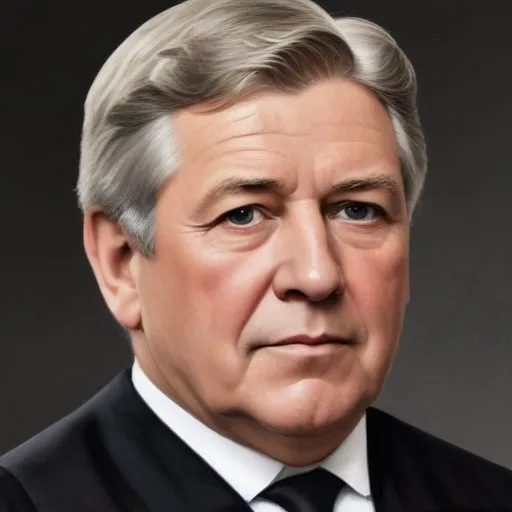
Australia's first Prime Minister, who played a key role in the country's federation and shaped its early government, is most known for uniting the country's six colonies into one nation. He was a strong advocate for Australian independence and self-governance.
Edmund Barton, the first Prime Minister of Australia, is revered for his instrumental role in shaping the nation's constitution and federal laws. As a statesman, barrister, and jurist, he dedicated his life to uniting the Australian colonies and creating a strong, unified nation.
Barton was an ardent advocate for the federation of the Australian colonies, a dream he summarized as "a nation for a continent, and a continent for a nation." He played a crucial role in drafting the national constitution and was a key figure in the federation movement in New South Wales.
As a delegate to the constitutional conventions, Barton worked tirelessly to craft a document that would unite the colonies and establish a strong federal government. His drafting skills and knowledge of the law were instrumental in shaping the Constitution of Australia.
In 1901, Barton was commissioned to form a caretaker government as Australia's first Prime Minister. His term began on January 1, 1901, the date of federation. At the first federal election in March 1901, the Protectionist Party, led by Barton, won the most seats, but fell short of a majority. He formed an alliance with the Australian Labor Party (ALP) to remain in power.
Barton's government also established several national institutions, which formed the foundation of modern Australia.
In 1903, Barton resigned as Prime Minister to become one of the three founding members of the High Court of Australia, a position he held until his death in 1920.
Edmund Barton's contributions to Australia's federation and constitution have had a lasting impact on the nation. He is remembered as a visionary leader who worked tirelessly to unite the Australian colonies and create a strong, unified nation.
Barton's personal life was marked by dedication to his work and his country. He will always be remembered as a champion of Australian federation and a leader who shaped the nation's constitution.
Barton's legacy extends beyond his role in shaping Australia's constitution. He played a crucial role in establishing the country's democratic institutions and laid the foundations for modern Australia.
In conclusion, Edmund Barton was a true visionary who dedicated his life to creating a united and strong Australia. His contributions to the nation's constitution, federal laws, and institutions have had a lasting impact on the country and its people.
Born in 1856
The 2nd Prime Minister of Australia, a key figure in the country's early development, known for his role in shaping Australia's constitution and federation. He played a crucial part in uniting the country's six colonies into a single nation.
Born in 1867
Third Prime Minister of Australia, serving from 1904 to 1905, known for his efforts to establish a national government and implement progressive reforms.
Born in 1862
The 5th Prime Minister of Australia, a key figure in the country's early 20th-century politics, known for his role in shaping Australia's social and economic landscape. He played a crucial part in establishing the country's old-age pension and maternity allowance systems.
Born in 1845
The 4th Prime Minister of Australia, a Scottish-Australian lawyer and politician who served from 1904 to 1905, known for his role in shaping the country's early years and contributing to its growth.
Born in 1860
The 6th Prime Minister of Australia, a key figure in the country's early 20th-century politics, known for his role in shaping Australia's economy and foreign policy. He played a crucial part in Australia's transition from a British colony to an independent nation.
Born in 1883
Led Australia through the 1920s, implementing significant economic and social reforms, and played a key role in the country's transition from a British dominion to an independent nation.
Born in 1876
The 9th Prime Minister of Australia, serving from 1929 to 1932, is known for leading the country through the Great Depression and implementing significant economic reforms. He was a strong advocate for workers' rights and social justice.
Born in 1885
Led the country through World War II, implementing policies to defend Australia and its economy. He's also known for his leadership during the country's transition from British to American influence.
