


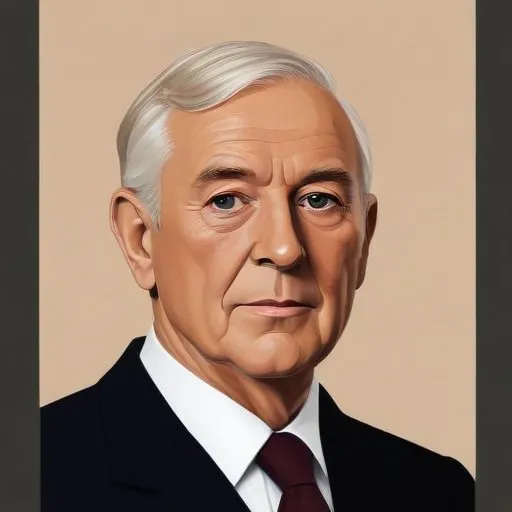
The 6th Prime Minister of Australia, a key figure in the country's early 20th-century politics, known for his role in shaping Australia's economy and foreign policy. He played a crucial part in Australia's transition from a British colony to an independent nation.
Sir Joseph Cook is renowned for being the sixth Prime Minister of Australia, serving from 1913 to 1914, and leading the Liberal Party to victory in the 1913 federal election – a milestone that marked the first time a centre-right party secured an outright majority in Australian federal politics.
Born on December 7, 1860, in Silverdale, Staffordshire, England, Cook began his working life as a coal miner at the tender age of nine. He emigrated to Australia in 1885, settling in Lithgow, New South Wales, where he continued to work as a miner and became involved with the local labour movement as a union official.
Cook's entry into politics began in 1891 when he was elected to the New South Wales Legislative Assembly as a representative of the Labor Party, becoming one of its first members of parliament. He rose through the ranks, becoming party leader in 1893, but left Labor in 1894 due to disagreements over party discipline. He was then invited to become a government minister under George Reid and joined Reid's Free Trade Party.
In 1901, Cook was elected to the new Federal Parliament representing the Division of Parramatta. He became deputy leader of the federal Free Trade Party, later renamed the Anti-Socialist Party, under George Reid, and in 1908 replaced Reid as party leader and Leader of the Opposition. In 1909, Cook agreed to merge his party with Alfred Deakin's Protectionist Party, forming a unified anti-Labor party for the first time, and became deputy leader of the new Liberal Party.
Cook replaced Deakin as leader of the Liberals in January 1913 and went on to win a one-seat majority over Andrew Fisher's Labor Party at the 1913 election. Although his party failed to secure a majority in the Australian Senate, making governing difficult, Cook's tenure marked a significant shift in Australian politics. His legacy is characterized by his commitment to free trade and his role in shaping the country's early political landscape.
Sir Joseph Cook passed away on July 30, 1947, leaving behind a rich political legacy. Despite facing many challenges during his time in office, Cook's contributions to Australian politics remain significant, and his story serves as an inspiration to generations of politicians and public servants.
Born in 1862
The 5th Prime Minister of Australia, a key figure in the country's early 20th-century politics, known for his role in shaping Australia's social and economic landscape. He played a crucial part in establishing the country's old-age pension and maternity allowance systems.
Born in 1862
A carpenter-turned-politician who served as Australia's 7th Prime Minister, known for his strong leadership during World War I and his role in shaping the country's post-war development.
Born in 1883
Led Australia through the 1920s, implementing significant economic and social reforms, and played a key role in the country's transition from a British dominion to an independent nation.
Born in 1876
The 9th Prime Minister of Australia, serving from 1929 to 1932, is known for leading the country through the Great Depression and implementing significant economic reforms. He was a strong advocate for workers' rights and social justice.
Born in 1885
Led the country through World War II, implementing policies to defend Australia and its economy. He's also known for his leadership during the country's transition from British to American influence.
Born in 1885
Australian engineer and politician who served as the 16th Prime Minister of Australia, implementing significant economic reforms and playing a crucial role in shaping the country's post-war development.
Born in 1894
The 12th Prime Minister of Australia, a lawyer-turned-politician who played a crucial role in shaping the country's post-war economy and foreign policy, and is often credited with establishing the modern Australian identity.
Born in 1894
The 13th Prime Minister of Australia, serving from 1941, known for his brief but significant term during World War II, and his role in shaping the country's economy.
