


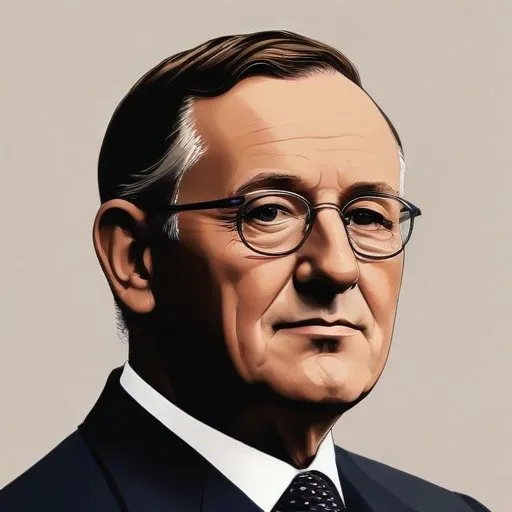
The 13th Prime Minister of Australia, serving from 1941, known for his brief but significant term during World War II, and his role in shaping the country's economy.
Sir Arthur William Fadden, the 13th Prime Minister of Australia, served for a mere 39 days in 1941, but his leadership left an indelible mark on the country's history. As the leader of the Country Party and treasurer, Fadden's conciliatory manner and pragmatic approach earned him widespread popularity during a tumultuous period.
Born on April 13, 1894, in Ingham, Queensland, to Irish immigrant parents, Fadden's life was marked by a strong sense of duty and commitment to public service. After leaving school at 15, he worked his way up from humble beginnings to become the town clerk of Mackay in 1916. Following the devastating 1918 cyclone, Fadden moved to Townsville, where he established his own accountancy firm and eventually entered politics.
Fadden's political career began in 1930 when he was elected to the Townsville City Council. Two years later, he entered the Queensland Legislative Assembly as a member of the Country and Progressive National Party. Although he lost his seat in 1935, Fadden bounced back by winning a federal by-election in 1936 for the Division of Darling Downs.
On August 29, 1941, Fadden became the Prime Minister of Australia after Menzies resigned. During his brief tenure, Fadden worked tirelessly to maintain stability and unity within the government. Despite facing significant challenges, he managed to pass key legislation, including the Income Tax Assessment Act and the War-time (Company) Tax Assessment Act.
Although his premiership was short-lived, Fadden's influence extended far beyond his time in office. He continued to serve as treasurer from 1949 to 1958, playing a crucial role in shaping Australia's post-war economy. As a testament to his dedication and service, Fadden was knighted in 1958.
Fadden's personal life was marked by a strong sense of family and community. He married Ilma Nita Garnham in 1916, and the couple had three children together. An avid sportsman, Fadden was a keen cricketer and golfer, and he maintained a strong connection to his local community throughout his life.
Born in 1894
The 12th Prime Minister of Australia, a lawyer-turned-politician who played a crucial role in shaping the country's post-war economy and foreign policy, and is often credited with establishing the modern Australian identity.
Born in 1885
Australian engineer and politician who served as the 16th Prime Minister of Australia, implementing significant economic reforms and playing a crucial role in shaping the country's post-war development.
Born in 1885
Led the country through World War II, implementing policies to defend Australia and its economy. He's also known for his leadership during the country's transition from British to American influence.
Born in 1890
The 15th Prime Minister of Australia, serving for just eight days in 1945, known for being the shortest-serving prime minister in Australian history. He was also a prominent educator and politician.
Born in 1881
Early Hollywood pioneer who directed over 500 films and was a key figure in the development of the film industry. Known for his prolific output and innovative filmmaking techniques.
Born in 1883
Led Australia through the 1920s, implementing significant economic and social reforms, and played a key role in the country's transition from a British dominion to an independent nation.
Born in 1876
The 9th Prime Minister of Australia, serving from 1929 to 1932, is known for leading the country through the Great Depression and implementing significant economic reforms. He was a strong advocate for workers' rights and social justice.
Born in 1867
Third Prime Minister of Australia, serving from 1904 to 1905, known for his efforts to establish a national government and implement progressive reforms.
