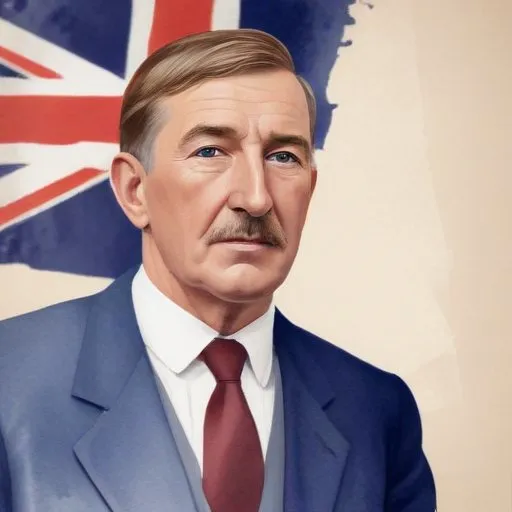
Billy Hughes: The Maverick Prime Minister of Australia
A Dominant Force in Australian Politics
Billy Hughes, Australia's seventh prime minister, left an indelible mark on the country's political landscape. For over five decades, he navigated the treacherous waters of politics, leading the nation through World War I and shaping the country's destiny in the post-war era.
A Life of Politics
Born on September 25, 1862, in London to Welsh parents, Hughes emigrated to Australia at the age of 22. He soon became immersed in the fledgling Australian labor movement, which laid the foundation for his future political career. In 1894, he was elected to the New South Wales Legislative Assembly as a member of the New South Wales Labor Party. His early success paved the way for his entry into federal politics in 1901, when he was elected to the Australian Parliament.
A Leader of Multiple Parties
Hughes' political career was marked by his ability to adapt and thrive in different party environments. He was a member of six political parties during his lifetime, leading five of them, including the Australian Labor Party, National Labor Party, and Nationalist Party. His flexibility and pragmatic approach to politics allowed him to outlast and outmaneuver his opponents.
Leading Australia Through World War I
As prime minister from 1915 to 1923, Hughes played a crucial role in navigating Australia through the turbulent waters of World War I. His decision to introduce conscription in 1916 sparked controversy and split the Labor Party, but he remained undeterred, forming the National Labor Party and later merging with the Liberals to create the Nationalist Party. His government's efforts to mobilize the country's resources and troops contributed significantly to the Allied war effort.
Reforms and Legacy
Hughes' tenure as prime minister saw the establishment of several institutions that continue to shape Australia's governance and economy. He founded the Commonwealth Police Force, precursor to the Australian Federal Police, and the Council for Scientific and Industrial Research (CSIR), now known as the Commonwealth Scientific and Industrial Research Organisation (CSIRO). Additionally, he created state-owned enterprises to support the post-war economy, laying the groundwork for Australia's modern mixed economy.
Personal Milestones and Key Life Events
- Called to the bar in 1903, Hughes combined his legal career with politics, becoming one of the most influential figures in Australian politics.
- In 1914, he was elected deputy leader of the Australian Labor Party, marking the beginning of his meteoric rise to prime ministership.
- Hughes died on October 28, 1952, at the age of 90, leaving behind a legacy that continues to shape Australian politics and society.
Controversies and Public Perception
Hughes' political career was not without controversy. His support for conscription in 1916 sparked intense debate and split the Labor Party, earning him the nickname "The Little Digger." Despite these controversies, Hughes remained a dominant force in Australian politics, earning the respect of his peers and the admiration of the Australian people.
Influence on Modern Society
Billy Hughes' lasting impact on Australian society is undeniable. His leadership during World War I, his role in shaping the country's institutions, and his commitment to social and economic reform continue to inspire generations of Australians. As a testament to his enduring legacy, Hughes remains one of the most important figures in Australian political history.
FAQ
What was Billy Hughes role in Australian politics?
Billy Hughes served as the 7th Prime Minister of Australia from 1915 to 1923, leading the country through World War I and its aftermath.
What were Billy Hughes views on conscription during World War I?
Billy Hughes was a strong supporter of conscription during World War I, believing it was necessary to support the war effort.
What was Billy Hughes early life like?
Billy Hughes was born in London, England, and immigrated to Australia as a young man, where he worked as a carpenter before entering politics.
How did Billy Hughes leadership impact Australia during World War I?
Billy Hughes leadership during World War I had a significant impact on Australia, as he played a key role in rallying the country behind the war effort and shaping its foreign policy.
What were Billy Hughes later years like?
After leaving politics, Billy Hughes continued to be involved in public life, serving as a member of the Australian Parliament until his death in 1952.