


This fateful event is etched in the annals of history as one of the most daring rescue missions of all time, where the lives of 86 hostages hung precariously in the balance. On October 18, 1977, Lufthansa Flight 181, hijacked by four Palestinian terrorists, landed in Mogadishu, Somalia, setting the stage for a thrilling rescue operation that would captivate the world.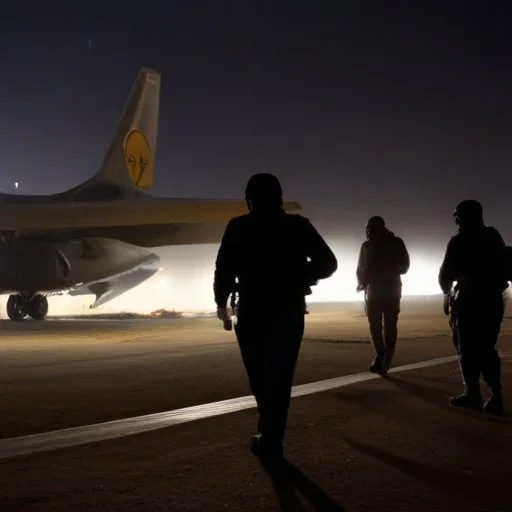
The hijacking of Lufthansa Flight 181 was a meticulously planned operation, carried out by four terrorists affiliated with the Popular Front for the Liberation of Palestine (PFLP). The Boeing 737, carrying 86 passengers and five crew members, took off from Palma de Mallorca, Spain, bound for Frankfurt, Germany, when it was hijacked.
As the hijacked plane landed in Mogadishu, the clock began ticking. The West German government, in close coordination with the Somali authorities, worked tirelessly to negotiate the release of the hostages. However, as the hours ticked by, it became clear that a more drastic approach was needed.
In a daring midnight operation, a team of West German commandos, dressed in black and armed with precision weapons, stormed the hijacked plane. The rescue mission was a masterclass in precision and bravery, with the commandos working in tandem to overcome the hijackers and free the hostages.
The rescue of Lufthansa Flight 181 stands as a testament to courage, determination, and international cooperation. It serves as a powerful reminder of the importance of standing firm against terrorism and protecting innocent lives.
In the words of Chancellor Helmut Schmidt, "The rescue of Lufthansa Flight 181 was a moment of pride for Germany and a beacon of hope for the world."
The hijacking of Lufthansa Flight 181 was not an isolated incident. It was part of a larger wave of terrorist attacks that swept across Europe in the 1970s. The Popular Front for the Liberation of Palestine (PFLP), the group responsible for the hijacking, had already carried out a string of attacks on Israeli and Western targets. In fact, just a few months earlier, the PFLP had hijacked a French plane and forced it to land in Entebbe, Uganda, leading to a daring rescue mission by Israeli commandos.
The 1970s were a tumultuous time, marked by rising terrorism and political instability. The hijacking of Lufthansa Flight 181 was just one of many incidents that highlighted the need for governments and security agencies to rethink their approach to counter-terrorism.
Jürgen Schumann, the Lufthansa pilot, played a crucial role in the hijacking drama. A seasoned aviator with over 10,000 hours of flying experience, Schumann remained calm and composed throughout the ordeal. Despite being threatened by the hijackers, he continued to communicate with air traffic control and negotiators, providing vital information that helped inform the rescue mission.
Schumann's bravery and professionalism have been widely praised. He was hailed as a hero by the German government and received numerous awards for his role in the crisis.
The rescue of Lufthansa Flight 181 was a powerful symbol of resistance against terrorism. It demonstrated that governments and security agencies could work together to thwart the plans of extremist groups. The operation also highlighted the importance of international cooperation in combating terrorism.
In the aftermath of the hijacking, the German government and its allies reiterated their commitment to fighting terrorism in all its forms. The rescue operation was seen as a triumph of good over evil, a testament to the power of courage and determination in the face of adversity.
The hijacking of Lufthansa Flight 181 was a geopolitical crisis that drew in several countries. The involvement of Somali President Mohamed Siad Barre, who provided a safe haven to the hijackers, added a complex layer to the crisis. Barre's regime was heavily dependent on Soviet support, which led some to speculate about the role of the Cold War in the hijacking.
The rescue operation was a testament to the strength of international partnerships. The cooperation between the German government, Somali authorities, and other countries involved in the crisis highlighted the importance of working together to address global challenges.