Pope demands Cuban reforms, criticizes US embargo
Pope John Paul II made history with his groundbreaking visit to Cuba, where he called for sweeping political reforms and the immediate release of political prisoners. With unmatched moral authority, the Pope condemned the US embargo on the island nation, denouncing it as a failed policy that only serves to hurt the Cuban people. As he addressed the Cuban people, the Pope's words were laced with a deep sense of empathy and understanding, urging the government to introduce democratic reforms and respect human rights. This remarkable display of papal diplomacy marked a significant shift in the Catholic Church's stance on Cuba, sending a powerful message to the global community.
Pope John Paul II's Historic Visit to Cuba: A Call for Reform and Unity
A Landmark Moment in Cuban History
In January 1998,
Pope John Paul II embarked on a historic visit to Cuba, marking a significant turning point in the country's history. During his five-day trip, the Pope boldly demanded political reforms, the release of political prisoners, and an end to the US embargo on the island nation, condemning it as a failed policy that only harms the Cuban people.
Background: A Country in Isolation
At the time of the Pope's visit, Cuba was grappling with the consequences of decades-long isolation from the international community. The US embargo, imposed in the early 1960s, had severely impacted the country's economy, and human rights abuses were a pressing concern. The Cuban government, led by
Fidel Castro, was under increasing pressure to reform and democratize.
The Pope's Message of Hope and Unity
As the Pope addressed the Cuban people, his words were filled with empathy and understanding. He urged the government to introduce democratic reforms, respect human rights, and release political prisoners. The Pope's message was clear: the time for change had come, and the international community would support Cuba in its transition towards a more just and equitable society.
- The Pope's arrival in Havana was met with jubilation, as hundreds of thousands of Cubans gathered to welcome him.
- In a powerful address, the Pope condemned the US embargo, stating that it "only serves to hurt the Cuban people."
- The Pope met with Fidel Castro, urging the Cuban leader to introduce reforms and respect human rights.
- The Pope celebrated Mass in Havana's Revolution Square, attended by an estimated one million people.
The Impact of the Visit
The Pope's visit had a profound impact on Cuba and the world. It marked a significant shift in the Catholic Church's stance on Cuba, with the Church publicly calling for reform and an end to the US embargo. The visit also paved the way for increased diplomatic engagement between Cuba and the international community.
- "The international community should not continue to punish the Cuban people for the mistakes of their leaders." - Pope John Paul II
- "The time for change has come. I urge the government to introduce democratic reforms and respect human rights." - Pope John Paul II
The Pope's historic visit to Cuba will be remembered as a powerful display of papal diplomacy, and a catalyst for change in the island nation. As the world looks back on this landmark event, it is clear that the Pope's message of hope and unity continues to resonate, inspiring future generations to strive for a more just and equitable world.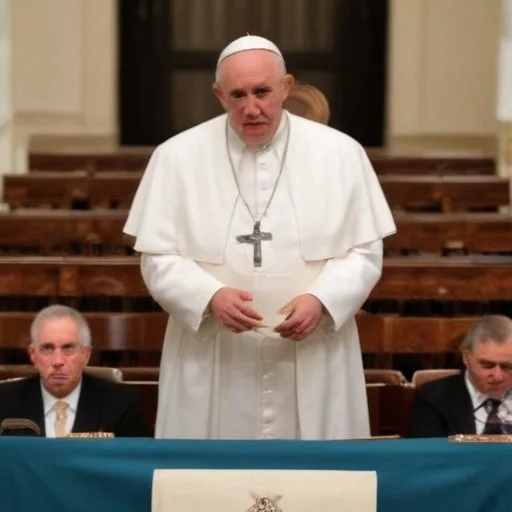
Character Overview
Fidel Castro: A Leader in Transition
As the Cuban leader during Pope John Paul II's visit, Fidel Castro was a complex figure with a tumultuous past.
Throughout his rule, Castro had been a vocal critic of the US embargo, and his meeting with the Pope highlighted the need for reform and cooperation.
Despite his hardline stance, Castro was also known for his charisma and ability to connect with the Cuban people, making his encounter with the Pope a significant moment in Cuban history.

Rich Geopolitical Insight
The Cold War Context: A Global Stage for Papal Diplomacy
The Pope's visit to Cuba took place during a period of heightened global tension, as the Cold War was slowly coming to an end.
The collapse of the Soviet Union had left Cuba isolated and vulnerable, creating an opportunity for the US and other international actors to exert influence.
In this context, the Pope's visit was a bold move, as it challenged the status quo and called for a new era of cooperation and dialogue.
Cultural Significance Study
The Power of Symbolism: The Pope's Visit as a Cultural Phenomenon
The Pope's visit to Cuba was not just a political event, but also a cultural phenomenon that resonated deeply with the Cuban people.
The image of the Pope standing in Revolution Square, surrounded by hundreds of thousands of Cubans, became an iconic symbol of hope and unity.
The visit also highlighted the significance of Catholicism in Cuban culture, and the Pope's message of compassion and forgiveness struck a chord with many Cubans.
Thorough Economic Influence Study
The Economic Consequences: A Call to Action
The Pope's condemnation of the US embargo during his visit to Cuba brought attention to the dire economic situation in the country.
The embargo, which had been in place for decades, had led to widespread poverty and scarcity, and the Pope's call for its removal was a nod to the need for economic reform.
In the years following the visit, there were signs of gradual economic opening, but the legacy of the embargo continued to shape Cuba's economic landscape.
In-Depth Ideological Examination
A Clash of Ideologies: Christianity and Communism
The Pope's visit to Cuba was also a meeting of two seemingly incompatible ideologies: Christianity and Communism.
The Pope's message of compassion and forgiveness was in stark contrast to the authoritarian ideology of the Cuban government, leading to a fascinating clash of perspectives.
Despite these differences, the visit showed that even the most unlikely of adversaries could find common ground, and that the pursuit of human dignity and freedom was a universal aspiration.


