Nazi Troops Raid Roman Ghetto, Thousands Deported
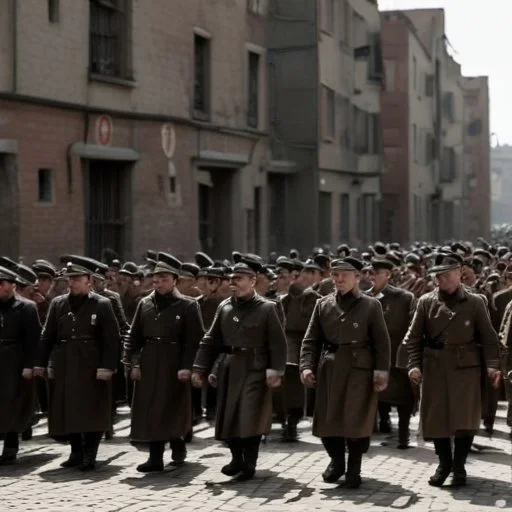
In the heart of Rome, where ancient history and modern life intertwined, a sense of unease settled over the Roman Ghetto, a centuries-old Jewish quarter. On a crisp autumn morning, the tranquility was shattered as Nazi troops, under the command of Hauptsturmführer Theodor Dannecker, descended upon the narrow streets, rounding up over 1,000 Jews, including the elderly, women, and children. The SS and Italian police combed through homes, seizing valuables and arresting anyone with a Jewish sounding name. The detainees were hastily herded onto trucks, leaving behind a trail of shattered lives and broken families. The majority of those taken would never return, ultimately perishing in the Auschwitz concentration camp.
The Raid on the Roman Ghetto: A Day of Infamy in the Heart of Rome
A Brutal Dawn in the Eternal City
The Raid on the Roman Ghetto, a devastating event that took place on October 16, 1943, is infamous for being one of the largest and most brutal roundups of Jews in Italy during World War II. On that fateful morning, over 1,000 Jews, including the elderly, women, and children, were torn from their homes and deported to the Auschwitz concentration camp, where the majority would meet their tragic fate.
A Historical Background of Persecution
The Roman Ghetto, established in 1555, was one of the oldest and most vibrant Jewish communities in Europe. However, with the rise of Fascist Italy and its alliance with Nazi Germany, the Jews of Rome faced increasing persecution. The racial laws of 1938, which stripped Jews of their citizenship and prohibited them from owning property, marked the beginning of a dark era for the Jewish community.
The Culprit: Hauptsturmführer Theodor Dannecker
The mastermind behind the Raid on the Roman Ghetto was Hauptsturmführer
Theodor Dannecker, a ruthless and ambitious SS officer who had already orchestrated several deportations of Jews from other European cities. Dannecker's zeal for persecution was matched only by his disregard for human life, making him the perfect instrument for the Nazis' sinister plans.
The Timeline of Events
- October 16, 1943: Nazi troops, aided by Italian police, surround the Roman Ghetto, sealing off the narrow streets and beginning the brutal roundup of Jews.
- 5:00 AM: The first group of Jews is arrested, taken from their homes, and loaded onto trucks.
- 8:00 AM: The raid reaches its peak, with over 1,000 Jews detained and awaiting deportation.
- October 18, 1943: The Jews are deported to Auschwitz, where they will face unimaginable horrors.
A Community Fractured
The Raid on the Roman Ghetto left an indelible mark on the Jewish community of Rome. Families were torn apart, and the once-thriving ghetto was left in ruins. The trauma of that day would linger for generations, a painful reminder of the devastating consequences of hatred and intolerance.
Major Outcomes and Impacts
- The Raid on the Roman Ghetto marked a turning point in the persecution of Jews in Italy, as it demonstrated the ruthless efficiency of the Nazi machinery.
- The event sparked a wave of outrage among the Italian people, leading to increased resistance against the Nazi occupation.
- The tragedy also galvanized the papacy, with Pope Pius XII issuing a secret appeal to the Italian government to intervene on behalf of the Jews.
A Legacy of Remembrance
Today, the Raid on the Roman Ghetto serves as a poignant reminder of the dangers of xenophobia and the importance of protecting human rights. The event is commemorated annually in Rome, with ceremonies and exhibitions honoring the memory of the victims. As we reflect on this dark chapter in history, we are compelled to remember the words of Italian writer and Holocaust survivor,
Primo Levi: "It happened, therefore it can happen again."
In-Depth Character Profile
Theodor Dannecker: A Ruthless Persecutor
Theodor Dannecker, the mastermind behind the Raid on the Roman Ghetto, was a complex figure with a troubled past. Born in 1913 in Tübingen, Germany, Dannecker joined the SS in 1934 and quickly rose through the ranks, becoming a skilled expert in Jewish affairs.
Dannecker's zeal for persecution was matched only by his ambition, and he saw the Roman Ghetto as the perfect opportunity to prove himself to his Nazi superiors. His role in the raid cemented his reputation as a ruthless and efficient executor of the Nazi's sinister plans.
Despite his heinous crimes, Dannecker's fate remains somewhat of a mystery. He allegedly committed suicide in December 1945, while in American custody.

Detailed Historical Story
The Jewish Community of Rome: A Rich History
The Roman Ghetto, established in 1555, was one of the oldest and most vibrant Jewish communities in Europe. The ghetto was home to a rich cultural heritage, with a unique blend of Italian and Jewish traditions.
The Jews of Rome played an integral role in the city's economic and social fabric, with many owning businesses, practicing medicine, and serving as scholars and intellectuals.
Despite centuries of persecution, the Jewish community of Rome remained resilient, preserving their heritage and traditions until the devastating raid of 1943.
Full Cultural Impact Analysis
The Cultural Significance of the Roman Ghetto
The Roman Ghetto was more than just a physical space – it was a cultural hub, where Jewish traditions and Italian customs intertwined.
The ghetto's narrow streets were lined with synagogues, yeshivas, and kosher restaurants, creating a unique cultural tapestry that was brutally disrupted by the Nazi occupation.
The raid on the Roman Ghetto not only destroyed lives but also erased a rich cultural heritage, leaving a lasting impact on the city's cultural landscape.

Political Examination
The Pope's Silence: A Moral Imperative
Pope Pius XII has been criticized for his alleged silence during the Raid on the Roman Ghetto, sparking a heated debate about the Catholic Church's role in the Holocaust.
While the Pope did issue a secret appeal to the Italian government to intervene on behalf of the Jews, many argue that his actions were too little, too late.
The Pope's silence has been interpreted as a moral failure, highlighting the complexities of faith and politics during times of crisis.
Historiographical Insights
Reinterpretation and Revisionism: The Historiography of the Raid
Historical narratives surrounding the Raid on the Roman Ghetto have evolved over time, with various interpretations and revisions emerging.
Early accounts often portrayed the raid as a isolated incident, while later historians have contextualized it within the broader framework of the Holocaust and the rise of Fascism in Italy.
Recent scholarship has challenged traditional narratives, highlighting the complexities of Italian-Jewish relations and the role of the Catholic Church during the war.


