


The tumultuous year of 1943 bore witness to one of the most heinous atrocities in human history – the systematic dismantling of the Kraków Ghetto, a miserable haven for thousands of Jews, and their subsequent deportation to the depths of concentration camps. The liquidation of the ghetto, completed on March 14, 1943, marked a devastating climax to the community's desperate struggle for survival.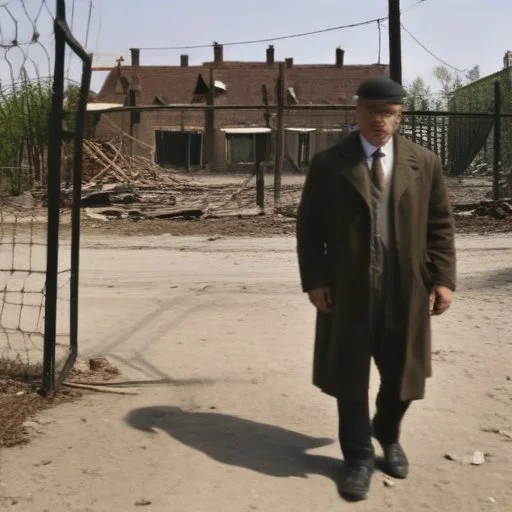
The Kraków Ghetto, established in 1941, was a cramped and wretched refuge for the city's Jewish population, already ravaged by poverty, hunger, and disease. Confined to a mere 16-square-block area, approximately 20,000 Jews were forced to live in deplorable conditions, with an average of 5-6 people per room. The ghetto's brutal formation was a precursor to the horrors that would soon unfold.
The liquidation of the Kraków Ghetto resulted in the brutal murder of approximately 20,000 Jews, with only a few hundred surviving the concentration camps. The horrors of the ghetto and its liquidation left an indelible mark on humanity, serving as a stark reminder of the dangers of unchecked authority and the importance of standing against oppression.
The Kraków Ghetto's story is not merely one of tragedy, but also of resilience and defiance. Despite the overwhelming odds, Jews within the ghetto engaged in acts of resistance, from documenting their experiences to forming underground organizations. These brave individuals, in the face of unimaginable horror, remind us that even in the darkest of times, humanity can find ways to persevere and resist.
The liquidation of the Kraków Ghetto serves as a poignant reminder of the importance of remembrance and education. It is our collective responsibility to ensure that the lessons of the Holocaust are never forgotten, and that the horrors of the past inform our actions in the present, guiding us towards a more just and equitable world.
The Kraków Ghetto was not the only Jewish ghetto established by the Nazis in Poland. In fact, there were several other ghettos, including the Warsaw Ghetto, the Łódź Ghetto, and the Lublin Ghetto, among others. However, the Kraków Ghetto was one of the most notorious, known for its extreme poverty, overcrowding, and brutality.
The ghetto was surrounded by high walls, with only a few gates that were heavily guarded by Nazi soldiers. The living conditions inside the ghetto were deplorable, with little access to food, water, and sanitation. Diseases such as typhus and tuberculosis were rampant, and malnutrition was widespread.
Despite the harsh conditions, the Jews of the Kraków Ghetto found ways to maintain a sense of community and culture. They established a Jewish police force, a court system, and even a network of underground schools and cultural organizations.

Oskar Schindler's story is one of the most remarkable aspects of the Kraków Ghetto's history. A German industrialist, Schindler was a member of the Nazi party, but he was also a complex and nuanced individual who was deeply affected by the suffering of the Jews.
Schindler employed Jewish workers in his factory, saving the lives of over 1,200 Jews by convincing Nazi officials that they were essential to the war effort. He also bribed Nazi officials and used his connections to protect his workers from deportation and certain death.
Despite his bravery, Schindler's motivations were not entirely altruistic. He was a sophisticated businessman who saw the value in exploiting Jewish labor, and he was also known to be a womanizer and a heavy drinker. Nevertheless, his actions during the Holocaust were heroic, and he is remembered as one of the few Germans who actively worked to save Jewish lives.
The Kraków Ghetto liquidation was not an isolated event, but rather part of a larger pattern of violence and genocide that characterized the Holocaust. In many ways, it was similar to the liquidation of the Warsaw Ghetto, which occurred in 1943, just a few months after the Kraków Ghetto was liquidated.
Both ghettos were established by the Nazis as part of their effort to concentrate and isolate Jewish populations. Both ghettos were characterized by extreme poverty, overcrowding, and brutality, and both were eventually liquidated, with their inhabitants deported to concentration camps.
However, there were also significant differences between the two ghettos. The Warsaw Ghetto was much larger, with a population of over 400,000 Jews, compared to the Kraków Ghetto's 20,000. The Warsaw Ghetto was also the site of a major uprising in 1943, in which Jewish resistance fighters battled Nazi soldiers in a desperate bid for survival.
The Kraków Ghetto's legacy can be seen in the many cultural and artistic works that it has inspired. From novels like Schindler's Ark to films like Schindler's List, the story of the Kraków Ghetto has captivated audiences around the world.
One of the most poignant legacies of the Kraków Ghetto is the music of Mordechai Gebirtig, a Jewish poet and songwriter who lived in the ghetto and documented its struggles and horrors through his work.
Gebirtig's music is a testament to the power of art to resist oppression and to give voice to the voiceless. His songs, which were often smuggled out of the ghetto and performed by Jewish musicians, became anthems of resistance and hope.
The Kraków Ghetto was not just a local phenomenon, but rather part of a larger geopolitical landscape that shaped the course of World War II. The ghetto was established in 1941, at a time when Nazi Germany was expanding its territorial control over Europe.
The Nazi occupation of Poland, which began in 1939, set the stage for the establishment of the Kraków Ghetto and the subsequent liquidation of its Jewish population. The ghetto was part of a larger pattern of violence and genocide that characterized the Nazi regime, and it was closely tied to the Nazi's broader military and strategic goals.
Understanding the Kraków Ghetto in its geopolitical context is essential to grasping its significance and importance. It was a key site of struggle and resistance, not just for the Jews of Kraków, but for the entire Jewish community of Europe.