


In the bleak landscape of World War II, a sinister collaboration between Nazi Germany and Vichy France marked the beginning of a terrifying chapter in history – the deportation of 65,000 innocent Jews from the Drancy internment camp to the notorious German extermination camps. This horrific event, a cornerstone of the Holocaust, sealed the fate of thousands of men, women, and children, condemning them to unimaginable suffering and brutal extermination.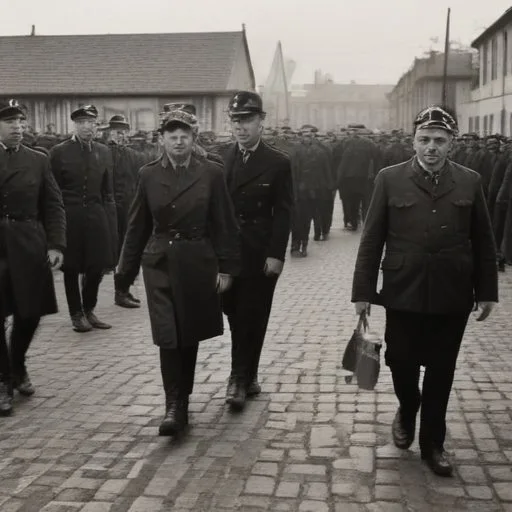
In the aftermath of France's defeat in 1940, the country was divided into two zones: the occupied zone under German control and the so-called "Free Zone" in the south, governed by the collaborationist Vichy regime. The Drancy internment camp, situated just outside Paris, was initially established as a transit camp for prisoners of war, but soon became a hub for Jewish deportations.
As the Nazi regime intensified its persecution of Jews, Vichy France, led by Marshal Philippe Pétain, enthusiastically collaborated with the German authorities, agreeing to implement the "Final Solution" in France. The notorious Vel' d'Hiv Roundup in July 1942, in which over 13,000 Jews were arrested and detained at the Drancy camp, marked the beginning of the end for the Jewish population of France.
The deportation of 65,000 Jews from Drancy internment camp to German extermination camps resulted in the brutal murder of an estimated 61,000 people, with only a handful of survivors. This event serves as a stark reminder of the horrors of the Holocaust, the consequences of unchecked hatred and prejudice, and the devastating effects of collaboration with evil regimes.
A young girl, Simone Lagrange, who was deported from Drancy to Auschwitz, later recalled the inhumane conditions and brutal treatment at the camp: "We were treated like animals, packed into cattle cars with no food, no water, no toilet facilities... It was a never-ending nightmare."
The deportation of Jews from Drancy internment camp served as a catalyst for the eventual liberation of France and the downfall of the Vichy regime. The event also galvanized global awareness of the atrocities committed during the Holocaust, paving the way for the establishment of the State of Israel and the fight against anti-Semitism.
The courage and resilience of those who survived the Drancy deportations, such as Simone Lagrange, serve as a beacon of hope and inspiration. Their stories remind us of the importance of standing against hatred, prejudice, and oppression, and of the power of human spirit in the face of unimaginable adversity.
The Drancy internment camp, originally built in 1939, was initially intended to serve as a transit camp for French prisoners of war. However, following the German occupation of France, it was converted into a detention center for Jews, communists, and other "undesirables." The camp's early years were marked by overcrowding, poor sanitation, and inadequate living conditions, setting the stage for the horrors that would follow.
In the spring of 1941, the French authorities began to detain Jews at Drancy, labeling them as "foreigners" or " Enemies of the State." This marked the beginning of a dark period in the camp's history, as Jews were subjected to forced labor, starvation, and brutal treatment at the hands of their French and German captors.

René Bousquet: The Architect of the Vel' d'Hiv Roundup
René Bousquet, the French police chief, played a pivotal role in the Vel' d'Hiv Roundup, working closely with the Nazis to orchestrate the mass arrest of Jews in Paris. Bousquet's zeal for collaboration earned him the moniker "the butcher of the Jews," and his actions led to the deportation of thousands of innocent victims to concentration camps.
Bousquet's motivations for collaborating with the Nazis remain shrouded in mystery, but his actions had devastating consequences for the Jewish population of France. Despite being eventually tried and acquitted for his role in the roundup, Bousquet's legacy serves as a stark reminder of the dangers of unchecked power and collaboration with evil regimes.
The Drancy deportation records, long hidden from public view, provide a chilling glimpse into the meticulous planning and organization that characterized the Nazi's "Final Solution." These records, now preserved at the Shoah Memorial in Paris, consist of handwritten lists, typed manifests, and other documents that detail the names, ages, and destinations of the thousands of Jews deported from Drancy.
A closer examination of these records reveals the cold, calculating logic of the Nazi apparatus, as well as the role of Vichy France in facilitating the deportation of its own citizens. The Drancy records serve as a haunting reminder of the importance of preserving historical records, and the lessons that can be gleaned from them.

The Drancy deportations had a profound impact on French culture, prompting a national reckoning with the country's role in the Holocaust. The event inspired a new wave of French writers, artists, and intellectuals to confront the darkness of their nation's past, and to grapple with the complexities of guilt, shame, and responsibility.
The deportations also gave rise to a new generation of Holocaust memorials and museums, including the Shoah Memorial in Paris, which commemorates the victims of the Drancy deportations. These cultural institutions serve as poignant reminders of the importance of remembrance, and the need to learn from the lessons of history.
The Drancy deportations raise profound questions about the nature of evil, morality, and the human condition. The event serves as a stark reminder of the dangers of unchecked nationalism, xenophobia, and anti-Semitism, and the importance of promoting tolerance, empathy, and understanding.
The deportations also highlight the importance of moral courage and individual resistance in the face of oppression. The bravery of those who risked their lives to rescue Jews, and the heroism of those who resisted the Nazi occupation, serve as powerful testaments to the human capacity for goodness and altruism.