


On June 22, 1633, in a dramatic turn of events, Galileo Galilei, the father of modern astronomy, was forced to renounce his groundbreaking theory that the Sun, not the Earth, is the center of the Universe. This pivotal moment marked a significant shift in the quest for scientific truth, as the Holy Office in Rome exerted its authority over the audacious astronomer.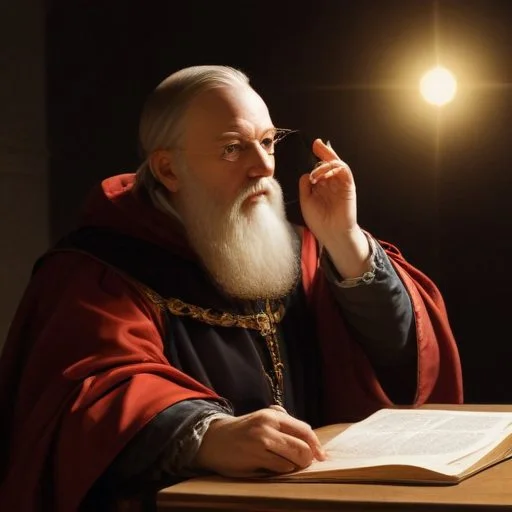
In the early 17th century, the geocentric model, which placed Earth at the center of the Universe, was widely accepted by the Catholic Church and the scientific community. However, with the advent of the telescope, Galileo's observations challenged this long-held belief, sparking a heated debate that would shake the foundations of the Church and shake the scientific establishment.
1610: Galileo Galilei observes four moons orbiting Jupiter, providing strong evidence for the Copernican heliocentric model.
1616: Galileo is admonished by Cardinal Bellarmine to abandon his support for the Copernican theory.
1632: Galileo publishes his seminal work, Dialogue Concerning the Two Chief World Systems, which presents a comprehensive argument for the heliocentric model.
1633: Galileo is summoned to Rome, where he is put on trial by the Holy Office and forced to recant his views.
The recantation of Galileo's views had far-reaching consequences, stifling scientific progress and perpetuating a climate of fear and censorship. The event sparked a century-long struggle between the Church and science, with Galileo's martyrdom inspiring future generations of scientists to challenge dogma and seek truth.
Galileo's recantation may have silenced his voice, but it amplified the message of the scientific revolution. The controversy surrounding his trial galvanized the scientific community, paving the way for pioneers like Isaac Newton and Albert Einstein to challenge the status quo and push the boundaries of human knowledge.
"In my study, I am not afraid to question the authority of the great Aristotle, nor do I think I am obliged to believe that the other philosophers are all infallible, for I know that they are but men, and that they can err."
— Galileo Galilei, from Dialogue Concerning the Two Chief World Systems
Galileo's story serves as a testament to the power of human curiosity and the importance of standing up for what one believes in, even in the face of overwhelming adversity. His courage in the face of persecution has inspired generations of scientists, thinkers, and rebels to challenge the norms and push the boundaries of human understanding.
As we gaze up at the stars, we are reminded of the infinite mysteries waiting to be unraveled. Galileo's struggle serves as a poignant reminder of the importance of free inquiry and the pursuit of knowledge, without which our understanding of the Universe would still be shrouded in darkness.
Cardinal Robert Bellarmine, a prominent Jesuit theologian, played a crucial role in the condemnation of Galileo's views. A prolific writer and philosopher, Bellarmine was known for his expertise in biblical interpretation and his commitment to the authority of the Church. Despite his admiration for Galileo's intellectual prowess, Bellarmine saw the astronomer's theories as a threat to the Church's teachings and took steps to ensure their suppression.
Bellarmine's role in the Galileo affair highlights the complexities of the Jesuit order, which was both a bastion of intellectual curiosity and a defender of orthodoxy. As a key advisor to the Pope, Bellarmine's influence was instrumental in shaping the Church's response to the new scientific discoveries.
In 1633, Galileo Galilei embarked on a perilous journey to Rome, summoned by the Holy Office to answer for his perceived heresy. The 280-mile journey took him through the picturesque Tuscan countryside, but the astronomer's mind was consumed by the looming trial and its uncertain outcome.
During his journey, Galileo stopped in Florence, where he was met with a mixture of support and trepidation from his friends and allies. The city, once a hub of scientific inquiry, was now gripped by fear and uncertainty, as the Church's grip on intellectual freedom tightened.
Galileo's arrival in Rome marked the beginning of a grueling trial, during which he would face intense questioning and pressure to renounce his theories.
The Galileo affair sent shockwaves through the cultural landscape of 17th-century Europe, inspiring a range of artistic and literary responses. From the satirical plays of Giambattista Marino to the philosophical treatises of René Descartes, the controversy surrounding Galileo's recantation sparked a period of intense creative ferment.
In the years following the trial, artists and writers began to explore the themes of censorship, intellectual freedom, and the role of the Church in regulating knowledge. This cultural ferment laid the groundwork for the Enlightenment, as thinkers and artists began to challenge the authority of the Church and assert the power of human reason.
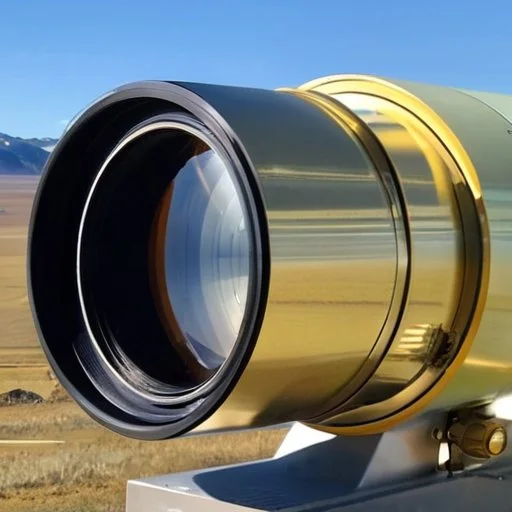
Galileo Galilei's contributions to the development of the telescope revolutionized the field of astronomy, enabling scientists to study the heavens with unprecedented precision. The astronomer's innovative designs, including the use of convex lenses and the creation of the first practical refracting telescope, opened up new vistas of observation and exploration.
The impact of Galileo's telescopes was felt far beyond the scientific community, as they inspired a new generation of inventors and explorers. From the observation of celestial bodies to the study of the human body, the telescope's influence can be seen in a wide range of scientific and technological advancements.
Galileo's heliocentric theory challenged the Aristotelian view of the Universe, which had dominated Western philosophy for centuries. The astronomer's observations, grounded in empirical evidence, threatened the authority of Aristotle's concept of a geocentric Universe, sparking a fundamental rethinking of the cosmos and humanity's place within it.
The Galileo affair marked a turning point in the history of philosophy, as thinkers began to question the authority of ancient texts and assert the power of human reason. The conflict between Aristotelian philosophy and the new scientific discoveries of the 17th century laid the groundwork for the development of modern scientific thought.