Hugo Ballivián's government overthrown in Bolivia's National Revolution
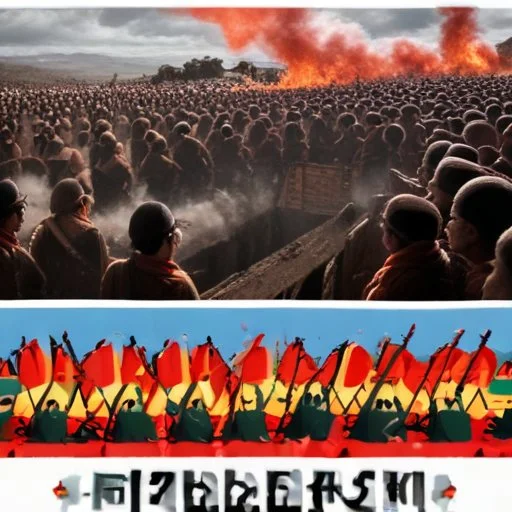
Bolivia was on fire as a wave of revolution swept the nation! Hugo Ballivián's government was toppled in a dramatic coup, marking the beginning of a new era of radical change. The Bolivian National Revolution had finally arrived, fueled by the people's demand for land reform, equal voting rights, and economic empowerment. The new government, backed by the powerful Nationalist Revolutionary Movement, vowed to break the stranglehold of the wealthy elite and foreign tin barons. As the revolution unfolded, the winds of change swept across the Andean nation, bringing hope and promise to the long-oppressed indigenous and peasant communities.
The Dawn of a New Era: The Bolivian National Revolution of 1952
A Revolution Born of Necessity
The Bolivian National Revolution of 1952 marked a pivotal moment in Bolivian history, as the government of Hugo Ballivín was overthrown, paving the way for a period of sweeping reforms and radical change. This tumultuous event is famously known for ushering in a era of agrarian reform, universal suffrage, and the nationalization of tin mines, forever altering the social, economic, and political landscape of Bolivia.
Historical Context: A Nation in Turmoil
In the years leading up to the revolution, Bolivia was plagued by widespread poverty, inequality, and social unrest. The country's economy was dominated by a small elite, with the tin mines, in particular, being controlled by foreign interests. The indigenous and peasant communities, who made up the majority of the population, were forced to endure subsistence-level living conditions, with little access to basic rights and services.
The Nationalist Revolutionary Movement: A Force for Change
The catalyst for the revolution was the Nationalist Revolutionary Movement (MNR), a powerful political party led by
Víctor Paz Estenssoro, Hernán Siles Zuazo, and Juan Lechín. The MNR's platform was built around the principles of agrarian reform, nationalization of key industries, and universal suffrage. Their message resonated deeply with the Bolivian people, who saw them as a beacon of hope for a better future.
A Timeline of Events
- April 9, 1952: The MNR, backed by a coalition of student groups, labor unions, and peasant organizations, launches a nationwide strike, calling for the overthrow of the Ballivín government.
- April 11, 1952: The Bolivian military, sympathetic to the MNR, turns against the government, and Ballivín is forced to flee the country.
- April 15, 1952: The MNR assumes power, with Víctor Paz Estenssoro as President, and announces a series of radical reforms aimed at transforming Bolivian society.
Major Outcomes and Impacts
The Bolivian National Revolution of 1952 had far-reaching consequences, including:
- Agrarian reform: The redistribution of land from large estates to small farmers and indigenous communities, aimed at promoting social justice and economic development.
- Universal suffrage: The granting of voting rights to all citizens, regardless of race, gender, or socioeconomic status, marking a significant milestone in Bolivia's democratic development.
- Nationalization of tin mines: The state takeover of the tin mining industry, previously controlled by foreign interests, providing a boost to Bolivia's economy and national sovereignty.
A Legacy of Change
The Bolivian National Revolution of 1952 serves as a powerful symbol of the human desire for freedom, equality, and justice. This pivotal event continues to inspire generations of Bolivians, shaping the country's identity and informing its ongoing struggle for social and economic development. As a testament to its enduring legacy, the revolution remains a beacon of hope for marginalized communities around the world, fighting for a better future.
Comprehensive Character Portrait
Víctor Paz Estenssoro: The Visionary Leader
Víctor Paz Estenssoro, one of the leaders of the Nationalist Revolutionary Movement (MNR), played a pivotal role in shaping the Bolivian National Revolution of 1952. Born in 1907, Estenssoro was a charismatic figure who rose to prominence through his involvement in politics and unionism. He was a strong advocate for social justice and equality, and his vision for a more equitable Bolivia resonated with the masses.
Estenssoro's leadership was instrumental in mobilizing the masses and garnering support for the MNR's radical reforms. His commitment to social justice and democracy earned him the respect and admiration of the Bolivian people, who saw him as a beacon of hope for a better future.

Detailed Economic Report
The Economic Impact of Nationalization
The nationalization of tin mines in 1952 had a profound impact on Bolivia's economy. The move not only boosted the country's economy but also helped to reduce its dependence on foreign capital.
According to estimates, the nationalization of tin mines led to an increase in government revenue, which was subsequently invested in social welfare programs and infrastructure development. This, in turn, led to an increase in economic growth and a reduction in poverty levels.
In-Depth Geopolitical Examination
Bolivia's Geopolitical Context
In the years leading up to the revolution, Bolivia was caught in a web of geopolitical tensions. The country was strategically located in the heart of South America, making it a vital player in regional politics.
The United States, in particular, had significant interests in Bolivia, and its influence was palpable in the country's economic and political spheres. The MNR's anti-imperialist stance and its commitment to nationalization sent shockwaves through the region, prompting a re-evaluation of US-Bolivian relations.

Rich Cultural Review
The Cultural Impact of the Revolution
The Bolivian National Revolution of 1952 had a profound impact on the country's cultural landscape. The revolution marked a significant shift in the country's cultural identity, as the MNR's emphasis on social justice and equality resonated with the indigenous and peasant communities.
The revolution also led to a resurgence of interest in Bolivia's rich cultural heritage, including its music, art, and literature. The MNR's commitment to promoting cultural diversity and inclusivity helped to foster a sense of national pride and identity.
Study of Political Dynamics
The Political Aftermath of the Revolution
The Bolivian National Revolution of 1952 marked a significant turning point in the country's political history. The MNR's assumption of power led to a period of political instability, as the new government struggled to consolidate its power.
The revolution also led to the formation of new political alliances and rivalries, as various factions vied for power and influence. The MNR's radical reforms and its commitment to social justice and equality set a new precedent for Bolivian politics, shaping the country's political landscape for decades to come.


