


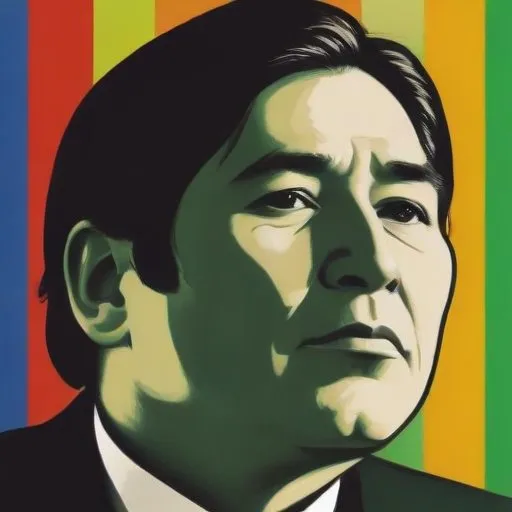
Led Bolivia through a period of rapid modernization and economic growth, implementing land reforms and nationalizing key industries. He's remembered for his progressive policies and commitment to social justice.
Víctor Paz Estenssoro, a towering figure in Bolivian politics, is best known for his unprecedented four terms as president of Bolivia, spread across three decades, and his instrumental role in shaping the country's modern history. As the co-founder of the Revolutionary Nationalist Movement (MNR), Paz Estenssoro spearheaded significant reforms, transforming Bolivia's social, economic, and political landscape.
Born on October 2, 1907, in Tarija, Bolivia, Paz Estenssoro pursued law and economics at the University of Chile, eventually earning a doctorate in law. His entry into politics began in 1941, when he co-founded the MNR alongside Hernán Siles and others. This revolutionary movement aimed to reform and modernize Bolivia, which was then plagued by political instability and economic stagnation.
Paz Estenssoro's first presidential bid in 1947 ended in a third-place finish, but he rebounded in 1951, winning the election only to have the results annulled by the conservative government. Undeterred, Paz Estenssoro led the MNR in a popular uprising, which culminated in the 1952 Revolution, and he subsequently became president.
During his first term (1952-1956), Paz Estenssoro introduced landmark reforms, including:
These reforms earned Paz Estenssoro widespread popularity, and he went on to win two more presidential terms, in 1960 and 1985, respectively.
Paz Estenssoro's legacy is complex and multifaceted. While his reforms brought about significant social and economic progress, his later terms were marked by economic turmoil and controversies. Nevertheless, he is remembered as a champion of democracy and a key figure in Bolivia's transition to modernity.
His influence extends beyond Bolivia, with his brand of reformist politics inspiring similar movements across Latin America. Paz Estenssoro's commitment to social justice and his unwavering dedication to Bolivia's development have cemented his place as one of the country's most important leaders.
In addition to his remarkable political career, Paz Estenssoro was a prolific writer, publishing several books on politics, economics, and history. He was also an accomplished diplomat, serving as Bolivia's ambassador to the United Kingdom and the United States.
Throughout his life, Paz Estenssoro was driven by a deep sense of patriotism and a desire to transform Bolivia into a more just and equitable society. His remarkable journey, marked by triumphs and setbacks, has left an indelible mark on Bolivian history.
One of Paz Estenssoro's most famous quotes is: "La revolución no es una etapa, sino un proceso" ("The revolution is not a stage, but a process"). This phrase encapsulates his commitment to ongoing reform and transformation, which remained a hallmark of his political philosophy throughout his life.
Paz Estenssoro's presidency coincided with a tumultuous period in Latin American history, marked by military dictatorships, economic instability, and social unrest. In this context, his reforms and commitment to democracy stood out as a beacon of hope for the region.
In comparison to his contemporaries, such as Juan Perón in Argentina or Getúlio Vargas in Brazil, Paz Estenssoro's brand of reformist politics was more radical and far-reaching, ultimately leading to a more profound transformation of Bolivian society.
Víctor Paz Estenssoro passed away on June 7, 2001, at the age of 93, leaving behind a complex and multifaceted legacy. While his later years were marked by controversy and declining health, his contributions to Bolivia's development and his unwavering commitment to democracy continue to inspire generations of Bolivians and Latin Americans.
In conclusion, Víctor Paz Estenssoro's life and legacy serve as a testament to the power of visionary leadership, revolutionary politics, and unwavering dedication to social justice. His impact on Bolivia and Latin America remains profound, ensuring his place as one of the most influential figures in modern Bolivian history.
66 Years Old
The first indigenous president of Bolivia, who served from 2006 to 2019 and implemented policies to reduce poverty and increase economic growth, while also being a strong advocate for indigenous rights.
Born in 1907
Led Bolivia through a period of rapid modernization and economic growth, implementing land reforms and nationalizing key industries. He's remembered for his progressive policies and commitment to social justice.
Born in 1919
Led a military coup and later became president, implementing reforms and modernizing the country. He's known for his efforts to industrialize and develop Bolivia's economy.
