


Ilich Ramrez Snchez, infamously known as Carlos the Jackal, was captured on August 14, 1994, marking the end of a reign of terror that spanned decades and left a trail of destruction across the globe. This mastermind behind the 1975 OPEC headquarters siege, among numerous other atrocities, was finally brought to justice after evading capture for years.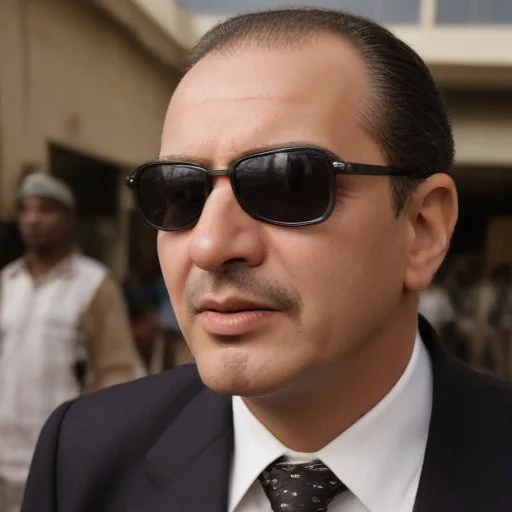
Ilich Ramrez Snchez was born in 1949 in Venezuela to a family of activists. He was drawn to the Marxist-Leninist ideology from an early age and joined the Venezuelan communist party. His radicalization led him to abandon his law studies and join the Palestinian Liberation Organization (PLO), where he adopted the nom de guerre "Carlos."
Carlos's acts of terror knew no borders. He orchestrated bombings, assassinations, and hijackings across the globe, from Europe to the Middle East, leaving countless innocent civilians in his wake. His notoriety earned him the title "the world's most notorious terrorist."
One of Carlos's most infamous acts was the 1975 siege of the OPEC headquarters in Vienna, Austria. On December 21, 1975, Carlos and his team stormed the building, taking 60 oil ministers and staff members hostage. The ensuing standoff lasted for two days, resulting in the deaths of three people and the escape of Carlos and his accomplices.
On August 14, 1994, a joint operation between Sudanese and French operatives ambushed Carlos at his hideout in Khartoum, Sudan. He was taken into custody without resistance, marking the end of his reign of terror.
Carlos was extradited to France, where he stood trial for his crimes. In 1997, he was convicted of the 1975 OPEC siege and sentenced to life imprisonment. Carlos remains incarcerated to this day, his revolutionary ideals and violent methods relegated to the dustbin of history.
Carlos's capture and conviction sparked debate about the nature of terrorism, revolution, and justice. While some saw him as a hero fighting against imperialism, others viewed him as a cold-blooded killer. His legacy serves as a reminder that the line between revolutionary and terrorist is often blurred, and that the consequences of violent actions can be devastating.
The 1970s and 1980s were marked by a surge in international terrorism, with various groups and individuals like Carlos emerging on the scene. This period saw a shift in the geopolitical landscape, with the Cold War raging on and the rise of proxy wars and nationalist movements in the Middle East and Latin America.
In this context, Carlos's acts of terror were often fueled by his Marxist-Leninist ideology and his support for Palestinian and Arab nationalist causes. His actions were also influenced by his connections with Eastern European intelligence agencies and his ability to move freely across borders.
The capture of Carlos in 1994 marked a significant turning point in the global war on terror, as it signaled a shift towards increased international cooperation and a more aggressive approach to combating terrorism.
Early Influences
Ilich Ramrez Snchez's radicalization was influenced by his family's activist background and his early exposure to Marxist-Leninist ideology. His father, José Altagracia Ramírez Navas, was a prominent lawyer and communist who instilled in Carlos a strong sense of social justice and anti-imperialism.
Carlos's early years in Venezuela were marked by a sense of restlessness and rebellion, as he became increasingly involved in left-wing politics and activism. This set the stage for his later involvement with the Palestinian Liberation Organization and his adoption of the nom de guerre "Carlos."
A Comparison of Notorious Terrorists
Carlos the Jackal's reputation as the "world's most notorious terrorist" is often compared to that of other infamous figures like Osama bin Laden and Abu Nidal. While all three were responsible for catastrophic acts of violence, they differed in their ideology and methods.
Carlos's Marxist-Leninist ideology and his support for Palestinian and Arab nationalist causes set him apart from bin Laden's Islamist extremism. Abu Nidal, on the other hand, was known for his brutal tactics and lack of ideological coherence, earning him the nickname "the merciless."
The Carlos Archives
In the aftermath of Carlos's capture, French authorities seized a vast trove of documents and artifacts from his hideout in Khartoum. These archives, known as the "Carlos Archives," provided a wealth of information on his terrorist network, including contacts, plans, and operational details.
The archives also revealed the extent of Carlos's connections with Eastern European intelligence agencies and his use of coded messages and cryptic communication methods to evade detection.
Reinterpreting the Legacy of Carlos the Jackal
Historians and scholars have debated the significance and relevance of Carlos's actions in the context of modern terrorism. Some view him as a relic of the Cold War era, while others see him as a precursor to the modern jihadist movement.
Recent historiographical perspectives have attempted to reframe Carlos's narrative, arguing that his actions were motivated by a complex mix of ideological, political, and personal factors. This more nuanced understanding of Carlos's legacy highlights the need for a more comprehensive approach to understanding the roots of terrorism.