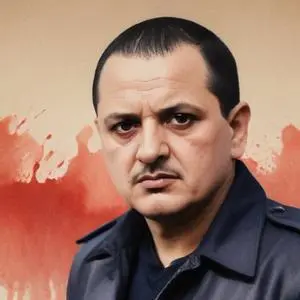
Carlos the Jackal: The Notorious Marxist-Leninist Terrorist
A Life of Violence and Political Ideology
Carlos the Jackal, born Ilich Ramírez Sánchez, is one of the most infamous terrorists of the 20th century, responsible for a string of assassinations, bombings, and hostage takings that left countless lives lost and destroyed. From 1973 to 1985, Ramírez Sánchez waged a campaign of terror against the Western world, motivated by his unwavering commitment to Marxism-Leninism.
Early Life and Radicalization
Born on October 12, 1949, in Michelena, Venezuela, Ramírez Sánchez was the son of a Marxist lawyer, Jos Altagracia Ramírez Navas, and Elba María Sánchez. His father, a staunch admirer of
Vladimir Lenin, named his son Ilyich after the Soviet leader. This ideological influence would shape Ramírez Sánchez's worldview and inform his future actions.
Rise to Infamy
Ramírez Sánchez's terrorist career began in 1973, with a series of bombings and assassinations targeting Western targets. However, it was his 1975 raid on the Organization of the Petroleum Exporting Countries (OPEC) headquarters in Vienna that catapulted him to international notoriety. The attack, which left three people dead, was orchestrated in collaboration with the Stasi and the KGB.
The OPEC Raid and Its Aftermath
During the OPEC raid, Ramírez Sánchez and his accomplices demanded a plane and flew with several hostages to Libya. This brazen act of terrorism marked the beginning of his reputation as a ruthless and cunning operative. The subsequent imprisonment of his wife, Magdalena Kopp, would spark a series of retaliatory bombings, claiming 11 lives and injuring over 100 people.
Capture and Conviction
Ramírez Sánchez's reign of terror eventually came to an end in 1994, when he was captured by French agents in Sudan. He was subsequently extradited to France, where he was put on trial and convicted of multiple crimes, including murder and terrorism. He was sentenced to three life terms, the first in 1994, the second in 2011, and the third in 2017.
Philosophical Contributions and Beliefs
Throughout his life, Ramírez Sánchez remained unwavering in his commitment to Marxism-Leninism. He believed that violence was a necessary means to achieve revolutionary change and that the ends justified the means. His actions, however, were widely condemned by governments and human rights organizations around the world.
Legacy and Impact
Carlos the Jackal's actions had far-reaching consequences, influencing the global political landscape and shaping the modern concept of terrorism. His exploits have been the subject of numerous books, films, and documentaries, cementing his notoriety in popular culture. Despite his heinous crimes, Ramírez Sánchez remains a figure of fascination, a symbol of the darker aspects of human nature.
Personal Milestones and Key Life Events
- 1949: Born in Michelena, Venezuela, to Jos Altagracia Ramírez Navas and Elba María Sánchez
- 1973: Begins terrorist campaign against Western targets
- 1975: Leads OPEC raid, killing three people and sparking international outcry
- 1994: Captured by French agents in Sudan and extradited to France
- 1994, 2011, and 2017: Convicted of multiple crimes and sentenced to three life terms
Quotes and Memorable Sayings
"I am the resistance, the revolution, and the people." - Carlos the Jackal
Historical Context and Legacy
Ramírez Sánchez's actions took place during a time of great political upheaval, with the Cold War and the rise of radical left-wing movements shaping the global landscape. His exploits served as a catalyst for increased security measures and counter-terrorism efforts, influencing the trajectory of modern politics. Despite his notorious reputation, Carlos the Jackal remains a complex and multifaceted figure, a product of his time and a symbol of the darker aspects of human nature.
FAQ
Who is Carlos the Jackal and what were his terrorist activities?
Carlos the Jackal, born Ilich Ramírez Sánchez, is a Venezuelan terrorist and former leader of the Popular Front for the Liberation of Palestine. He was responsible for numerous bombings, hijackings, and assassinations in the 1970s and 1980s.
What was Carlos the Jackals most notorious attack?
One of Carlos the Jackals most infamous attacks was the 1975 OPEC siege in Vienna, where he took 60 hostages and killed three. The attack made him an international fugitive.
How was Carlos the Jackal eventually caught?
After years of evading capture, Carlos the Jackal was finally arrested in 1994 in Sudan, following a joint operation by French and Sudanese authorities. He was subsequently extradited to France, where he was tried and convicted.
What is Carlos the Jackals current status?
Carlos the Jackal is currently serving a life sentence in a French prison, convicted of multiple murders and terrorist activities. Despite numerous appeals and attempts to escape, he remains incarcerated.
What impact did Carlos the Jackal have on global terrorism?
Carlos the Jackals actions helped shape the modern terrorist landscape, influencing groups like Al-Qaeda and ISIS. His capture marked a significant turning point in the fight against global terrorism.