


On December 24, 1999, Indian Airlines Flight 814 took off from Tribhuvan International Airport in Kathmandu, Nepal, bound for Indira Gandhi International Airport in New Delhi, India. Little did the 155 passengers and crew on board know, their holiday celebrations would soon turn into a nightmare, as the flight was hijacked by a group of terrorists, sparking a 7-day standoff that would captivate the world.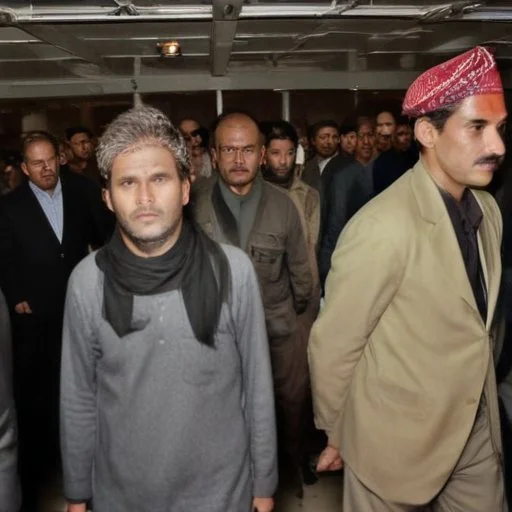
The hijackers, later linked to the Pakistani terrorist group Harkatul Mujahideen, made a series of demands, including the release of three high-profile terrorists, including Maulana Masood Azhar, Mushtaq Zagar, and Ahmed Omar Saeed Sheikh, who were being held in Indian prisons. They also demanded a ransom of $200 million and the refueling of the plane to enable it to fly to Afghanistan.
Over the next seven days, the hijackers navigated the plane to various locations, including Dubai and Afghanistan. The Indian government, led by Prime Minister Atal Bihari Vajpayee, was under immense pressure to resolve the crisis. After intense negotiations, the government reluctantly agreed to release the three terrorists, sparking widespread outrage and criticism.
On December 31, 1999, the ordeal finally came to an end as the 190 survivors were freed at Kandahar Airport in Afghanistan. The hijackers, who had threatened to kill the hostages if their demands were not met, released the passengers and crew in exchange for the three terrorists and the ransom.
The hijacking of Indian Airlines Flight 814 had significant implications for India's internal security and foreign policy. The incident led to a major overhaul of airport security in India, with the government implementing stricter security measures to prevent such incidents in the future.
The release of the three terrorists also sparked widespread outrage and criticism, with many questioning the government's decision to negotiate with terrorists. The incident also led to a deterioration in India-Pakistan relations, with India accusing Pakistan of supporting terrorist groups.
One of the passengers, Satnam Singh, recalled the hijackers' brutality, saying, "They beat us, they slapped us, and they threatened to kill us." Singh, who was on his way to visit his family for the holidays, was held captive for seven days, along with his wife and two children.
Another passenger, Rohan Sehgal, praised the bravery of the flight attendants, saying, "They were the real heroes. They kept us calm and comforted us throughout the ordeal."
The hijacking of Indian Airlines Flight 814 was a watershed moment in India's fight against terrorism. The incident led to a major shift in the country's approach to counter-terrorism, with the government implementing stricter laws and security measures to prevent such incidents in the future.
The incident also highlighted the need for international cooperation in the fight against terrorism, with India and other countries working together to share intelligence and coordinate efforts to combat terrorist groups.
The hijacking of Indian Airlines Flight 814 was not an isolated incident. In the months leading up to the hijacking, there were several other terrorist attacks and hijackings in the region. For example, in April 1999, a Kashmiri separatist group hijacked an Indian Airlines plane flying from Kathmandu to Delhi, releasing all passengers and crew unharmed after negotiations. This incident was seen as a precursor to the more brazen hijacking of Flight 814.
In addition, the hijacking of Flight 814 was part of a larger pattern of terrorist activity in the region. The Harkatul Mujahideen, the group responsible for the hijacking, was known to have ties to the Pakistani military and intelligence services. The hijacking was seen as an attempt to embarrass the Indian government and to draw attention to the Kashmir issue.

Ahmed Omar Saeed Sheikh, one of the terrorists released in exchange for the hostages, was a British-born Pakistani militant who was known for his involvement in several high-profile kidnappings and terrorist attacks. Born in 1973 in London, Sheikh was radicalized at a young age and joined the Harkatul Mujahideen in the 1990s. He was arrested in 1994 for kidnapping several Western tourists in India, but was released in 1999 as part of a deal to secure the release of 155 hostages from an Indian Airlines plane.
After his release, Sheikh went on to play a key role in the 9/11 attacks, serving as a financier and facilitator for the hijackers. He was eventually arrested in 2002 and sentenced to death for his role in the kidnapping and murder of Daniel Pearl, a Wall Street Journal reporter.
The hijacking of Indian Airlines Flight 814 shares some striking similarities with other major hijackings and terrorist attacks. For example, the 1988 hijacking of Pan Am Flight 73, in which 20 passengers were killed, was also carried out by a group of Pakistani terrorists. Similarly, the 1996 hijacking of Ethiopian Airlines Flight 961, which ended in a dramatic crash in the Indian Ocean, was also carried out by a group of terrorists demanding the release of political prisoners.
Comparison with other hijackings and terrorist attacks also highlights the unique challenges posed by the hijacking of Flight 814. The hijackers' demands for the release of high-profile terrorists, as well as their willingness to use violence and intimidation to achieve their goals, marked a new level of sophistication and brutality in terrorist tactics.
The hijacking of Indian Airlines Flight 814 took place against the backdrop of simmering tensions between India and Pakistan over the Kashmir dispute. The Indian government, led by Prime Minister Atal Bihari Vajpayee, was under intense pressure to take a strong stance against Pakistan, which was seen as supporting and harboring terrorist groups.
The hijacking also highlighted the complex and often fraught relationship between India and Afghanistan. The hijackers' decision to fly the plane to Kandahar, Afghanistan, where they were able to negotiate with Indian officials, underscored the country's status as a safe haven for terrorist groups.
The hijacking of Indian Airlines Flight 814 had significant economic implications for India and the global aviation industry. The incident led to a sharp decrease in air travel to and from India, with many airlines canceling or suspending flights to the country. The Indian government was forced to implement costly security measures at airports across the country, including the deployment of additional troops and the installation of advanced surveillance systems.
The hijacking also led to a re-evaluation of the economic costs of terrorism. The Indian government was criticized for agreeing to pay a ransom to the hijackers, which was seen as setting a dangerous precedent for future hijackings and terrorist attacks.