US Starts War in Afghanistan After 9/11 Attacks
Operation Enduring Freedom began with a bang – literally – as the US launched a decisive air campaign against Taliban forces in Afghanistan, marking the start of the longest war in American history. In the aftermath of the devastating 9/11 attacks, President George W. Bush vowed to bring those responsible to justice, and this marked the first major strike in the global War on Terror. With a combined force of US, British, and Afghan Northern Alliance troops, the initial assault aimed to dismantle Al-Qaeda's stronghold and topple the Taliban regime. Little did they know, this would be just the beginning of a decades-long conflict.
The Unrelenting Quest for Justice: The U.S. Invasion of Afghanistan
A Decisive Strike Against Terror
The U.S. invasion of Afghanistan, code-named Operation Enduring Freedom, is infamous for being the longest war in American history, spanning over two decades. This military campaign was sparked by the devastating 9/11 attacks, which claimed thousands of innocent lives and left a profound impact on global politics.
The Perfect Storm: Historical Background
The roots of the conflict can be traced back to the 1979 Soviet invasion of Afghanistan, which led to a prolonged insurgency and eventually, the rise of the Taliban regime. The Taliban's extremist ideology and their providing safe haven to terrorist organizations like Al-Qaeda created a volatile environment. The 9/11 attacks were the tipping point, prompting the United States to take drastic action.
Key Figures Involved
- President George W. Bush: The commander-in-chief who spearheaded the War on Terror
- General Tommy Franks: The chief architect of the initial air campaign
- Hamid Karzai: The first post-Taliban president of Afghanistan
- Osama bin Laden: The mastermind behind the 9/11 attacks and Al-Qaeda's founder
Timeline of Events
- September 11, 2001: 9/11 attacks on the World Trade Center
- October 7, 2001: Operation Enduring Freedom begins with an air campaign
- November 2001: The Northern Alliance, backed by the U.S., captures key cities
- December 2001: Hamid Karzai becomes the interim president of Afghanistan
- 2002-2014: Insurgency and counter-insurgency operations continue
- 2014: The official end of combat operations, marking a shift to advisory and training roles
Major Outcomes and Impacts
- The Taliban regime was toppled, and Al-Qaeda's stronghold was significantly weakened
- The establishment of a new government in Afghanistan, with a constitution and democratic elections
- The War on Terror expanded to include operations in Iraq and other regions
- The conflict has resulted in over 31,000 civilian casualties and 2,400 U.S. military fatalities
Cultural and Social Influences
The war in Afghanistan has had a profound impact on the cultural and social fabric of the region. The conflict has led to:
- A significant increase in women's rights and education opportunities
- The growth of a fledgling democracy, with improvements in governance and infrastructure
- The displacement of millions of people, leading to a massive refugee crisis
- A rise in anti-American sentiment and resentment towards foreign military presence
Controversies and Public Perception
The war in Afghanistan has been marred by controversies, including:
- Civilian casualties and human rights abuses
- The use of torture and controversial interrogation techniques
- The high cost of the war, estimated to be over $2 trillion
- The perceived lack of progress and unclear exit strategies
Personal Accounts and Anecdotes
Quote from a U.S. Marine: "I remember the first time we rolled into Kandahar. The roads were lined with people, mostly women and kids, staring at us with a mix of curiosity and suspicion. It was a moment that stuck with me, reminding me of the human cost of war."
Impact on Future Events
The War in Afghanistan has had far-reaching consequences, influencing:
- The rise of the Islamic State (ISIS) in Iraq and Syria
- The growth of extremist groups in the region, including the Taliban's resurgence
- The evolution of modern warfare, with a focus on counter-insurgency and asymmetrical threats
- The re-evaluation of U.S. foreign policy, with a greater emphasis on diplomacy and soft power
Inspirational Stories and Motivations
The war in Afghanistan has brought to the forefront countless stories of heroism, sacrifice, and resilience. From the brave men and women in uniform to the ordinary Afghans fighting for their freedom, these stories serve as a testament to the human spirit. As one U.S. Army captain noted, "We're not just fighting for our country; we're fighting for the values that make us human."
The U.S. invasion of Afghanistan marks a pivotal moment in modern history, a complex and multifaceted conflict that continues to shape the world we live in today.
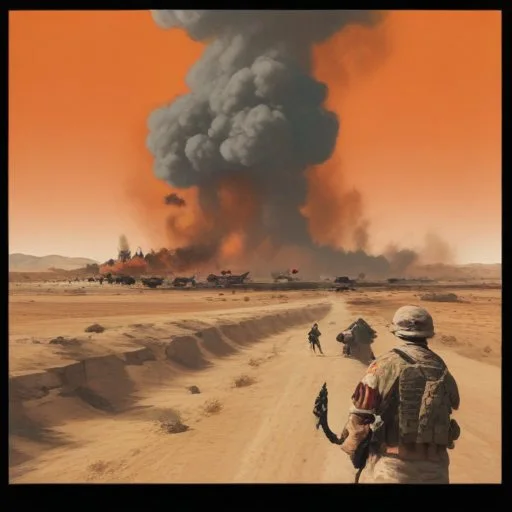
Full Character Review
Osama bin Laden: The Elusive Enemy
Osama bin Laden, the notorious mastermind behind the 9/11 attacks, was a man shrouded in mystery. Born in Saudi Arabia in 1957, bin Laden was raised in a wealthy family and was educated in Islamic schools. He became radicalized during the Soviet-Afghan War, where he saw the Soviet occupation as an attack on Islam.
Bin Laden's extremist ideology was shaped by his belief that Muslim lands were under attack by Western imperialism. He founded Al-Qaeda in the late 1980s, with the goal of driving Western influence out of Muslim countries. His hatred for the United States was fueled by the presence of American troops in Saudi Arabia during the Gulf War.
Throughout the war in Afghanistan, bin Laden remained elusive, evading capture and death for nearly a decade. His ability to evade detection was a testament to his cunning and resourcefulness, as well as the loyalty of his followers.

Historiographical Review
Reevaluating the War on Terror
The War on Terror, launched in response to the 9/11 attacks, has been the subject of intense historiographical debate. Some historians argue that the war was a justified response to the threat of terrorism, while others see it as a catastrophic mistake that has led to further destabilization in the region.
One school of thought argues that the war was a necessary evil, citing the need to protect American interests and prevent further attacks. Others contend that the war was a misguided attempt to impose Western values on a region that is fundamentally different.
Recent scholarship has also highlighted the role of the War on Terror in shaping modern conceptions of security and threat. The war has led to a reevaluation of the role of the military in foreign policy, as well as the tension between security and civil liberties.
Rich Cultural Review
Afghanistan's Cultural Renaissance
The war in Afghanistan has had a profound impact on the country's cultural landscape. Despite the devastation and destruction, the war has also brought about a cultural renaissance of sorts.
The return of Afghan refugees from Iran and Pakistan has led to a resurgence of interest in traditional Afghan music, art, and literature. The war has also led to an increase in women's education and empowerment, with many Afghan women taking on leadership roles in government and civil society.
The cultural impact of the war has also been felt beyond Afghanistan's borders. Afghan diaspora communities around the world have become increasingly vocal about their cultural heritage, leading to a renewed interest in Afghan culture and identity.
Geopolitical Analysis
The Geopolitical Context of the War
The war in Afghanistan took place against the backdrop of a complex and shifting geopolitical landscape. The collapse of the Soviet Union had left a power vacuum in Central Asia, which was quickly filled by emerging powers like China and India.
The war also highlighted the importance of the region's natural resources, particularly oil and natural gas. The presence of American troops in Afghanistan was seen by some as an attempt to secure access to these resources and to counter the growing influence of Iran.
The war has also had significant implications for regional security, with many countries in the region viewing the conflict as a litmus test for American resolve and commitment.
Detailed Economic Report
The Economic Cost of War
The war in Afghanistan has come at a staggering economic cost, with estimates suggesting that the conflict has cost the United States over $2 trillion since 2001.
The war has also had significant economic implications for Afghanistan, with the country's economy heavily reliant on foreign aid and remittances from abroad. The war has disrupted trade and commerce, leading to widespread poverty and unemployment.
In addition, the war has also had significant economic implications for the global economy, with many countries feeling the pinch of rising military expenditures and the impact of disrupted global supply chains.


