


Iraq's bold announcement on December 26, 1998, sent shockwaves across the international community. For the first time since the Gulf War, Saddam Hussein's regime threatened to fire upon U.S. and British warplanes patrolling the northern and southern no-fly zones, established to protect Kurdish and Shiite populations from Iraqi aggression.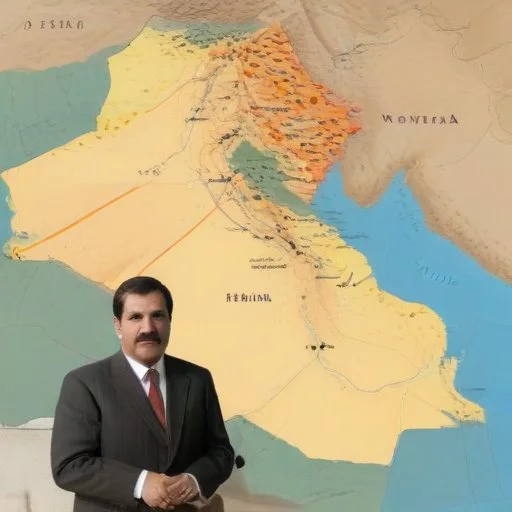
Iraq's decision was not an isolated incident, but rather a culmination of years of tension and resistance against the Western powers. The no-fly zones, imposed after the Gulf War, were seen as a humiliation to Iraq's sovereignty and a constant reminder of its defeat. Saddam Hussein's regime viewed the zones as a threat to its authority and a challenge to its dominance in the region.
Iraq's announcement sparked a crisis that brought the region to the brink of war. The U.S. and UK responded by increasing their military presence in the region, deploying additional aircraft and troops to the no-fly zones. The situation remained tense, with both sides engaging in a war of rhetoric, but no direct conflict ensued.
The incident highlighted the ongoing struggle for power and influence in the Middle East, with Iraq seeking to assert its independence and the West determined to maintain its dominance. The event also underscored the complexities of the no-fly zones, which had become a permanent fixture in the region's politics.
Iraq's defiance resonated deeply with the Arab world, where it was seen as a bold challenge to Western imperialism. The move was hailed as a symbol of resistance against foreign occupation, and Saddam Hussein was portrayed as a hero and a defender of Arab dignity.
In contrast, the West viewed Iraq's actions as a reckless provocation, and the incident reinforced perceptions of Saddam Hussein as a brutal and unpredictable leader. The event also highlighted the challenges of maintaining a delicate balance of power in the region, where the interests of rival nations and ideologies often clashed.
The incident sparked a heated debate about the legality and effectiveness of the no-fly zones. Critics argued that the zones were an unjustified infringement on Iraq's sovereignty, while proponents saw them as a necessary measure to protect vulnerable populations from Iraqi aggression.
The event also raised questions about the role of the international community in enforcing UN resolutions and protecting human rights. The controversy surrounding the no-fly zones and Iraq's defiance highlighted the complexities of international relations and the challenges of promoting peace and stability in the region.
Iraq's announcement on December 26, 1998, marked a turning point in the country's relations with the West. The incident underscored the deep-seated tensions and rivalries that would eventually culminate in the U.S.-led invasion of Iraq in 2003.
The event also left a lasting impact on the region, highlighting the need for a more nuanced understanding of the complexities of Middle Eastern politics and the importance of promoting dialogue and cooperation between nations.
Saddam Hussein, the President of Iraq, was a man of contradictions. On one hand, he was a ruthless dictator who ruled with an iron fist, crushing any opposition and dissent. On the other hand, he was a shrewd politician who managed to maintain a grip on power for over two decades.
Hussein's early life was marked by poverty and instability. Born in 1937 in Tikrit, Iraq, he was raised by his uncle after his father's death. He eventually joined the Iraqi Baath Party and quickly rose through the ranks, becoming a key figure in the 1968 coup that brought the party to power.
Hussein's rule was marked by a series of brutal crackdowns on opposition groups, including the Kurdish population in northern Iraq. He also launched a disastrous war against Iran in 1980, which ended in stalemate and economic devastation for Iraq. Despite these setbacks, Hussein remained a dominant figure in Iraqi politics, using a combination of propaganda, coercion, and manipulation to maintain his grip on power.

The no-fly zones imposed on Iraq after the Gulf War were part of a broader strategy to contain Saddam Hussein's regime and protect vulnerable populations. However, they also had significant geopolitical implications.
The zones were seen as a symbol of Western dominance in the region, and Iraq's defiance was viewed as a challenge to this authority. The incident highlighted the complexities of the Middle East, where rival powers jostled for influence and ideological rivalries played out.
The no-fly zones also underscored the tensions between the United States and its allies, who were increasingly wary of Saddam Hussein's regime but disagreed on how to address the threat. The incident demonstrated the difficulties of maintaining a coalition in the face of conflicting interests and priorities.
Iraq's decision to challenge the no-fly zones resonated deeply with the Arab world. The move was seen as a bold challenge to Western imperialism and a symbol of resistance against foreign occupation.
Saddam Hussein was hailed as a hero and defender of Arab dignity, and his defiance was celebrated in the streets of Arab capitals. The incident tapped into deep-seated feelings of resentment and humiliation among Arabs, who felt that the West had long exploited and dominated the region.
The Arab world's response to Iraq's defiance also highlighted the complexities of pan-Arabism, as different countries and ideologies responded in different ways. While some saw the move as a necessary challenge to Western dominance, others were more cautious, fearing the consequences of provoking the West.

The diplomatic fallout of Iraq's defiance was significant, with both the United States and the United Kingdom responding with a show of force.
The incident highlighted the difficulties of maintaining a fragile peace in the region, as the United States struggled to balance its commitment to containing Saddam Hussein's regime with its desire to avoid another costly war.
The crisis also underscored the challenges of maintaining a coalition in the face of conflicting interests and priorities. The incident demonstrated the difficulties of coordinating a response to a crisis, especially when different countries and ideologies had different stakes and priorities.
The no-fly zones imposed on Iraq after the Gulf War were a novel innovation in international relations. They represented a new approach to conflict resolution, one that emphasized containment and deterrence over direct military intervention.
Historians have debated the effectiveness of the no-fly zones, with some arguing that they were a necessary measure to protect vulnerable populations, while others saw them as an unjustified infringement on Iraq's sovereignty.
The incident also highlighted the complexities of humanitarian intervention, as the international community struggled to balance its commitment to protecting human rights with its respect for national sovereignty.