


The Iraq disarmament crisis, ignited by the sudden announcement of the Iraqi government to cease cooperation with United Nations weapons inspectors, marked a pivotal moment in the tumultuous history of Middle Eastern geopolitics. This decision, made by President Saddam Hussein's regime in 1998, sent shockwaves throughout the international community, precipitating a cascade of diplomatic and military repercussions that would resonate for years to come.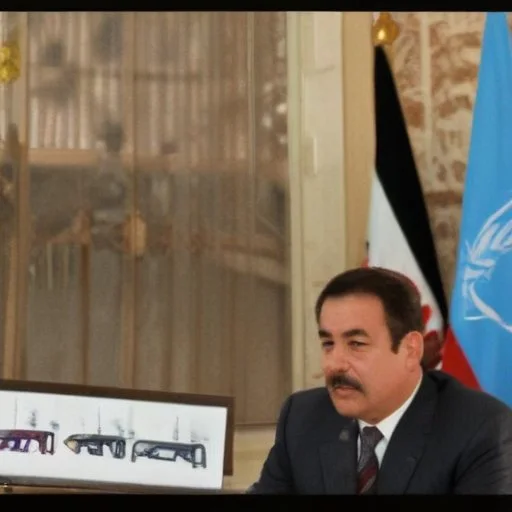
The roots of the Iraq disarmament crisis can be traced back to the 1991 Gulf War, in which a US-led coalition liberated Kuwait from Iraqi occupation. In the wake of this conflict, the United Nations Security Council, via Resolution 687, mandated Iraq to dismantle its weapons of mass destruction (WMD) and undertake a comprehensive disarmament program. This marked the beginning of a protracted and contentious process, as Iraq's compliance with the WMD disarmament regime would become a persistent source of contention.
At the forefront of the disarmament process was Richard Butler, the Australian diplomat who led the United Nations Special Commission (UNSCOM) from 1997 to 1999. Tasked with verifying Iraq's disarmament, Butler's team faced an uphill battle as they confronted Iraqi obstructionism, delay, and deception. The increasingly acrimonious relationship between UNSCOM and the Iraqi government set the stage for the cataclysmic announcement that would soon follow.
On August 5, 1998, Iraq's Foreign Minister, Muhammad Saeed al-Sahhaf, declared that Iraq would no longer permit UNSCOM inspections, citing the "intrusive and humiliation-oriented behavior" of the inspectors as justification. This abrupt suspension of cooperation plunged the international community into a state of alarm, as the specter of Iraq's WMD capabilities loomed large.
The Iraq disarmament crisis precipitated a series of far-reaching consequences, including:
The Iraq disarmament crisis offers valuable insights into the intricate web of international relations, highlighting the delicate balance between national sovereignty and global security concerns. It serves as a poignant reminder of the importance of effective diplomacy, the perils of unchecked proliferation, and the imperative of responsible leadership in the face of crisis.
In conclusion, the Iraq disarmament crisis stands as a testament to the complexities and challenges of international diplomacy, illuminating the intricate dance between nations and the high stakes of global politics. As the world continues to grapple with the reverberations of this crisis, it is essential to reflect on the lessons learned and to strive for a more informed, cooperative, and peaceful international order.
In the months leading up to the crisis, a complex web of diplomatic efforts unfolded, involving key international players. The United States, Britain, and France, among others, engaged in a flurry of high-stakes negotiations, seeking to persuade Iraq to comply with UN resolutions.
Richard Butler, the head of UNSCOM, played a crucial role in these efforts, oftentimes finding himself at the forefront of tense diplomatic confrontations. His team's meticulous documentation of Iraq's WMD program and Saddam Hussein's regime's obfuscation tactics would eventually prove instrumental in building the case against Iraq.
Meanwhile, Russia, China, and France, three permanent members of the UN Security Council, adopted a more conciliatory approach, advocating for a more gradual and cooperative disarmament process. This divergence in strategies would ultimately contribute to the international community's fractured response to the crisis.

Raised in a family of modest means, Richard Butler's early life in rural Australia belied his future diplomatic prowess. He would go on to earn a Ph.D. in international relations from the University of Oxford, eventually becoming one of Australia's most esteemed diplomats.
Butler's tenure as head of UNSCOM (1997-1999) proved a defining chapter in his career. Confronting Saddam Hussein's regime, he demonstrated unwavering resolve and unshakeable commitment to the disarmament process.
His Australian background, marked by a strong sense of fairness and a willingness to challenge authority, served him well in navigating the treacherous waters of international diplomacy. As the crisis intensified, Butler's unflinching stance would earn him both admiration and criticism, cementing his place as a key protagonist in the Iraq disarmament saga.
The Iraq disarmament crisis unfolded against the backdrop of a global arms control landscape in flux. The post-Cold War era had brought about a renewed focus on non-proliferation and disarmament, with the Nuclear Non-Proliferation Treaty (NPT) serving as a cornerstone of international efforts.
In this context, Iraq's WMD program posed a significant challenge to the international community. The crisis served as a stark reminder of the ongoing threat posed by weapons of mass destruction, prompting a reevaluation of global arms control strategies.
A comparative analysis of Iraq with other proliferation hotspots, such as North Korea and Iran, highlights the complexity of the issue. While each case presents unique challenges, they all underscore the need for sustained international cooperation and effective verification mechanisms to prevent the spread of WMD.

The crisis served as a manifestation of the seismic shifts underway in global politics. The post-Cold War era had brought about a significant redistribution of power, with the United States emerging as the sole superpower.
In this context, Iraq's decision to defy the international community can be seen as a challenge to American hegemony. The crisis provided an opportunity for the United States to assert its leadership and demonstrate its commitment to non-proliferation.
Beyond the immediate crisis, the event highlighted the need for a more inclusive and adaptive international order, one capable of responding to the rapidly evolving security landscape. The Iraq disarmament crisis thus served as a harbinger of the complex, multipolar world we inhabit today.
Nestled in the heart of the Middle East, Iraq's strategic location made it a crucial player in regional geopolitics. The country's borders with Iran, Kuwait, and Saudi Arabia, among others, rendered it a nexus of competing interests and rivalries.
The Iraq disarmament crisis cannot be dissociated from the broader regional dynamics. The Gulf War, which preceded the crisis, had reshaped the regional security landscape, introducing a new era of American military presence and engagement.
In this environment, Iraq's WMD program was perceived as a threat not only to regional stability but also to the global balance of power. As the crisis unfolded, the complex interplay of alliances, rivalries, and regional ambitions came to the fore, underscoring the intricate web of relationships that define Middle Eastern geopolitics.