


In a historic report to the United Nations Security Council, UNMOVIC Executive Chairman Hans Blix revealed that disarmament inspectors had found no evidence of weapons of mass destruction in Baathist Iraq, contradicting the claims of the United States and the United Kingdom. This bombshell report, delivered on March 7, 2003, sent shockwaves around the world and raised questions about the justification for the Iraq War.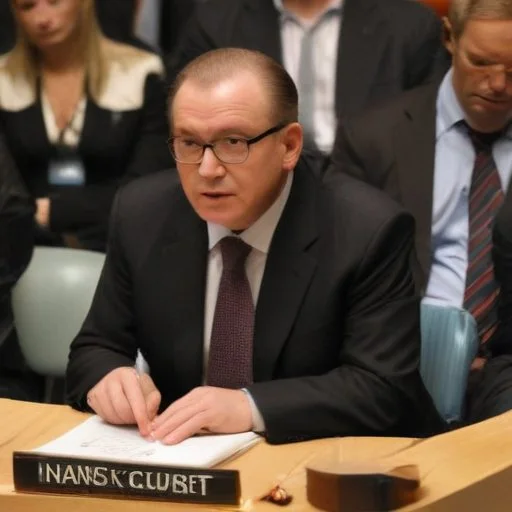
The Iraq disarmament crisis was a result of the Gulf War, which ended in 1991. The United Nations Security Council imposed severe sanctions on Iraq, demanding that the country dismantle its weapons of mass destruction (WMDs) and allow UN inspectors to verify the process. However, Iraq's lack of cooperation and false reports of WMDs led to the invasion of Iraq in 2003.
September 2002: The United States and the United Kingdom begin to build a case for invading Iraq, citing the presence of WMDs.
November 2002: The UN Security Council passes Resolution 1441, threatening "serious consequences" if Iraq fails to comply with disarmament demands.
January 2003: UNMOVIC inspectors begin searching for WMDs in Iraq.
March 7, 2003: Hans Blix reports to the UN Security Council that no WMDs have been found.
March 20, 2003: The United States and the United Kingdom launch a military invasion of Iraq.
The Iraq War led to the overthrow and capture of Saddam Hussein, but it also resulted in widespread instability, insurgency, and civilian casualties. The failure to find WMDs led to a significant loss of credibility for the Bush and Blair administrations, and the war remains a controversial topic to this day.
The Iraq War and the subsequent occupation were widely criticized for their lack of transparency, misinformation, and human rights abuses. The failure to find WMDs led to accusations of lies and deception, damaging the reputation of the United States and the United Kingdom.
"We have not found any weapons of mass destruction, and I think it's very unlikely that we will find any." - Hans Blix, March 7, 2003
"Intelligence gathered by this and other governments leaves no doubt that the Iraq regime continues to possess and conceal some of the most lethal weapons ever devised." - George W. Bush, January 28, 2003
Hans Blix has spoken publicly about the intense pressure he faced from the United States and the United Kingdom to find WMDs, despite the lack of evidence. He has described the experience as a "nightmare" and has criticized the invasion of Iraq as a "tragic mistake."
The Iraq War and its aftermath have had a profound impact on global politics, leading to a re-examination of the role of the United Nations, the use of military force, and the importance of diplomacy and cooperation.
The Iraq disarmament crisis and the subsequent war serve as a cautionary tale about the dangers of misinformation, misleading intelligence, and the misuse of power. It is a reminder of the importance of transparency, accountability, and respect for international law.
The Iraq disarmament crisis and subsequent war can be compared to the Cuban Missile Crisis of 1962. Both events involved a standoff between major world powers, with the threat of weapons of mass destruction hanging in the balance. In both cases, the consequences of military action were dire, with the potential for devastating global consequences. However, while the Cuban Missile Crisis was ultimately resolved through diplomacy, the Iraq War was not. This contrast highlights the importance of international cooperation and diplomacy in resolving conflicts.
Another comparison can be made with the Vietnam War, where the US government's claims of a communist threat were later proven to be exaggerated. Similarly, the Bush administration's claims of WMDs in Iraq were later found to be false. Both cases demonstrate the dangers of misinformation and the importance of verifying intelligence before taking military action.
These comparisons serve as a reminder of the importance of learning from history and the need for critical thinking in international relations.

Hans Blix's leadership during the Iraq disarmament crisis was marked by his commitment to transparency and accountability. As the head of UNMOVIC, he faced intense pressure from the US and UK to find WMDs, but he remained steadfast in his pursuit of the truth. His report to the UN Security Council on March 7, 2003, was a testament to his independence and integrity.
Blix's experience during the crisis is a testament to the importance of international civil servants who are willing to stand up for what they believe in, even in the face of immense pressure. His legacy serves as an inspiration to those who believe in the power of diplomacy and international cooperation.
The Iraq disarmament crisis was set against the backdrop of a rapidly changing global landscape. The end of the Cold War had left the United States as the sole superpower, and the 9/11 attacks had created a sense of urgency and fear. Against this backdrop, the Bush administration's claims of WMDs in Iraq seemed plausible to many, despite the lack of concrete evidence.
The crisis also highlighted the tensions between the US and Europe, with many European countries, including France and Germany, opposing the war. The crisis ultimately led to a re-examination of the role of the United Nations and the importance of international cooperation in maintaining global peace and security.
The Iraq War and its aftermath have raised important philosophical and ideological questions. Was the war a justified act of self-defense, or was it a reckless and imperialist adventure? Did the war constitute a legitimate exercise of American power, or did it undermine the principles of international law and morality?
These questions have sparked intense debates among scholars, policymakers, and the general public. At stake is the very nature of international relations, with some arguing that the war marked a dangerous shift towards unilateralism and others seeing it as a necessary response to emerging threats.
The Iraq War has had a devastating impact on the environment. The destruction of Iraqi infrastructure and the use of depleted uranium munitions have led to widespread environmental contamination. The war has also disrupted the country's ecosystem, leading to the loss of biodiversity and the degradation of natural habitats.
The environmental costs of the war are still being felt today, with many Iraqi communities suffering from the effects of environmental degradation. The war serves as a stark reminder of the importance of considering the environmental consequences of military action and the need for sustainable and environmentally responsible foreign policy.