


The Iran-Iraq War, which lasted from 1980 to 1988, is known for being one of the longest and most destructive conflicts of the 20th century, claiming millions of lives and reshaping the geopolitical landscape of the Middle East.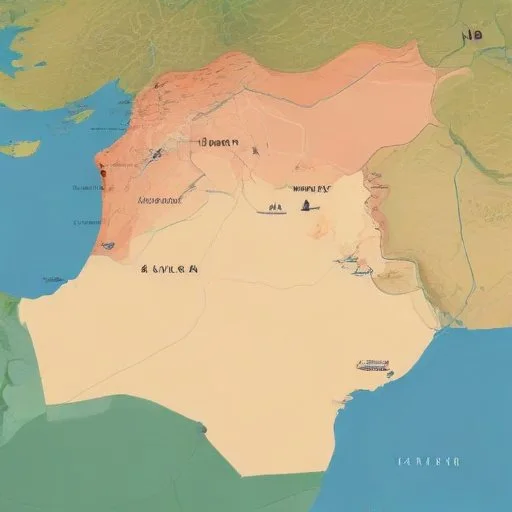
The war was sparked by a dispute over the Shatt al-Arab waterway, a vital shipping channel that forms the border between Iraq and Iran. The waterway is a crucial artery for both countries, providing access to the Persian Gulf and connecting them to international trade routes.
However, the war was also fueled by the ambition of Saddam Hussein, Iraq's president at the time, who sought to dominate the region and become the leader of the Arab world. Saddam's regime had long been a thorn in the side of Iran's Islamic government, and he saw the dispute over the Shatt al-Arab as an opportunity to assert his country's dominance.
The war that ensued was brutal and devastating, with both sides suffering heavy losses. The conflict drew in other world powers, including the United States and the Soviet Union, who backed Iraq and Iran respectively. The war saw the use of chemical weapons, ballistic missiles, and even human wave attacks, resulting in massive civilian casualties and widespread destruction.
The human cost of the war was staggering. Estimates suggest that between 500,000 to 1 million people lost their lives, with many more injured or displaced. The war also had a profound impact on the economies of both countries, with trade and oil production severely disrupted.
The war involved several key figures, including Saddam Hussein, Iran's Supreme Leader Ayatollah Khomeini, and Iraqi generals such as Ali Hassan al-Majid, who was known as "Chemical Ali" for his role in using chemical weapons against Iranian civilians.
The war began on September 22, 1980, when Iraqi forces launched a surprise attack on Iran. The conflict continued for nearly eight years, with several key events shaping its course. These included:
The war had a profound impact on the Middle East, leading to:
The war also had a significant impact on the cultural and social fabric of both countries. In Iran, the war reinforced the country's Islamic identity and strengthened the position of the Islamic government. In Iraq, the war led to a surge in nationalism and a consolidation of Saddam Hussein's power.
The war was marked by several controversies, including the use of chemical weapons, the targeting of civilians, and the support of governments such as the United States for Saddam Hussein's regime. The war remains a highly controversial and divisive topic, with many Iranians and Iraqis continuing to feel its impact today.
"The war is not just a war between two countries, it's a war between two ideologies." - Saddam Hussein
"We will not be intimidated by the aggressor. We will fight to the last drop of our blood." - Ayatollah Khomeini
Despite the devastation and tragedy of the war, there are many stories of courage, resilience, and sacrifice that inspire and motivate us. These include the stories of:
The Iran-Iraq War is a prime example of how historical events can be shaped by competing narratives. The war was fought not only on the battlefield but also in the realm of propaganda and public opinion. Both Iran and Iraq used media and propaganda to sway public opinion and gain international support.
For Iran, the war was a struggle for national liberation and a defense of its Islamic revolution. The Iranian government emphasized the idea of martyrdom and sacrifice, portraying its soldiers as heroes and martyrs fighting against an oppressive aggressor.
In contrast, Iraq framed the war as a necessary defense against Iranian aggression and a fight for Arab solidarity. Saddam Hussein's regime emphasized the idea of patriotism and national unity, portraying the war as a necessary evil to protect Iraq's sovereignty and territorial integrity.

The Iran-Iraq War shares striking similarities with other conflicts in the region. The war's origins, duration, and consequences can be compared to the Iran-Iraq War's precursor, the Arab-Israeli War of 1948.
Both conflicts were sparked by territorial disputes and ideological differences. Similarly, both wars involved the intervention of foreign powers, with the United States and the Soviet Union playing key roles in the Iran-Iraq War, just as they did in the Arab-Israeli conflict.
The war's devastating impact on civilians and the environment also draws parallels with other conflicts in the region, such as the Gulf War and the Syrian Civil War. The use of chemical weapons, ballistic missiles, and human wave attacks in the Iran-Iraq War foreshadowed the tactics used in these later conflicts.
Ali Hassan al-Majid, "Chemical Ali"
Ali Hassan al-Majid, also known as "Chemical Ali," was a notorious Iraqi general and Saddam Hussein's cousin. He earned his nickname for his role in using chemical weapons against Iranian civilians, particularly during the Halabja massacre in 1988.
Al-Majid was a key figure in the Iraqi military, serving as the commander of the Iraqi Republican Guard and the head of the Iraqi Intelligence Service. He was known for his brutality and ruthlessness, earning the fear and respect of his colleagues and enemies alike.
The Iran-Iraq War had a profound impact on the environment, particularly in the region surrounding the Shatt al-Arab waterway. The war led to the destruction of mangrove forests, coral reefs, and other sensitive ecosystems.
The use of chemical weapons and oil spills during the war contaminated the soil and water, causing long-term damage to the region's biodiversity. The war also led to the displacement of local communities, who were forced to flee their homes and livelihoods due to the conflict.
The environmental legacy of the war continues to affect the region today, with ongoing efforts to restore the ecosystem and protect the region's natural resources.
The Iran-Iraq War was a pivotal moment in the modern history of the Middle East, with far-reaching consequences for the region's geopolitics. The war marked a significant shift in the balance of power, with Iraq emerging as a dominant regional player.
The war also led to a realignment of alliances, with the United States and the Soviet Union taking opposing sides in the conflict. The war marked a turning point in the Cold War, as the United States began to take a more assertive role in the region.
The war's legacy continues to shape the region's geopolitics today, with ongoing tensions between Iran and Iraq, as well as between Iran and the United States.