


On a sweltering summer morning in 1990, the world witnessed a brazen act of aggression as Iraqi forces, under the command of Saddam Hussein, swept into neighboring Kuwait, catching the international community off guard. This daring invasion would set in motion a chain of events that would culminate in the Gulf War, a conflict that would leave an indelible mark on the region and the world.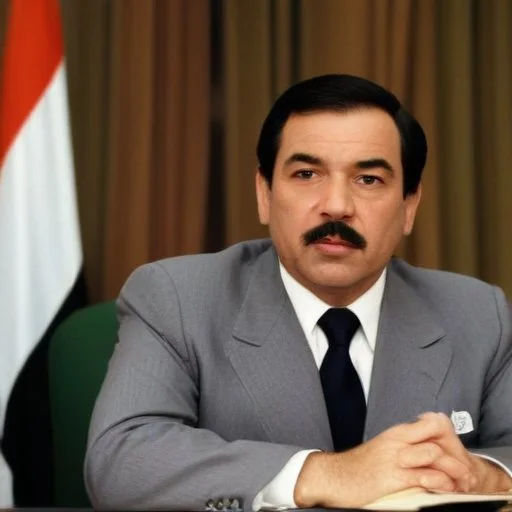
Saddam Hussein, driven by a desire to reclaim ancient Iraqi territories and assert his country's dominance, had long coveted Kuwait's strategic location and oil-rich resources. As the Cold War drew to a close, Hussein saw an opportunity to redraw the regional map, leveraging Iraq's military might to annex the tiny emirate and secure a stranglehold on the Persian Gulf.
As the world rallied against Iraq's aggression, a diverse coalition of nations coalesced behind the United States, determined to restore Kuwait's sovereignty and protect the region's stability. The UN Security Council's swift condemnation of the invasion was followed by a series of economic sanctions, further isolating Iraq from the international community.
The Gulf War, launched on January 17, 1991, was a climactic, high-tech conflict that saw the US-led coalition unleash a devastating aerial campaign, crippling Iraq's military infrastructure and paving the way for a swift ground invasion. As Iraqi forces retreated, Kuwait City was liberated, and Saddam Hussein's ambitions were dealt a crushing blow.
The Gulf War's repercussions continue to shape the Middle East's geopolitical landscape. The conflict marked a watershed moment in the region's modern history, underscoring the importance of collective security and setting a precedent for international intervention in the face of aggression. As we reflect on this pivotal event, we are reminded of the enduring importance of diplomacy, cooperation, and the unwavering defense of sovereignty.
"The liberation of Kuwait has restored the region's stability and sent a clear message to would-be aggressors: the international community will not tolerate the use of force to achieve territorial ambitions." — US President George H.W. Bush, March 1991
I recall speaking with a Kuwaiti businessman who had fled to Saudi Arabia during the invasion. He spoke of the fear and uncertainty that gripped the Kuwaiti people, but also of their resilience and determination to rebuild their nation. His words stuck with me: "We thought we had lost everything, but we didn't lose our dignity."
The Gulf War's legacy extends far beyond the conflict itself. It paved the way for a more assertive US foreign policy, influenced the development of international law, and shaped the region's power dynamics. As we navigate the complexities of modern geopolitics, the lessons of the Gulf War remain as relevant as ever.
The modern-day conflict between Iraq and Kuwait has its roots in ancient history. The region has been a prized possession for various empires, from the Babylonians to the Ottomans. The modern-day borders of Iraq and Kuwait were drawn by the British and French after World War I, often disregarding centuries-old tribal and ethnic divisions. This artificial demarcation of territories has led to recurring tensions between the two nations.
Saddam Hussein's claim to Kuwait as an integral part of Iraq's historical territory was not a new concept. In the 1930s, Iraq had made similar claims, and it was only through British intervention that Kuwait maintained its independence. This historical context is crucial in understanding the motivations behind Saddam's invasion.
The region's rich history has been marked by a struggle for power and control, with various empires rising and falling. The ancient city of Babylon, located in present-day Iraq, was once a center of power and learning. The ancient Greeks, Romans, and Persians all vied for control of the region, followed by the Arabs, Ottomans, and finally the British and French.
Saddam Hussein's rise to power was marked by brutal suppression of opposition and a cult of personality. Born in 1937, Saddam rose through the ranks of the Ba'ath Party, eventually becoming President of Iraq in 1979. His regime was characterized by extreme violence, torture, and human rights abuses.
Saddam's ambition and ruthlessness drove him to consolidate power, eliminating potential opponents and rivals. He purged the Ba'ath Party of potential challengers, famously ordering the execution of scores of high-ranking officials in 1979.
Saddam's leadership style was a mix of fear, charisma, and cunning. He manipulated tribal and ethnic loyalties, using patronage and corruption to maintain control. His regime's nationalist rhetoric and anti-imperialist stance resonated with many Iraqis, who saw him as a strong leader capable of restoring their country's pride and prestige.
The Gulf War shares similarities with other modern conflicts in the Middle East. Like the 2003 US-led invasion of Iraq, the Gulf War was sparked by a desire to remove a rogue regime and secure strategic resources. Both conflicts involved a coalition of international forces and were marked by controversy over the legitimacy of military intervention.
The Gulf War also has parallels with the Iran-Iraq War, which lasted from 1980 to 1988. Both conflicts involved a struggle for regional dominance, with Iraq seeking to assert its power and influence in the region.
However, the Gulf War differs significantly from these conflicts in its swift and decisive outcome. The war lasted mere weeks, with Iraqi forces quickly defeated and Kuwait liberated. In contrast, the 2003 Iraq War and the Iran-Iraq War were longer and more devastating, with higher casualty counts and greater regional instability.
The Gulf War marked a turning point in Kuwait's cultural development. The war and subsequent liberation sparked a cultural renaissance in the country, as Kuwaitis sought to rebuild and redefine their national identity.
The war had a profound impact on Kuwait's arts scene, with many artists and writers using their work to process the trauma and horror of the occupation. Literature, in particular, became a powerful medium for expressing Kuwaiti identity and resistance.
The post-war period also saw a resurgence of traditional Kuwaiti culture, with a renewed interest in folk music, dance, and crafts. The government invested heavily in cultural institutions and festivals, seeking to promote national unity and pride.
The Gulf War had a devastating impact on the economy of Kuwait and the wider region. The war resulted in significant infrastructure damage, with oil fields and production facilities severely damaged.
The occupation and subsequent liberation of Kuwait led to a massive influx of refugees and displaced persons, placing a huge strain on the country's resources and infrastructure. The war also disrupted trade and commerce, with many businesses forced to close or relocate.
In the aftermath of the war, the Kuwaiti government invested heavily in reconstruction and development, with a focus on diversifying the economy and reducing dependence on oil exports. The country also received significant financial aid and investment from the international community, helping to spur economic growth and recovery.