


The capture of Saddam Hussein marked a significant turning point in the Iraq War, leading to:
The capture of Saddam Hussein sparked debate about the treatment of prisoners, with some criticizing the conditions in which he was held. However, the overwhelming sentiment was one of relief and jubilation, as the Iraqi people and the international community hailed the end of a brutal regime.
The bravery and determination of the soldiers involved in Operation Red Dawn served as an inspiration to many, highlighting the importance of perseverance and teamwork in the pursuit of justice.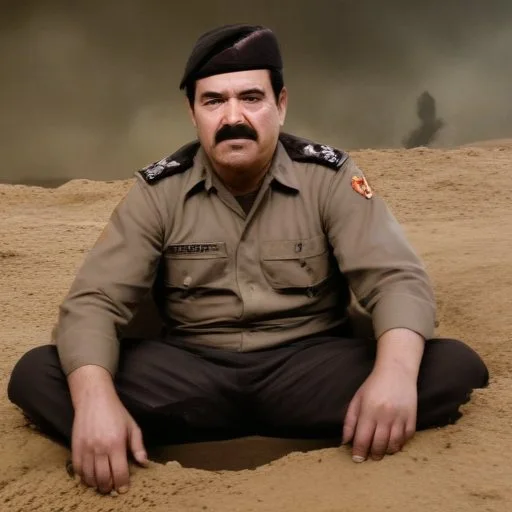
The capture of Saddam Hussein raised hopes for a more stable and peaceful Iraq, with many predicting a decline in violence and an increase in reconstruction efforts. While the road ahead was long and challenging, the operation marked a significant step towards a brighter future for the Iraqi people.
Saddam Hussein, the former President of Iraq, was a complex figure known for his iron grip on power and his paranoia about potential threats to his rule. Born in 1937, Saddam rose to power in the 1960s as a member of the Ba'ath Party, eventually becoming President in 1979.
During his reign, Saddam was notorious for his brutal suppression of opposition, using torture, executions, and other forms of violence to maintain control. He was also known for his grandiose projects, such as the construction of lavish palaces and monuments to himself.
Saddam's paranoia about potential threats led him to create a network of informants and spies, and he was obsessed with his own personal security. He was known to use disguise and deception to move around Iraq, often using fake identities and secret hideouts to avoid detection.
The Ba'ath Party, which came to power in Iraq in 1968, was a nationalist and socialist organization that emphasized Arab unity and social justice. Saddam Hussein, who joined the party in the 1950s, rose to prominence within its ranks and eventually became its leader.
Under Saddam's leadership, the Ba'ath Party dominated Iraqi politics, using a combination of propaganda, repression, and patronage to maintain control. The party's ideology emphasized the importance of Arab unity and the need to resist Western imperialism, but in practice, it became a tool for Saddam's personal rule.
The Ba'ath Party's grip on power was eventually broken by the US-led invasion of Iraq in 2003. The party's remnants went underground, and many of its leaders, including Saddam, were captured or killed in the subsequent insurgency.
The Iraq War of 2003 was a major conflict that was shaped by a complex array of geopolitical factors. The war was launched by a US-led coalition, which included countries such as the UK, Australia, and Poland, in response to Saddam Hussein's alleged development of weapons of mass destruction.
The war was also driven by a desire to remove Saddam from power and to democratize Iraq, which was seen as a key strategic location in the Middle East. The US and its allies hoped that a democratic Iraq would become a beacon of stability in the region, and would help to counter the influence of Iran and other hostile powers.
However, the war was widely criticized by other countries, including France, Germany, and Russia, which argued that it was illegal and unjustified. The conflict also sparked widespread protests and opposition around the world, with many people arguing that it was a war of aggression launched on false pretenses.
Saddam Hussein's regime had a profound impact on Iraqi culture, promoting a cult of personality that emphasized the leader's bravery, wisdom, and benevolence. Saddam's image was everywhere, from posters and billboards to statues and monuments.
The regime also promoted a narrative of Iraqi history that emphasized the country's ancient heritage and its role as a champion of Arab nationalism. Saddam's propaganda machine emphasized the importance of resisting Western imperialism and defending Iraq's sovereignty.
However, the regime's cultural policies were also highly repressive, with strict controls on artistic expression and a blacklisting of dissident intellectuals. Many Iraqi artists and writers were forced into exile, and those who remained were forced to conform to the regime's ideological dictates.
Saddam Hussein's capture in 2003 marked a major turning point in the Iraq War, but it also raised a range of complex political questions about the country's future. The US-led coalition, which had launched the invasion, was faced with the daunting task of rebuilding Iraq and establishing a new government.
The process of creating a new Iraqi government was marked by controversy and dispute, with different factions and interest groups vying for power. The US and its allies eventually established the Iraqi Interim Government, which was tasked with preparing the country for democratic elections.
However, the new government faced numerous challenges, including widespread violence and insurgency, corruption and mismanagement, and rivalries between different ethnic and sectarian groups. The political aftermath of Saddam's capture was marked by a long and difficult struggle to establish stability and security in Iraq.