


On October 11, 2002, the United States Congress made a historic decision that would shape the course of world events for years to come. With a vote of 77-23 in the Senate and 296-133 in the House of Representatives, Congress approved the Authorization for Use of Military Force Against Iraq Resolution of 2002, granting President George W. Bush the authority to use military force against Iraq.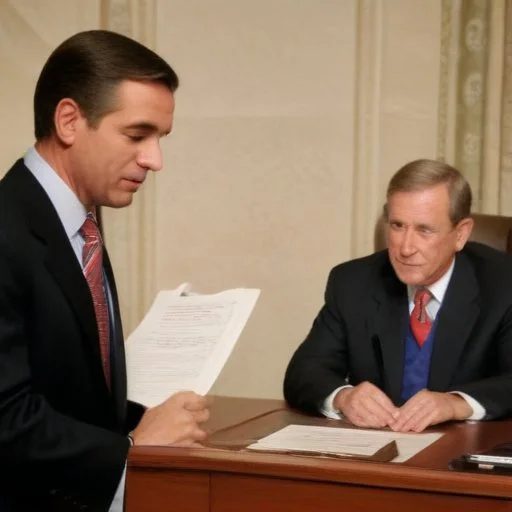
The resolution came amidst growing concerns about Iraq's alleged possession of weapons of mass destruction (WMDs) and its potential threat to global security. The aftermath of 9/11 had created a climate of fear and uncertainty, and the Bush administration was determined to take preemptive action against perceived threats.
The road to the Authorization for Use of Military Force Against Iraq Resolution was paved by a series of events:
The consequences of the resolution were far-reaching:
The Authorization for Use of Military Force Against Iraq Resolution remains a contentious issue, with many questioning the validity of the claims made by the Bush administration and the long-term consequences of the war.
As we reflect on this pivotal moment in history, we are reminded of the importance of careful consideration and international cooperation in responding to global threats.
The Historiographical Debate: The Authorization for Use of Military Force Against Iraq Resolution has sparked intense debate among historians, with some arguing that the Bush administration's claims about WMDs were exaggerated or fabricated, while others maintain that the threat posed by Iraq was real. Meanwhile, scholars have also debated the role of Congress in authorizing the war, with some arguing that lawmakers failed to exercise sufficient oversight.
One school of thought, led by historians such as John Prados, argues that the war was the result of a deliberate campaign of misinformation by the Bush administration. Others, like Robert Kagan, contend that the threat posed by Iraq was genuine, and that the administration's actions were justified.
The debate highlights the challenges of writing history in the aftermath of a controversial event, and underscores the need for ongoing scrutiny and critical analysis of the evidence.
Vice President Dick Cheney: The Architect of War
Dick Cheney played a crucial role in shaping the Bush administration's policy on Iraq, and was a key advocate for military action. A close advisor to the President, Cheney brought a wealth of experience to the role, having served as Secretary of Defense during the Gulf War.
Cheney's influence extended beyond the realm of policy, as he was also known for his close relationships with oil industry executives and military contractors. Critics argued that his ties to these industries created a conflict of interest, and that his advocacy for war was motivated by a desire to advance their interests.
Iraq and the Global Geopolitical Landscape
The Authorization for Use of Military Force Against Iraq Resolution occurred against a backdrop of shifting global power dynamics. The end of the Cold War had created a power vacuum, which the United States sought to fill through its assertion of military dominance.
The Iraq War was part of a broader strategy to reshape the Middle East, and to establish the United States as a hegemonic power. However, the war also had unintended consequences, including the rise of Iran as a regional power and the destabilization of the entire region.

The Economic Costs of War
The Iraq War has had a profound impact on the US economy, with estimates suggesting that the total cost of the conflict will exceed $3 trillion. The war has also had significant opportunity costs, as resources devoted to the war effort could have been spent on other priorities such as education, healthcare, or infrastructure.
The war has also had negative impacts on the Iraqi economy, with the destruction of infrastructure and the loss of human capital leading to widespread poverty and instability.
The Cultural Impact of the Iraq War
The Iraq War has had a profound impact on popular culture, with the conflict influencing everything from music and film to literature and art. The war has also had a significant impact on the Arab-American community, with many individuals facing discrimination and prejudice in the aftermath of the conflict.
The war has also led to a reevaluation of the role of the media in shaping public opinion, with many critics arguing that the press failed to provide sufficient scrutiny of the Bush administration's claims about WMDs.