


On March 17, 1992, the Israeli Embassy in Buenos Aires, Argentina, became the target of a brutal car bomb attack, claiming the lives of 29 people and injuring 242 others. This devastating act of terror is remembered as one of the deadliest anti-Semitic attacks in history, leaving an indelible scar on the Argentine capital.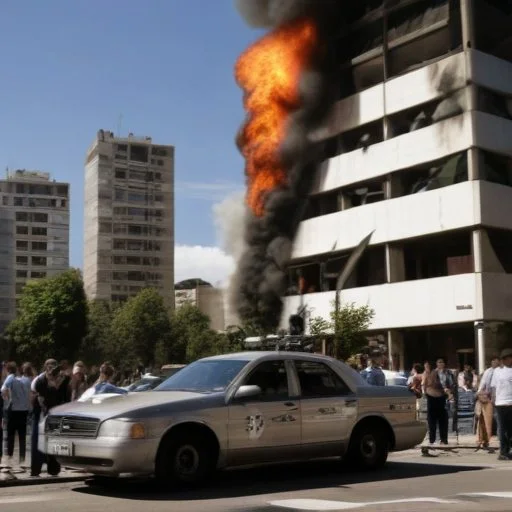
The attack occurred on a typical Tuesday morning, when a white Renault Trafic van, packed with over 400 pounds of explosives, detonated in front of the embassy building. The blast was so powerful that it destroyed the embassy's facade, shattered windows, and sent debris flying everywhere. The explosion was heard and felt throughout the city, causing widespread panic and chaos.
The investigation that followed revealed a complex web of deceit and conspiracy. It was later attributed to Iranian-backed Hezbollah militants, who had been secretly operating in Argentina. The attack was allegedly orchestrated by Imad Mugniyah, a notorious Hezbollah operative, who had masterminded similar attacks around the world.
The attack dealt a severe blow to Argentina's Jewish community, which had been a significant presence in the country for over a century. The victims included four Israelis, as well as Argentine citizens of Jewish descent. The bombing not only caused physical destruction but also left a deep emotional scar, fostering a sense of insecurity and fear among the Jewish community.
The attack sparked widespread condemnation from governments and leaders around the world. The Israeli government, in particular, was outraged, and Prime Minister Yitzhak Shamir vowed to take action against those responsible. The bombing also led to a significant shift in Argentina's foreign policy, as the country began to re-evaluate its relationships with Iran and other nations perceived to be supporting terrorist activities.
In the aftermath of the attack, the Argentine government launched a comprehensive investigation, which led to the arrest and conviction of several suspects. Although justice was served, the bombing left a lasting impact on the city and its people. The event served as a stark reminder of the dangers of terrorism and the importance of international cooperation in combating this global threat.
The Israeli Embassy attack in Buenos Aires will always be remembered as a senseless act of terror that claimed the lives of innocent people. As we reflect on this tragic event, we honor the memory of the victims and their families, and we reaffirm our commitment to combating terrorism and promoting peace and understanding around the world.
The 1992 Israeli Embassy attack in Buenos Aires was not an isolated incident, but rather a culmination of a long history of anti-Semitism in Argentina. The country had a significant Jewish population, with many immigrants arriving in the early 20th century. However, they faced discrimination and persecution, particularly during the 1930s and 1940s.
In the years leading up to the attack, there was a resurgence of anti-Semitic sentiment, fueled by right-wing groups and political leaders. This created a climate of fear and mistrust among the Jewish community, making them vulnerable to violent attacks like the one on the Israeli Embassy.

Imad Mugniyah was a notorious Hezbollah operative, responsible for planning and executing the 1992 Israeli Embassy attack in Buenos Aires. Born in 1962 in Lebanon, Mugniyah joined Hezbollah at a young age and quickly rose through the ranks, becoming one of the organization's top military commanders.
Mugniyah was known for his cunning and ruthlessness, earning him the nickname "the ghost" among intelligence agencies. He was responsible for numerous terrorist attacks around the world, including the 1983 bombing of the US Marines barracks in Beirut.
The 1992 Israeli Embassy attack in Buenos Aires had significant political implications for Argentina and its relationships with other countries. The attack led to a major shift in Argentina's foreign policy, as the government began to re-evaluate its ties with Iran and other nations perceived to be supporting terrorist activities.
The attack also led to increased cooperation between Argentina and Israel, with both countries working together to combat terrorism and bring those responsible to justice. This cooperation marked a significant departure from Argentina's previous stance, which had been more aligned with Palestinian interests.
The 1992 Israeli Embassy attack in Buenos Aires occurred at a time of great geopolitical upheaval. The Cold War had recently ended, and the Middle East was undergoing a significant transformation, with the Iran-Iraq War and the Gulf War both having a profound impact on the region.
This geostrategic context created an environment in which terrorist organizations like Hezbollah were able to operate with relative impunity, taking advantage of the power vacuum left by the collapse of the Soviet Union.
The 1992 Israeli Embassy attack in Buenos Aires had a profound cultural impact on the city and its people. The attack led to a sense of unease and insecurity, particularly among the Jewish community, which had long been an integral part of Argentine society.
The attack also led to a renewed focus on Jewish-Argentine identity and a sense of community among Jewish Argentines. In the aftermath of the attack, many Jewish Argentines began to re-examine their roots and cultural heritage, leading to a resurgence of interest in Jewish customs and traditions.