


Muhammad al-Durrah's name is etched in the collective consciousness of the world as the 12-year-old Palestinian boy who was fatally shot on live television during a fierce gun battle between Israeli forces and Palestinian militants in the Gaza Strip on September 30, 2000. This heart-wrenching incident marked a pivotal moment in the Second Intifada, a period of heightened violence and unrest in the Israeli-Palestinian conflict.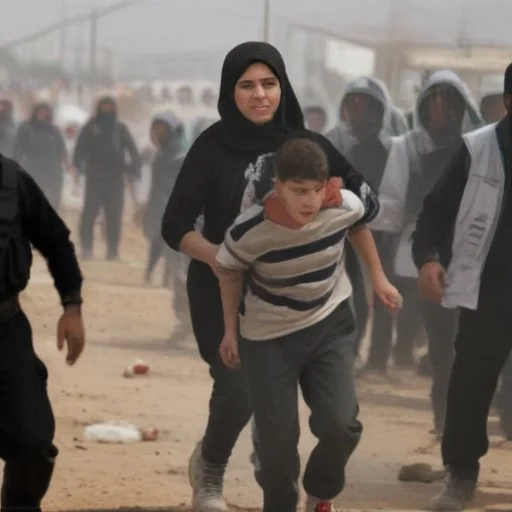
As the chaos erupted, Muhammad's father, Jamal, desperately tried to shield his son from the hail of bullets. The father's futile efforts to protect his child were captured on camera, broadcasting the tragedy to a global audience. The graphic footage showed Jamal crouching behind a concrete cylinder, with Muhammad clinging to him, as bullets whizzed past them. In a matter of seconds, Muhammad's life slipped away, his body slumping to the ground as his father screamed in anguish.
The Second Intifada, also known as the Al-Aqsa Intifada, was a wave of Palestinian protests and violence that began in September 2000, following a controversial visit by Israeli opposition leader Ariel Sharon to the Temple Mount in Jerusalem. The incident sparked widespread unrest, which escalated into a full-blown conflict between Israeli forces and Palestinian militants. The Second Intifada lasted for five years, resulting in the deaths of thousands of Palestinians and Israelis, and causing widespread destruction and displacement.
Muhammad al-Durrah's death became an symbol of the human cost of the Israeli-Palestinian conflict. The image of the helpless father, cradling his dying son, resonated with people worldwide, fueling international condemnation of the violence and sparking widespread protests. Muhammad's innocent face, frozen in time, became a powerful symbol of the suffering and loss that had befallen countless Palestinian families.
The incident sparked a flurry of diplomatic activity, with world leaders calling for an end to the violence and a resumption of peace talks. However, the incident also intensified the conflict, with both sides entrenching their positions and escalating the violence. The international community struggled to broker a lasting peace agreement, as the conflict continued to simmer, periodically boiling over into bloodshed.
Muhammad al-Durrah's death serves as a poignant reminder of the human cost of conflict and the importance of striving for peace. His memory continues to inspire activists, artists, and ordinary people to work towards a more just and peaceful future for Palestinians and Israelis alike. As the world continues to grapple with the complexities of the Israeli-Palestinian conflict, Muhammad's story remains a powerful symbol of the human spirit, a testament to the enduring power of hope and resilience in the face of adversity.
I want the world to know what happened to my son, and I want the world to know that the Palestinians are human beings, just like everyone else.
- Jamal al-Durrah, Muhammad's father
Muhammad's death is not just a tragedy, it's a symbol of the suffering of the Palestinian people. We must work towards a future where such tragedies are never repeated.
- Hanan Ashrawi, Palestinian politician and human rights activist
The Israeli-Palestinian conflict has its roots in the early 20th century, when the Middle East was carved up by European powers after World War I. The British Mandate for Palestine, established in 1920, created a fertile ground for Zionist and Arab nationalist movements. The subsequent establishment of the State of Israel in 1948 and the displacement of Palestinians, known as the Nakba or "catastrophe" in Arabic, further exacerbated the conflict.
The Second Intifada, which began in 2000, marked a new phase of violence and resistance against Israeli occupation. The Gaza Strip, where Muhammad al-Durrah was killed, has been a hotbed of resistance and a focal point of international attention.
Jamal al-Durrah, Muhammad's father, was a humble fruit vendor who became an unlikely symbol of Palestinian resistance. Born in 1959 in the Gaza Strip, Jamal lived through the tumultuous decades of Israeli occupation and Palestinian resistance. His desperate attempt to shield his son from the hail of bullets on that fateful day in September 2000 has become an iconic image, etched in the collective memory of the world.
The death of Muhammad al-Durrah has had a profound impact on Palestinian arts and culture. The iconic image of the father-son duo has inspired countless works of art, from paintings and sculptures to poetry and music. The tragedy has also become a rallying cry for Palestinian solidarity, with Muhammad's face appearing on posters, banners, and murals across the occupied territories.
In the years following Muhammad's death, Palestinian artists have used their work to convey the human cost of the conflict, often incorporating themes of loss, grief, and resistance. The tragedy has also inspired international artists to create works that express solidarity with the Palestinian people.
The Israeli-Palestinian conflict is a complex web of political, religious, and nationalist interests. The Second Intifada, which began in 2000, marked a significant shift in the dynamics of the conflict, with both sides entrenching their positions and escalating the violence. The incident that killed Muhammad al-Durrah was a turning point in the conflict, drawing international attention to the plight of the Palestinian people.
The political fallout from the incident was significant, with world leaders calling for an end to the violence and a resumption of peace talks. However, the conflict continued to simmer, periodically boiling over into bloodshed, as the international community struggled to broker a lasting peace agreement.
The footage of Muhammad al-Durrah's death, captured by French cameraman Talal Abu Rahmeh, has become one of the most iconic images of the Israeli-Palestinian conflict. The 27 seconds of footage, which show Jamal crouching behind a concrete cylinder, with Muhammad clinging to him, has been subject to intense scrutiny and analysis.
The videotape has been examined frame by frame, with experts verifying its authenticity and debunking conspiracy theories that sought to manipulate the narrative of the incident. The footage has become a testament to the power of visual media in shaping public opinion and influencing the discourse around the conflict.