


The Gaza-Jericho Accord, signed on May 4, 1994, marked a pivotal moment in the pursuit of peace in the Middle East. This historic agreement, facilitated by Israeli Prime Minister Yitzhak Rabin and PLO leader Yasser Arafat, granted self-rule to the Gaza Strip and Jericho, paving the way for Palestinian autonomy and recognition of Israel's right to exist.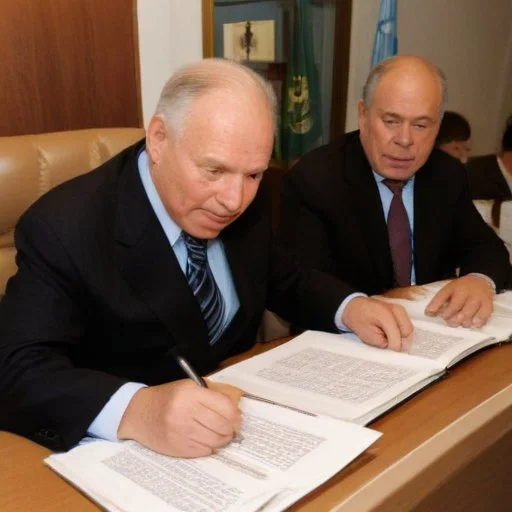
The signing of the Gaza-Jericho Accord came after decades of bloody conflict and unsuccessful attempts at peace negotiations. The Israeli-Palestinian conflict had its roots in the early 20th century, with the establishment of the State of Israel in 1948. Since then, the two nations had been locked in a cycle of violence and mistrust, with the Palestinians demanding independence and the Israelis seeking security.
The Gaza-Jericho Accord had significant outcomes and impacts on the Israeli-Palestinian conflict:
The Gaza-Jericho Accord had far-reaching cultural and social implications:
The agreement sparked hope for a lasting peace, inspiring a wave of optimism among Israelis and Palestinians alike.
The accord marked a shift in the psychological dynamics of the conflict, as both sides began to view each other as equals rather than enemies.
Rabin's remarks during the signing ceremony captured the essence of the accord: "We are not only fulfilling a promise, but we are making a new promise – that this time, we will not let the opportunity slip away."
Arafat's words reflected the newfound optimism: "This is a new era of peace and cooperation. We are not enemies anymore."
The Gaza-Jericho Accord paved the way for future peace agreements, including the Oslo II Accord (1995) and the Camp David Summit (2000).
The agreement also influenced the Israeli withdrawal from Southern Lebanon in 2000 and the disengagement from the Gaza Strip in 2005.
Rabin, Arafat, and Shimon Peres were jointly awarded the Nobel Peace Prize in 1994 for their efforts in negotiating the Gaza-Jericho Accord.
In the years leading up to the Gaza-Jericho Accord, a series of secret meetings and negotiations took place between Israeli and Palestinian officials.
One of the key players in these talks was Norwegian diplomat Terje Rød-Larsen, who facilitated the initial contact between the two sides in 1992.
Meetings were held in various locations, including Oslo, Paris, and London, with representatives from both sides engaging in intense discussions.
The breakthrough came in August 1993, when Israeli officials presented the Palestinians with a draft agreement, which ultimately paved the way for the Gaza-Jericho Accord.
Yasser Arafat, the Chairman of the Palestine Liberation Organization (PLO), was a complex figure with a tumultuous past.
Born in Jerusalem in 1929, Arafat was driven by a strong sense of nationalism and a desire for Palestinian independence.
A skilled politician and strategist, Arafat navigated the treacherous landscape of Middle Eastern politics, forging alliances and making calculated decisions to advance the Palestinian cause.
Despite his controversial reputation, Arafat remained a unifying figure for the Palestinian people, earning him the respect and admiration of many.
The Gaza-Jericho Accord marked a significant shift in the psychological dynamics of the Israeli-Palestinian conflict.
For the first time, both sides began to view each other as humans, rather than enemies, paving the way for a new era of cooperation and understanding.
This newfound empathy was reflected in the widespread celebrations that erupted across the region, as Israelis and Palestinians alike rejoiced at the prospect of a peaceful future.
The accord also sparked a wave of cultural exchanges, as artists, musicians, and writers from both sides came together to promote peace and understanding.
The Gaza-Jericho Accord was the result of a complex political calculus, with both sides making significant concessions to reach an agreement.
For Israel, the accord represented a strategic retreat from occupied territories, aimed at reducing the demographic and security risks associated with controlling a large Palestinian population.
For the Palestinians, the agreement marked a significant step towards statehood, with the establishment of a Palestinian Authority and the transfer of authority over key territories.
The accord also set a precedent for future negotiations, establishing a framework for gradual Israeli withdrawal and Palestinian autonomy.
The Gaza-Jericho Accord marked a significant shift in the regional balance of power, as Israel and the PLO emerged as key players in the Middle East peace process.
The agreement also had far-reaching implications for the global community, as the international community rallied behind the peace efforts.
The accord sent a powerful signal that the Israeli-Palestinian conflict was no longer intractable, paving the way for future agreements and cooperation.
The Gaza-Jericho Accord also marked a turning point in the Arab-Israeli conflict, as Arab states began to re-evaluate their stance towards Israel and the peace process.