


On November 24, 1963, in a stunning turn of events, Dallas nightclub owner Jack Ruby stepped out of the shadows and into the nation's consciousness, shooting Lee Harvey Oswald, the accused assassin of President John F. Kennedy, with a single .38 caliber bullet. This brazen act, which took place in the basement of Dallas Police Headquarters, sent shockwaves across the country, leaving the American public reeling and wondering: what secrets lay behind Ruby's motives?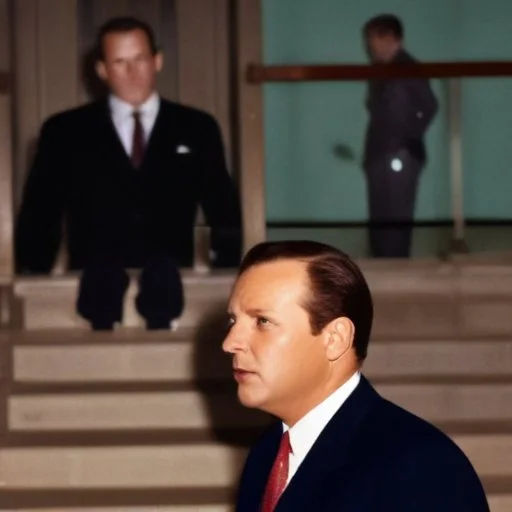
Jack Ruby, born Jacob Rubenstein on March 25, 1911, was a Polish-American businessman who operated several strip clubs and nightclubs in Dallas. His early life was marked by poverty and violence, which seemed to shape his aggressive and confrontational personality. Ruby's rise to infamy, however, was swift and unexpected.
On November 22, 1963, President John F. Kennedy was assassinated in Dallas, Texas, while riding in an open-top car in a motorcade through Dealey Plaza. Lee Harvey Oswald, a 24-year-old former Marine and employee of the Texas School Book Depository, was arrested for the crime. The nation was plunged into mourning, and Oswald's fate was all but sealed.
Just five days after Kennedy's assassination, as Oswald was being transferred through the basement of Dallas Police Headquarters, Jack Ruby emerged from the crowd, his .38 caliber handgun firing point-blank into Oswald's abdomen. The shooting was broadcast live on television, leaving millions of Americans stunned and horrified.
Nine months later, Ruby faced justice, charged with murder with malice. His trial was a media sensation, with prosecutors presenting a case that Ruby's actions were premeditated and intentional. Ruby's defense team, on the other hand, argued that their client acted impulsively, driven by grief and outrage over Kennedy's assassination. In the end, the jury delivered a verdict of guilty, and Ruby was sentenced to death.
The question of Ruby's motives continues to haunt historians and conspiracy theorists alike. Was Ruby acting to silence Oswald and protect his own secrets, or was he driven by a twisted sense of patriotism and loyalty to the Kennedy family? The truth, it seems, died with Ruby himself, leaving behind a legacy of intrigue and speculation.
The shooting of Lee Harvey Oswald marked a pivotal moment in American history, forever changing the course of the investigation into Kennedy's assassination. Ruby's actions cast a shadow of doubt and uncertainty, fueling conspiracy theories that continue to this day. As the nation looks back on this fateful event, one thing is clear: the truth behind Jack Ruby's motives remains a mystery that may never be fully unraveled.
As the curtain closes on this chapter of American history, we are left to ponder the what-ifs and the maybes, forever searching for answers to the questions that Jack Ruby took to his grave.
Jack Ruby's life was marked by poverty and violence from an early age. Born Jacob Rubenstein in 1911, Ruby grew up in a poor Jewish family in Chicago. His father, Joseph, was a violent and abusive man who often beat his wife and children. This tumultuous upbringing would shape Ruby's aggressive personality and influence his future actions.
Ruby's early life was also characterized by instability. He was shuffled between foster homes and reform schools, never quite finding a sense of belonging. This lack of stability would follow him into adulthood, as he struggled to find success and stability in his business ventures.
Did you know? Ruby's childhood was so unstable that he was even institutionalized for a period of time, where he was diagnosed with "juvenile delinquency" and "parental neglect". This early instability would have a lasting impact on Ruby's life and behavior.
The 1960s were a time of great upheaval in the United States. The Civil Rights movement was gaining momentum, and cities across the country were erupting in protests and rioting. The Cuban Missile Crisis had brought the world to the brink of nuclear war, and the threat of communism loomed large.
In this climate of fear and uncertainty, the assassination of President Kennedy sent shockwaves across the nation. The event was a watershed moment in American history, marking a turning point in the nation's psyche and sense of security.
The shooting of Lee Harvey Oswald would further exacerbate the sense of chaos and disorder, leaving many to wonder if the country was on the brink of collapse.The shooting of Lee Harvey Oswald was a pivotal moment in American cultural history. The event was broadcast live on television, and millions of Americans witnessed the shocking scene unfold in real-time. The nation was plunged into mourning, and the event marked a turning point in the country's cultural psyche.
The shooting also had a profound impact on the music and art of the time. Many artists, including Bob Dylan and Andy Warhol, would go on to create works that reflected the sense of shock and disillusionment that followed the event.
The shooting of Lee Harvey Oswald would become an cultural touchstone, symbolizing the sense of chaos and disorder that characterized the 1960s.
The shooting of Lee Harvey Oswald sent shockwaves through the political establishment. The event marked a turning point in the investigation into President Kennedy's assassination, and many would go on to question the official narrative.
The Warren Commission, established to investigate the assassination, would face intense scrutiny and criticism in the years that followed. Many would come to believe that the commission's findings were incomplete or inaccurate, and that a larger conspiracy was at play.
The shooting of Lee Harvey Oswald would fuel decades of speculation and conspiracy theories, forever changing the way Americans viewed their government and its institutions.The shooting of Lee Harvey Oswald has been the subject of intense historical scrutiny and debate. Many historians have questioned the official narrative of the event, pointing to inconsistencies and contradictions in the evidence.
Other historians have argued that the shooting was a pivotal moment in the development of conspiracy theories in American culture. The event marked a turning point in the way Americans viewed their government and its institutions, and would go on to influence the development of conspiracy theories in the decades that followed.
The shooting of Lee Harvey Oswald remains one of the most controversial and debated events in American history, with historians continuing to grapple with its significance and implications.