


The 11th of July, 1789, is remembered as the day that sparked the French Revolution, a pivotal event that would shake the foundations of European history. The catalyst for this uprising was the sudden dismissal of Jacques Necker, France's Finance Minister, by King Louis XVI, an act that would unleash a torrent of outrage and protest among the common people.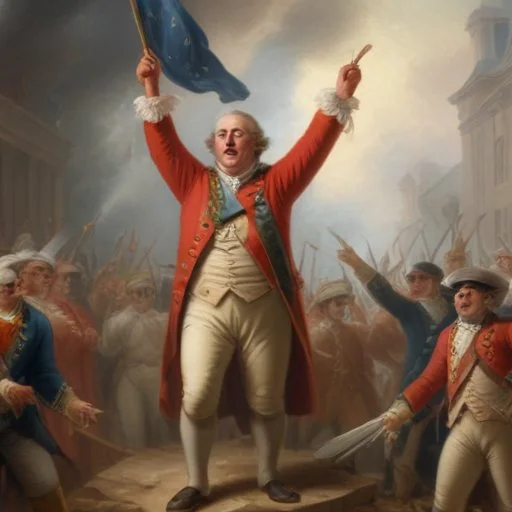
By the late 18th century, France was drowning in debt, courtesy of its extravagant spending on wars, lavish royal lifestyles, and an outdated feudal system. Necker, a Swiss-born banker and economist, was appointed Finance Minister in 1777, tasked with rectifying the country's financial woes. He implemented several reforms, including a more efficient taxation system and reduced government expenditure, but these measures were constantly thwarted by the aristocracy's resistance to change.
In May 1789, the National Assembly, a representative body comprising the clergy, nobility, and commoners, declared that it was the supreme authority in France, thereby challenging the absolute power of the monarch. This bold declaration sent shockwaves throughout the country, empowering the common people to demand greater representation and accountability from their government.
King Louis XVI, under pressure from the aristocracy, dismissed Necker on July 11, 1789, citing his inability to implement effective financial reforms. This move was perceived as a betrayal of the people's trust, as Necker was seen as a champion of the common folk. News of his dismissal spread like wildfire, fuelling outrage and discontent among the population.
In the aftermath of Necker's dismissal, the people of Paris, bolstered by the National Assembly's declaration of sovereignty, took to the streets in protest. A group of demonstrators, fueled by revolutionary fervor, stormed the Bastille, a symbol of royal authority and oppression, on July 14, 1789. The prison's fall marked the symbolic birth of the French Revolution, as the people asserted their power and demanded radical change.
The dismissal of Jacques Necker and the subsequent Storming of the Bastille had far-reaching consequences, including:
The French Revolution's ideals of liberty, equality, and fraternity resonated across Europe, inspiring similar movements and shaping modern democracy. The event's cultural significance extends to art, literature, and music, with works like Victor Hugo's Les Misérables and Édouard Manet's Liberty Leading the People paying homage to the revolution's spirit.
In conclusion, the dismissal of Jacques Necker on July 11, 1789, was the spark that ignited the French Revolution, a pivotal event that would forever change the course of European history. The people's uprising, fueled by a desire for change and accountability, marked the beginning of a new era, one that would be shaped by the principles of liberty, equality, and fraternity.
The financial crisis that led to Necker's dismissal was exacerbated by France's involvement in the American Revolutionary War. The country had spent heavily to support the American colonies, and the war had drained its resources. Additionally, the Estates-General, a representative assembly that had not convened since 1614, was summoned in 1789 to address the financial crisis. However, the assembly's demands for greater representation and accountability from the monarchy only added to the growing unrest.
The tension between the National Assembly and the monarchy came to a head in June 1789, when the assembly declared itself the National Constituent Assembly, with the power to create a new constitution. This bold move was seen as a direct challenge to the monarchy's authority, and it set the stage for the dramatic events that would unfold in the following weeks.

Jacques Necker was a complex figure, driven by a strong sense of duty and a commitment to fiscal responsibility. Born in Switzerland, he rose to prominence in the world of finance, becoming one of the wealthiest men in Europe. His appointment as Finance Minister in 1777 was seen as a shrewd move by King Louis XVI, who hoped to tap into Necker's expertise to solve France's financial woes.
Despite his impressive credentials, Necker struggled to implement meaningful reforms, facing fierce resistance from the aristocracy and the clergy. His dismissal on July 11, 1789, was a devastating blow to the common people, who had come to see him as a champion of their interests.
The French Revolution's impact on art and literature was profound, with many artists and writers drawing inspiration from the event's ideals of liberty and equality. Édouard Manet's painting, Liberty Leading the People, is a powerful symbol of the revolution's spirit, depicting a female personification of Liberty leading a charge of revolutionaries over the bodies of the fallen.
The revolution also influenced literature, with works like Victor Hugo's Les Misérables paying homage to the event's themes of social justice and redemption. The novel's protagonist, Jean Valjean, is a convict who seeks redemption in a society torn apart by inequality and oppression.
The French Revolution had far-reaching economic consequences, including the abolition of feudalism and the privileges of the nobility. The revolution's leaders also introduced a new system of taxation, aimed at redistributing wealth and reducing inequality.
The Assignats, a paper currency introduced in 1790, was a key economic innovation of the revolution. While initially successful, the Assignats ultimately led to hyperinflation, undermining the economy and paving the way for Napoleon Bonaparte's rise to power.
The National Assembly's declaration of sovereignty in May 1789 marked a significant shift in the balance of power in France. The assembly's assertion of its authority challenged the absolute power of the monarchy, paving the way for a more representative form of government.
The revolution also saw the rise of radical factions, including the Jacobins and the Girondins, who advocated for more extreme measures to achieve their goals. The resulting power struggles would shape the course of the revolution, leading to the Reign of Terror and the eventual rise of Napoleon Bonaparte.