


On a fateful summer afternoon, July 30, 1975, Jimmy Hoffa, the powerful leader of the International Brotherhood of Teamsters labor union, vanished from the parking lot of the Machus Red Fox restaurant in Bloomfield Hills, Michigan. This puzzling event would forever be etched in American history, leaving behind a trail of unanswered questions and conspiracy theories.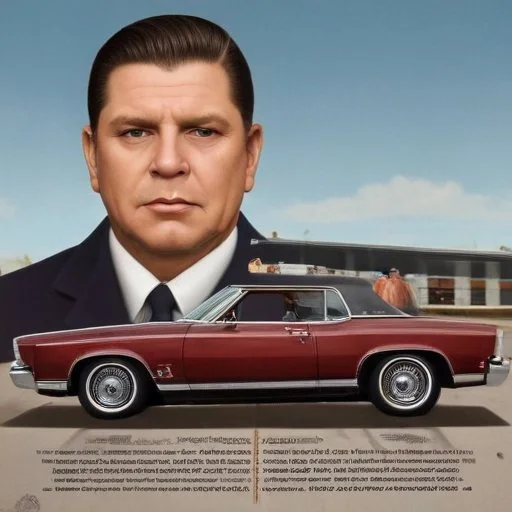
Born on February 14, 1913, in Indiana, Jimmy Hoffa rose to prominence in the labor union movement, becoming one of the most influential figures in American history. As the president of the Teamsters union, he wielded immense power, earning both admiration and fear from those who knew him. With alleged ties to organized crime, Hoffa's life was a labyrinth of secrets, controversies, and untold stories.
On that fateful day, Hoffa had scheduled a meeting with Tony Giacalone, a Detroit mafia leader, and Tony Provenzano, a New Jersey Teamsters leader, at the Machus Red Fox restaurant. According to witnesses, Hoffa received a mysterious phone call around 2:00 p.m., which prompted him to leave the restaurant. He was last seen alive in the parking lot, getting into a maroon 1974 Mercury Marquis driven by Charles "Chuckie" O'Brien, his adopted son and union aide.
The FBI launched an extensive investigation, scouring the area, interviewing witnesses, and analyzing evidence. Despite the extensive efforts, no concrete evidence was found, and no one was ever charged in connection with Hoffa's disappearance. Theories abound, ranging from a mob hit to government intervention, but the truth remains elusive. The case remains one of the most baffling in American criminal history.
Hoffa's disappearance sent shockwaves through the labor union movement, casting a shadow of uncertainty over his legacy. His unwavering commitment to the working class earned him the respect of many, while his alleged connections to organized crime sparked controversy. Today, Hoffa's enigmatic figure continues to fascinate, with many regarding him as a symbol of the darker aspects of American history.
Hoffa's larger-than-life persona was marked by tales of generosity and intimidation. Stories of him doling out cash to struggling workers and lavish spending on union events coexisted with whispers of strong-arm tactics and ruthless ambition. Those who knew him spoke of a charismatic leader who commanded attention, yet struggled with the demons of his own making.
The disappearance of Jimmy Hoffa continues to captivate and intrigue, a testament to the enduring mystique of this legendary figure. As the years pass, the truth behind his vanishing remains a secret, leaving us to ponder the what-ifs and maybes surrounding this American enigma.
On the day of his disappearance, Jimmy Hoffa had scheduled a meeting with Tony Giacalone, a Detroit mafia leader, and Tony Provenzano, a New Jersey Teamsters leader, at the Machus Red Fox restaurant. But who was Tony Giacalone, and what was the significance of this meeting? Giacalone, a powerful figure in the Detroit underworld, had a reputation for being ruthless and cunning. His presence at the meeting suggests that Hoffa was attempting to negotiate with the mafia, possibly to secure their support for his return to the Teamsters union.
The Machus Red Fox restaurant, a popular hangout for mafia figures and union leaders, was owned by a local businessman with alleged ties to organized crime. This raises questions about Hoffa's judgment and his willingness to engage with figures who operated on the fringes of the law.
The meeting itself remains shrouded in mystery, with conflicting accounts of what was discussed and who else was present. However, one thing is clear: the Machus Red Fox connection was a critical element in the chain of events that led to Hoffa's disappearance.
The International Brotherhood of Teamsters, one of the most powerful labor unions in the United States, had a complex and often tumultuous history. Founded in 1903, the union grew rapidly in the 1930s and 1940s, with Hoffa playing a key role in its expansion. However, the union's success was marred by allegations of corruption, violence, and mafia infiltration.
During the 1950s and 1960s, the Teamsters became embroiled in a series of high-profile scandals, including bribery, extortion, and racketeering. Hoffa's leadership was marked by controversy, with critics accusing him of using strong-arm tactics to maintain his grip on power.
Despite these challenges, the Teamsters remained a dominant force in the labor movement, with a membership that peaked at over 2 million in the 1960s. Hoffa's disappearance in 1975 sent shockwaves through the union, leading to a period of instability and power struggles.
Jimmy Hoffa's larger-than-life persona and mysterious disappearance have captivated American popular culture, inspiring countless books, films, and television shows. From the critically acclaimed film "F.I.S.T." (1978) to the popular TV series "The Sopranos" (1999-2007), Hoffa's enigmatic figure has been reimagined and reinterpreted for audiences around the world.
In literature, Hoffa has been the subject of numerous books, including novels, biographies, and memoirs. Authors such as Mario Puzo and Donald R. Wolfe have drawn inspiration from Hoffa's life and times, crafting compelling narratives that blur the lines between fact and fiction.
In popular music, Hoffa's name has been invoked by artists such as Bob Dylan and Warren Zevon, who have used his image to explore themes of power, corruption, and American identity. Hoffa's cultural impact extends far beyond his role as a labor leader, reflecting a deeper fascination with the darker aspects of American history.
Jimm Hoffa's disappearance sent shockwaves through the political establishment, with far-reaching consequences for the labor movement, the Democratic Party, and the Nixon administration. Hoffa's rivalry with President Richard Nixon, who had actively sought to undermine Hoffa's power, added a layer of intrigue to the mystery surrounding his disappearance.
The Nixon administration's involvement in Hoffa's case remains a topic of speculation, with some arguing that the government played a role in his disappearance or was at least aware of the circumstances surrounding it. The subsequent investigation, led by the FBI, was criticized for its lack of transparency and accountability.
Hoffa's disappearance also had significant implications for the labor movement, which was already grappling with internal power struggles and external challenges. The event marked a turning point in the decline of the American labor movement, as unions faced increasing scrutiny and public skepticism.
Jimm Hoffa's disappearance in 1975 occurred against the backdrop of the Cold War, a period of intense ideological rivalry between the United States and the Soviet Union. The event was closely monitored by foreign governments, which saw Hoffa's disappearance as a symbol of American instability and weakness.
The Teamsters union, with its alleged ties to organized crime and suspected communist infiltration, was viewed with suspicion by the U.S. government. Hoffa's disappearance was seen as a potential embarrassment for the Nixon administration, which was already struggling to maintain its credibility in the wake of the Watergate scandal.
The international press covered Hoffa's disappearance extensively, with many outlets speculating about the involvement of foreign governments or intelligence agencies. This speculation was fueled by rumors of Hoffa's connections to international labor leaders and his alleged dealings with foreign powers.