


In a momentous display of diplomacy, U.S. President George Bush and Russian President Boris Yeltsin put their signatures to a joint understanding agreement on arms reduction, marking a crucial step towards a safer world. This landmark accord, later enshrined in the START II treaty, would go on to dismantle a significant portion of the two nations' nuclear arsenals, ushering in a new era of cooperation and reduced global tension.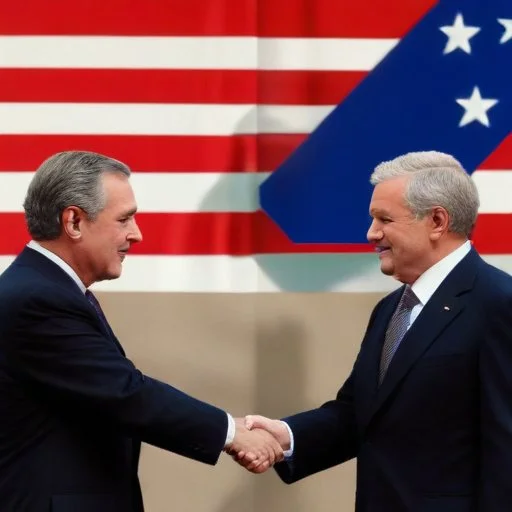
The Cold War, a decades-long period of political and military tension between the United States and the Soviet Union, had finally come to an end with the collapse of the Soviet empire in 1991. As the world basked in the warm glow of newfound freedom and cooperation, leaders on both sides of the Atlantic sensed an opportunity to build a more peaceful and stable world order. The joint understanding agreement on arms reduction was a key milestone in this process, demonstrating the willingness of former adversaries to work together towards a common goal.
U.S. President George Bush, a seasoned diplomat and statesman, played a crucial role in navigating the complex web of international relations following the end of the Cold War. His Russian counterpart, Boris Yeltsin, was a reform-minded leader determined to steer his country towards democracy and economic reform. Together, these two leaders forged a partnership that would have far-reaching implications for global security and international relations.
The joint understanding agreement on arms reduction had a profound impact on global security, leading to a significant reduction in the number of nuclear weapons deployed by both the United States and Russia. This, in turn, helped to reduce tensions and create a more stable international environment. The agreement also paved the way for further arms control agreements, solidifying the partnership between the two nations and creating a new era of cooperation and diplomacy.
The joint understanding agreement on arms reduction was hailed as a major victory for diplomacy and international cooperation, inspiring hope and optimism around the world. The agreement also marked a significant shift in the cultural narrative, as the United States and Russia moved from a state of hostility to one of cooperation and mutual respect.
According to accounts from those present at the signing ceremony, the atmosphere was one of excitement and optimism, as leaders from both nations gathered to celebrate this momentous occasion. President Bush was overheard remarking, "This is a great day for the world, and a testament to the power of diplomacy and cooperation."
The joint understanding agreement on arms reduction helped to set the stage for further arms control agreements, including the Strategic Offensive Reductions Treaty (SORT) and the New START treaty. These agreements have continued to reduce the number of nuclear weapons deployed by both nations, solidifying the partnership between the United States and Russia and creating a more stable international environment.
The joint understanding agreement on arms reduction has been hailed as a landmark achievement in the history of international relations, earning President Bush and President Yeltsin a place among the most esteemed leaders of the 20th century. This historic agreement continues to serve as a powerful symbol of the transformative power of diplomacy and cooperation, inspiring generations of leaders and diplomats to come.
The joint understanding agreement on arms reduction was a pioneering effort in international diplomacy, but it was not the only arms reduction treaty of its kind. In fact, the agreement was part of a larger trend towards disarmament and international cooperation in the post-Cold War era.
One notable comparison can be made with the Intermediate-Range Nuclear Forces Treaty (INF), signed in 1987 by the United States and the Soviet Union. While the INF treaty focused specifically on intermediate-range missiles, the joint understanding agreement took a more comprehensive approach, covering a broader range of nuclear weapons.
Another important comparison can be made with the Treaty on the Non-Proliferation of Nuclear Weapons (NPT), which has been in effect since 1970. While the NPT aims to prevent the spread of nuclear weapons to new countries, the joint understanding agreement focused on reducing the existing nuclear arsenals of the two superpowers.

Boris Yeltsin, the Russian President who signed the joint understanding agreement, was a complex and multifaceted leader. A former communist party official, Yeltsin underwent a significant transformation in the late 1980s, embracing democratic reforms and market-oriented economics.
Yeltsin's presidency was marked by a series of bold moves, including the dissolution of the Soviet Union and the introduction of radical economic reforms.Despite his reformist credentials, Yeltsin was not without his critics. Some accused him of being reckless and impulsive, while others saw him as a pragmatic leader willing to take risks to achieve his goals.
The joint understanding agreement on arms reduction was signed against the backdrop of a rapidly changing geopolitical landscape. The collapse of the Soviet Union had created a power vacuum in Eastern Europe, while the United States was grappling with the consequences of its newfound status as the world's sole superpower.
In this context, the agreement can be seen as an attempt by both nations to establish a new modus vivendi, one that would recognize their shared interests and responsibilities in maintaining global stability.

The agreement marked a significant shift in the cultural narrative, as the United States and Russia moved from a state of hostility to one of cooperation and mutual respect.
In the aftermath of the agreement, artists, writers, and musicians began to explore new themes and motifs, reflecting the changing mood of the times. It was an era of hope and optimism, and the joint understanding agreement was seen as a powerful symbol of the possibilities of international cooperation.
Historians have long debated the significance of the joint understanding agreement on arms reduction, with some seeing it as a major breakthrough in international relations and others viewing it as a tactical maneuver by the United States and Russia.
Some historians have argued that the agreement marked a turning point in the Cold War, while others have seen it as a continuation of the existing pattern of superpower rivalry.Despite these differing interpretations, there is general agreement that the joint understanding agreement was a landmark event in the history of international relations, one that paved the way for further arms control agreements and a more stable international environment.