


In the sweltering heart of Africa, a legendary journalist embarked on a perilous journey to find a fellow explorer and missionary, lost in the vast expanse of the uncharted continent. Henry Morton Stanley's trek to find David Livingstone would become one of the most iconic and daring feats of exploration in history, cementing his reputation as a fearless adventurer and intrepid reporter.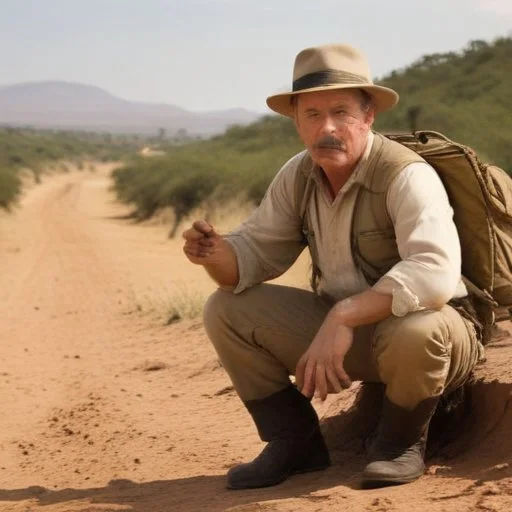
In the late 19th century, European explorers were venturing deeper into the African continent, driven by a thirst for discovery and a desire to spread Christianity. David Livingstone, a Scottish missionary and explorer, had been trekking through the African wilderness, spreading the Gospel and documenting the region's uncharted territories. His last dispatch, sent in 1869, sparked concern among his peers, and the world waited with bated breath for news of his whereabouts.
Henry Morton Stanley, a journalist and adventurer, had built a reputation for his fearlessness and tenacity. Born John Rowlands in 1841, Stanley had reinvented himself as a journalist, covering the American Civil War and later becoming a correspondent for the New York Herald. His editor, James Gordon Bennett, commissioned Stanley to find Livingstone, and the journalist set off on his epic quest.
On November 12, 1871, Stanley embarked on his treacherous journey, facing sweltering heat, torrential rains, and treacherous terrain. He navigated through dense jungles, crossed scorching deserts, and braved raging rivers, all while battling malaria, dysentery, and other deadly diseases. Stanley's unwavering determination and resourcefulness allowed him to outmaneuver hostile tribes, rival expeditions, and even a violent attack by a group of bandits.
After 236 days of arduous travel, Stanley finally stumbled upon Livingstone in the small village of Ujiji, Tanzania, on November 10, 1871. The emotional meeting between the two men would become an iconic moment in the annals of exploration. Stanley's famous greeting, "Dr. Livingstone, I presume?" has been etched into history, symbolizing the culmination of his unwavering pursuit.
The successful discovery of Livingstone had far-reaching consequences. Stanley's expedition opened up the African continent to further exploration, and his writings helped shape public perception of the region. The encounter also sparked a new wave of interest in missionary work, with many organizations sending representatives to Africa to spread the Gospel.
The Stanley-Livingstone expedition had a profound impact on the cultural and social landscape of the time. The encounter helped humanize Africa, dispelling myths and misconceptions about the continent and its inhabitants. The expedition also raised awareness about the plight of African slaves, contributing to the abolitionist movement.
Stanley's journals and writings provide a unique glimpse into the challenges and triumphs of his expedition. His vivid descriptions of the African wilderness, its people, and the perils he faced have captivated readers for generations, inspiring a new wave of explorers and adventurers.
The Stanley-Livingstone expedition has left an indelible mark on the world of exploration, journalism, and humanitarian work. Stanley's unwavering dedication to his craft, coupled with Livingstone's selfless missionary work, has inspired generations to venture into the unknown, driven by a sense of curiosity, compassion, and adventure.
"The greatest glory in living lies not in never falling, but in rising every time we fall." – Henry Morton Stanley
"I am prepared to go anywhere, provided it be forward." – David Livingstone
Henry Morton Stanley's quest to find David Livingstone embodies the essence of adventure, journalistic integrity, and humanitarian spirit. As we reflect on this epic journey, we are reminded of the power of determination, curiosity, and compassion, inspiring us to embark on our own unrelenting pursuits, driven by the thrill of discovery and the passion for exploration.
The journey of Henry Morton Stanley and David Livingstone was not just a remarkable feat of exploration, but also a testament to the complexities of European-African relations during the late 19th century. The two men's paths crossed at a time when European powers were scrambling for colonies and resources in Africa, and their encounter had far-reaching implications for the continent's future.
Stanley's expedition, sponsored by the New York Herald, was part of a larger effort by European powers to explore and claim African territories. The journalist's writings about his journey helped shape public opinion about Africa and its people, often perpetuating stereotypes and reinforcing the notion of European superiority.

David Livingstone was a complex figure, driven by a strong sense of Christian duty and a passion for exploration. Born in Scotland in 1813, he was raised in poverty and went on to become a missionary and doctor, dedicating his life to spreading the Gospel in Africa.
Despite his noble intentions, Livingstone was not without controversy. He was known for his strict views on discipline and his treatment of local Africans, which often bordered on the harsh.
The encounter between Stanley and Livingstone had a profound impact on the cultural landscape of the time. The two men's meeting helped humanize Africa and its people, dispelling myths and misconceptions about the continent.
The expedition also sparked a new wave of interest in African exploration, inspiring a generation of adventurers and explorers to venture into the unknown.

The late 19th century was a time of intense geopolitical competition, with European powers scrambling for colonies and resources in Africa. The scramble for Africa, as it came to be known, had significant implications for the continent's future, leading to the partition of Africa and the imposition of colonial rule.
Stanley and Livingstone's encounter took place against this backdrop of competition and exploitation, with European powers vying for influence and control in Africa.
Stanley's journals and writings provide a unique glimpse into the challenges and triumphs of his expedition. His vivid descriptions of the African wilderness, its people, and the perils he faced have captivated readers for generations.
The famous meeting between Stanley and Livingstone has also been immortalized in art, with numerous paintings and illustrations depicting the encounter. These artifacts offer a fascinating window into the cultural and historical context of the time.