


Juan de Oate's audacious expedition into the uncharted territories of Santa Fe de Nuevo Mxico in 1598 marked the beginning of a transformative era in the region's history, forever altering the trajectory of its cultural, economic, and social landscape. This pivotal moment is renowned for being the first successful European settlement in the southwestern United States, paving the way for Spanish colonization and shaping the destiny of the region.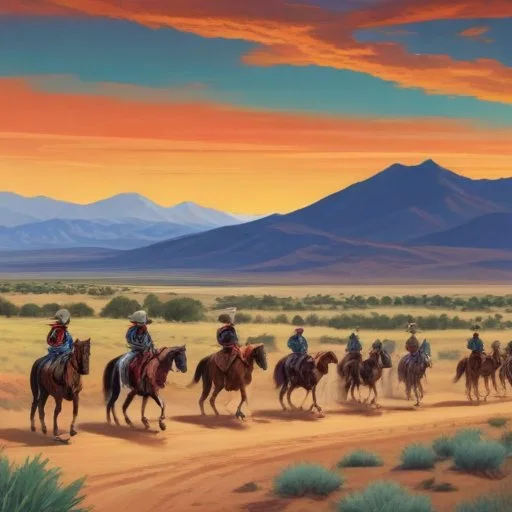
In the late 16th century, Spanish explorers had already begun to venture into the northern regions of Mexico, driven by the allure of untold riches and the promise of new trade routes. Against this backdrop, Juan de Oate, a seasoned explorer and politician, was appointed by King Philip II of Spain to lead an expedition to claim the untamed expanse of Santa Fe de Nuevo Mxico.
On January 26, 1598, Oate set out from the city of Zacatecas, Mexico, with a formidable entourage comprising over 500 colonists, including farmers, soldiers, and missionaries. The arduous journey took the expedition through treacherous terrain, navigating treacherous river crossings, and braving the harsh desert climate. As they traversed the region, they encountered various indigenous peoples, forging complex alliances that would have far-reaching consequences.
The conquest of Santa Fe de Nuevo Mxico marked a significant milestone in Spanish colonization, paving the way for the establishment of a prosperous colony that would thrive for centuries to come. The expedition's success also led to the displacement and marginalization of indigenous peoples, sparking a complex and often tumultuous chapter in the region's history.
As we delve into the fascinating narrative of Juan de Oate's conquest, we are reminded of the power of human perseverance, the allure of untold riches, and the complex interplay between cultures that has shaped the rich tapestry of human history.
The journey to Santa Fe de Nuevo México was not without its challenges. The expedition had to navigate treacherous terrain, including steep cliffs, raging rivers, and scorching deserts. The harsh climate and lack of resources took a toll on the colonists, with many falling ill or dying along the way. Despite these obstacles, Oñate persevered, driven by his vision to establish a Spanish settlement in the region.
In addition to the physical challenges, Oñate also faced resistance from the native populations. The expedition encountered various indigenous tribes, including the Pueblo, Apache, and Navajo, who were wary of the Spanish and their intentions. Oñate had to employ his diplomatic skills to forge alliances with these tribes, often relying on the help of Fray Francisco de San Miguel, who served as an interpreter and mediator.

Fray Francisco de San Miguel: A Devout Missionary and Diplomat
Fray Francisco de San Miguel was a Franciscan missionary who played a crucial role in Oñate's expedition. Born in Spain, San Miguel had spent several years in Mexico, where he learned various indigenous languages and studied the customs of the native populations. He joined Oñate's expedition as a chaplain and interpreter, using his linguistic skills to communicate with the native tribes and facilitate alliances.
San Miguel's peaceful nature and genuine interest in the welfare of the indigenous peoples earned him the respect and trust of the native populations. He worked tirelessly to establish relationships with the tribes, often risking his own life to mediate disputes and prevent conflicts. Through his efforts, San Miguel helped to cement the Spanish presence in the region, paving the way for the establishment of missions and the spread of Christianity.
The conquest of Santa Fe de Nuevo México had a profound impact on the cultural landscape of the region. The influx of Spanish colonists brought with it a new language, religion, and way of life, which often clashed with the traditions and customs of the native populations. The establishment of missions and the spread of Christianity led to the conversion of many indigenous peoples, who were forced to abandon their ancestral beliefs and practices.
The Spanish also introduced new technologies, such as irrigation systems and agriculture, which transformed the region's economy and environment. The construction of roads, bridges, and buildings also altered the physical landscape, introducing European-style architecture and urban planning to the region.

The conquest of Santa Fe de Nuevo México took place within the broader context of Spanish colonial expansion. In the late 16th century, Spain was engaged in a global struggle for power and influence, competing with other European powers such as Portugal, England, and France. The Spanish crown saw the colonization of the Americas as a means to expand its empire, gain access to new resources, and spread Christianity.
The establishment of a Spanish settlement in Santa Fe de Nuevo México was a strategic move to secure the region's natural resources, including its fertile land, abundant water, and mineral wealth. The colony also served as a bulwark against French and English encroachment, protecting Spain's claims to the region and maintaining its dominance in the Americas.
Historians have long debated the significance of Oñate's conquest of Santa Fe de Nuevo México. Some have portrayed Oñate as a heroic figure, who bravely ventured into the unknown and established a Spanish settlement in the region. Others have criticized Oñate's treatment of the native populations, accusing him of brutality, exploitation, and cultural imperialism.
Recent scholarship has sought to nuance our understanding of the conquest, highlighting the complexities and contradictions of Oñate's expedition. Historians have emphasized the agency and resistance of the indigenous peoples, who played a crucial role in shaping the course of the conquest and the subsequent development of the colony.