


In the summer of 2001, a historic gathering of leaders from six nations took place in Shanghai, China, marking the establishment of the Shanghai Cooperation Organisation (SCO). This pivotal moment marked the beginning of a new chapter in regional cooperation, aimed at fostering economic growth, security, and stability in the heart of Eurasia.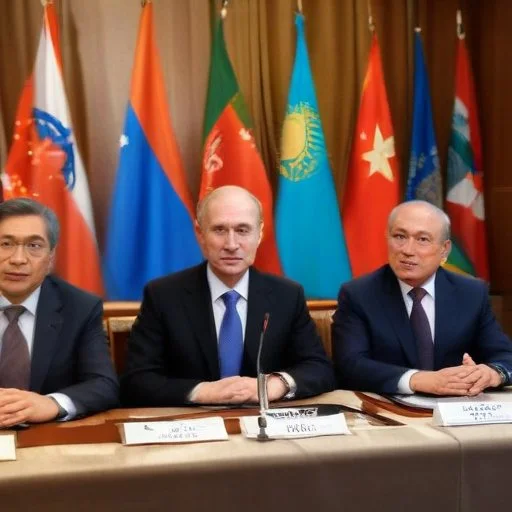
The SCO was the brainchild of Russian President Vladimir Putin, Chinese President Jiang Zemin, and the leaders of four Central Asian nations - Kazakhstan, Kyrgyzstan, Tajikistan, and Uzbekistan. This powerful alliance was formed to promote mutual trust, cooperation, and dialogue among its member states, with the ultimate goal of driving development and progress in the region.
The idea of the SCO was born out of the Shanghai Five mechanism, a informal grouping of nations founded in 1996 to address issues related to border demarcation, security, and regional cooperation. As the relationships between these nations grew stronger, the need for a more formalized framework became apparent, leading to the creation of the SCO.
The signing of the Declaration on the Establishment of the Shanghai Cooperation Organisation marked a significant milestone in regional cooperation. The SCO's founding members recognized the importance of working together to address common challenges, such as terrorism, separatism, and extremism, and to capitalize on opportunities for economic growth and development.
The SCO is guided by several key principles, including mutual trust, equality, and respect for sovereignty and territorial integrity. The organisation's primary objectives include:
The formation of the SCO has had a profound impact on the region, serving as a beacon of hope for a new century of cooperation and collaboration. As the organisation continues to grow and evolve, it remains committed to its core values of mutual respect, trust, and cooperation, shaping a brighter future for the people of Eurasia.
Today, the SCO has grown to include eight member states, with several others holding observer or dialogue partner status. The organisation's influence extends far beyond its member states, serving as a model for regional cooperation and a symbol of the power of collective action in addressing common challenges.
In the words of Chinese President Xi Jinping, "The SCO has become a vital platform for regional cooperation, playing an increasingly important role in promoting peace, stability, and development in the region."
The seeds of the Shanghai Cooperation Organisation (SCO) were sown in the early 1990s, when China and Russia began to rebuild their relations after the dissolution of the Soviet Union. The breakup of the Soviet Union led to the emergence of independent Central Asian nations, creating a power vacuum in the region. To address the ensuing security concerns, China, Russia, and the Central Asian nations formed the Shanghai Five mechanism in 1996.
This informal grouping aimed to demarcate borders, enhance security, and promote regional cooperation. The Shanghai Five mechanism laid the groundwork for the SCO, as it established a platform for dialogue and cooperation among its member states. Over time, the relationships between these nations grew stronger, paving the way for the creation of the SCO.
The SCO's establishment was not without its challenges. The organisation faced opposition from Western nations, which viewed it as a potential counterbalance to their influence in the region. However, the SCO's founding members persevered, driven by their shared vision of regional cooperation and development. Today, the SCO stands as a testament to the power of collective action in addressing common challenges and promoting regional prosperity.
Vladimir Putin: The Architect of the SCO
Russian President Vladimir Putin played a pivotal role in the formation of the Shanghai Cooperation Organisation (SCO). Putin recognised the importance of regional cooperation in addressing common security concerns and promoting economic development. His leadership and vision helped bring together the SCO's founding members, paving the way for the organisation's establishment in 2001.
Under Putin's guidance, Russia became a driving force behind the SCO, working closely with China and the Central Asian nations to build trust and foster cooperation. Putin's commitment to the SCO has been instrumental in shaping the organisation's agenda and driving its growth.
The SCO in Comparison to Other Regional Organisations
The Shanghai Cooperation Organisation (SCO) is often compared to other regional organisations, such as the European Union (EU) and the Association of Southeast Asian Nations (ASEAN). While these organisations share some similarities with the SCO, they also have distinct differences.
Unlike the EU, which focuses primarily on economic integration, the SCO places equal emphasis on security, economic cooperation, and cultural exchanges. Similarly, while ASEAN has a stronger focus on economic cooperation, the SCO's scope is broader, encompassing a wide range of areas, including security, defence, and culture.
The SCO's unique character lies in its ability to balance the interests of its member states, fostering a sense of mutual trust and cooperation in a region marked by diversity and complexity.

The Economic Impact of the SCO
The Shanghai Cooperation Organisation (SCO) has had a profound impact on the economies of its member states. Since its establishment, the SCO has facilitated the growth of trade and investment among its member states, driving economic development in the region.
The SCO has implemented various initiatives aimed at promoting economic cooperation, including the creation of a free trade area, the establishment of a development bank, and the facilitation of cross-border infrastructure projects.
As a result, trade among SCO member states has increased significantly, with China, Russia, and Kazakhstan emerging as the organisation's economic powerhouses. The SCO's economic impact extends beyond its member states, as it plays a key role in shaping the global economy and promoting regional prosperity.
The SCO's Role in Global Politics
The Shanghai Cooperation Organisation (SCO) has become an increasingly important player in global politics, offering a unique perspective on international relations and cooperation. The SCO's commitment to the principles of sovereignty, territorial integrity, and non-interference in internal affairs sets it apart from other regional organisations.
The SCO has also played a key role in shaping global governance, advocating for a more inclusive and diverse international system. The organisation's growing influence has led to increased engagement with other regional organisations, such as the EU and ASEAN, and has enhanced its ability to address global challenges.
As the SCO continues to grow and evolve, its role in global politics will remain critical, offering a distinct voice and perspective on international cooperation and development.