


The London Charter, signed on August 8, 1945, is a pivotal moment in history, marking the establishment of the laws and procedures for the Nuremberg trials. This monumental agreement, signed by France, the United Kingdom, the Soviet Union, and the United States, paved the way for holding Nazi war criminals accountable for their atrocities during World War II.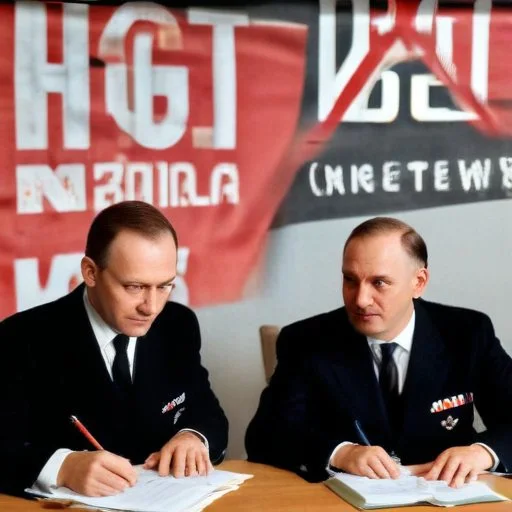
In the aftermath of World War II, the Allied powers recognized the need to bring those responsible for the war's atrocities to justice. The Moscow Conference of 1943, attended by the foreign ministers of the United States, the United Kingdom, and the Soviet Union, laid the groundwork for the establishment of a tribunal to try war criminals. The London Charter was the culmination of these efforts, providing the legal framework for the Nuremberg trials.
The London Charter was negotiated by a committee comprising Robert H. Jackson (United States), Sir David Maxwell Fyfe (United Kingdom), Iona Nikitchenko (Soviet Union), and François de Menthon (France). These individuals played a crucial role in shaping the Charter's provisions and ensuring its successful implementation.
The London Charter had far-reaching consequences, setting a precedent for international criminal law and establishing the principle of individual responsibility for war crimes. The Nuremberg trials, made possible by the Charter, brought to justice many high-ranking Nazi officials, providing a measure of closure for victims and their families.
The London Charter and the Nuremberg trials had a profound impact on the global psyche, reinforcing the notion that even the most powerful individuals can be held accountable for their actions. The trials also inspired the development of international humanitarian law, influencing the establishment of subsequent tribunals and courts, such as the International Criminal Court.
The London Charter and the Nuremberg trials serve as a stark reminder of the horrors of war and the importance of upholding human rights. As a testament to the power of international cooperation and the pursuit of justice, these events continue to shape our understanding of accountability, impunity, and the rule of law.
Today, as the world grapples with ongoing conflicts and human rights abuses, the London Charter and the Nuremberg trials remain a beacon of hope, inspiring future generations to strive for a world where justice and accountability reign supreme.
The Moscow Conference of 1943, where the Allied powers first discussed the idea of trying Nazi war criminals, was a pivotal moment in the lead-up to the London Charter. It was during this conference that the Soviet Union, led by Joseph Stalin, pushed for the execution of top Nazi officials without trial, a stance that was later rebuffed by the United States and the United Kingdom. This disagreement highlighted the complexities of dealing with war crimes and the need for a more formalized approach, which the London Charter would later provide.
The London Charter's negotiation process was not without its challenges. The four Allied powers had different opinions on the scope of the tribunal, the definition of war crimes, and the fate of top Nazi officials. Robert H. Jackson, the chief American prosecutor, played a crucial role in mediating these differences and finding common ground, ultimately ensuring the Charter's successful adoption.

Sir David Maxwell Fyfe, the British delegate to the London Charter negotiations, was a key figure in shaping the Charter's provisions. A seasoned lawyer and politician, Maxwell Fyfe brought a wealth of experience to the negotiating table, having served as the Attorney General for England and Wales during World War II. His commitment to holding Nazi war criminals accountable was unwavering, and his diplomatic skills helped to build consensus among the Allied powers.
He played a crucial role in drafting the Charter's provisions on war crimes, crimes against humanity, and conspiracy, laying the groundwork for the Nuremberg trials.
The London Charter's approach to trying Nazi war criminals was groundbreaking, but it was not without its precedents. The Hague Conventions of 1899 and 1907, which established the rules of war and the treatment of prisoners, influenced the Charter's provisions on war crimes and crimes against humanity. Similarly, the Geneva Protocol of 1925, which banned the use of poison gas in warfare, informed the Charter's definition of war crimes.
Despite these influences, the London Charter marked a significant departure from previous international agreements. Its emphasis on individual responsibility and the prosecution of war crimes as international crimes set a new standard for international justice.

The Nuremberg trials, enabled by the London Charter, had a profound impact on popular culture. Films like "Judgment at Nuremberg" (1961) and "Nuremberg" (2000) dramatized the trials, bringing the horrors of the Holocaust to a wider audience. Literature, too, was influenced by the trials, with authors like Hannah Arendt and Telford Taylor writing extensively on the subject.
The trials also inspired a new generation of lawyers, judges, and human rights advocates. The idea that individuals could be held accountable for their actions, no matter their nationality or political affiliation, resonated deeply with many.
The London Charter's establishment of the Nuremberg trials had significant economic implications. The trials themselves were costly, with estimates suggesting that the United States alone spent over $10 million on the proceedings. However, the long-term benefits of the trials far outweighed the costs. The trials helped to strengthen international relations, promote post-war reconstruction, and establish a new order of international justice.
The Charter's impact on the global economy was also felt in the realm of international trade. The trials helped to establish the principle of individual responsibility, which has since been applied to cases of corporate malfeasance and economic crimes.