


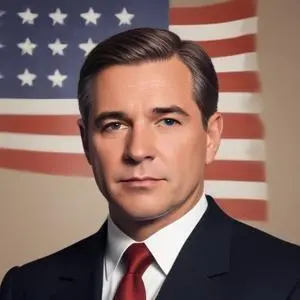
A renowned lawyer, judge, and politician who served as the 57th US Attorney General and played a key role in the Nuremberg Trials, prosecuting Nazi war criminals.
Robert Houghwout Jackson, the 57th Associate Justice of the United States Supreme Court, left an indelible mark on the American legal system. As the only person to have held the offices of Solicitor General, Attorney General, and Supreme Court Justice, Jackson's dedication to upholding the law and protecting individual rights remains unparalleled.
Born on February 13, 1892, in Spring Creek Township, Pennsylvania, Jackson's strong work ethic and passion for justice were instilled in him from a young age. He studied at Albany Law School, where he developed a deep understanding of the law, despite not completing his degree. Jackson's commitment to public service led him to serve as a private secretary to New York State Senator, Perley A. Pitcher, before embarking on a illustrious legal career.
Jackson's role as Chief United States Prosecutor at the Nuremberg trials of Nazi war criminals following World War II showcased his unwavering commitment to justice. His eloquent opening statement, which emphasized the importance of individual responsibility, set the tone for the trials and solidified his position as a champion of human rights.
Jackson's tenure on the Supreme Court was marked by a series of landmark cases that shaped the course of American law. His dissents in Terminiello v. City of Chicago, Zorach v. Clauson, Everson v. Board of Education, and Korematsu v. United States demonstrated his commitment to protecting individual liberties and upholding the Constitution.
Meanwhile, his majority opinion in West Virginia State Board of Education v. Barnette and concurring opinion in Youngstown Sheet & Tube Co. v. Sawyer showcased his dedication to promoting free speech and limiting government overreach.
Jackson's writing style, characterized by clarity, wit, and wisdom, has inspired generations of legal scholars and practitioners. Justice Antonin Scalia, who occupied the same seat on the Supreme Court, revered Jackson as the "best legal stylist of the 20th century."
Jackson's wisdom continues to resonate today, as seen in his iconic quotes:
Jackson's contributions to American jurisprudence have left an indelible mark on the Supreme Court and the legal community. His commitment to justice, eloquence, and integrity have cemented his place as one of the most revered justices in American history.
Born in 1882
Led the United States through the Great Depression and World War II, implementing a series of reforms known as the New Deal and helping to establish the country as a global superpower.
Born in 1872
The 12th Chief Justice of the United States, a prominent lawyer and jurist, is most known for his significant contributions to shaping the Supreme Court's decisions and upholding the Constitution. He played a crucial role in establishing the Court's liberal wing during the New Deal era.
Born in 1886
A U.S. Supreme Court Justice who served for 34 years, known for his strong support of individual liberties and First Amendment rights.
Born in 1882
A renowned Supreme Court Justice and Harvard Law professor who played a significant role in shaping American law and policy, particularly in the areas of civil liberties and judicial restraint.
Born in 1898
A Supreme Court Justice who championed individual rights and environmental protection, leaving a lasting impact on American law and conservation.
Born in 1879
A skilled stenographer who rose to become a prominent politician, serving as Secretary of State and playing a key role in shaping post-WWII foreign policy. He's known for his influential diplomatic efforts during a pivotal moment in world history.
Born in 1867
A prominent figure in American politics, serving as Secretary of State and playing a key role in shaping foreign policy during World War II. He's also known for his advocacy of international cooperation and collective security.
Born in 1880
A highly decorated military leader and statesman who played a crucial role in shaping post-WWII foreign policy and was awarded the Nobel Peace Prize for his efforts. He's most known for authoring the Marshall Plan, a massive economic aid program that helped rebuild war-torn Europe.
