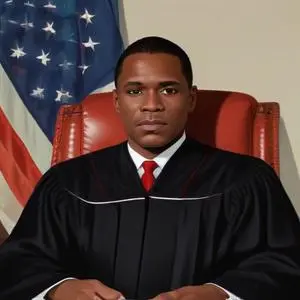
Hugo Black: The Liberal Lion of the Supreme Court
A Champion of Civil Liberties
Hugo Black, a towering figure in American jurisprudence, is renowned for his unwavering commitment to the Bill of Rights and his unrelenting defense of individual liberties. As a Supreme Court Justice, he left an indelible mark on the judicial landscape, shaping the course of American history with his progressive and principled decisions.
Early Life and Politics
Born on February 27, 1886, in Harlan, Alabama, Black grew up in a era marked by racial tensions and social unrest. He studied law at the University of Alabama and later established a successful practice in Birmingham. His entry into politics was marked by a stint in the Alabama House of Representatives, where he championed labor rights and social reform.
Rise to Prominence
Black's political career gained momentum when he was elected to the U.S. Senate in 1926, where he served for over a decade. As a senator, he emerged as a vocal advocate for President
Franklin D. Roosevelt's New Deal policies, earning the nickname "the champion of the common man." His ardent support for liberal causes and his reputation as a reformer paved the way for his appointment to the Supreme Court in 1937.
Supreme Court Tenure
Black's 34-year tenure on the Supreme Court was marked by landmark decisions that reshaped American law. He was a stalwart defender of the First Amendment, famously declaring, "No law means no law." His absolute stance on freedom of speech and press earned him the respect of civil libertarians nationwide. Black's commitment to the Bill of Rights was unshakeable, and he consistently pushed for its expansion to protect individual liberties.
Landmark Cases
- West Virginia State Board of Education v. Barnette (1943): Black wrote the majority opinion, which held that public school students cannot be forced to salute the American flag or recite the Pledge of Allegiance.
- McCollum v. Board of Education (1948): Black authored the majority opinion, which declared that public schools cannot sponsor religious activities, even if they are voluntary.
- Gideon v. Wainwright (1963): Black concurred with the majority, ensuring that indigent defendants have the right to counsel in state criminal proceedings.
Philosophical Contributions
Black's jurisprudence was rooted in a textualist reading of the Constitution, which emphasized the importance of adhering to the original meaning of the document. He believed that the liberties guaranteed in the Bill of Rights were incorporated into the Fourteenth Amendment, thereby applying to state governments as well. This philosophy has had a lasting impact on American constitutional law.
Personal Milestones and Controversies
Black's life was not without controversy. In the 1920s, he briefly joined the Ku Klux Klan, an affiliation he later renounced. Despite this, his commitment to civil rights and social justice remained unwavering. Black served as a mentor to Justice
Thurgood Marshall, the first African American to sit on the Supreme Court.
Legacy
Hugo Black's legacy extends beyond his judicial decisions to his enduring influence on American law and politics. As a champion of civil liberties, he left an indelible mark on the Supreme Court, shaping the course of American history. His commitment to individual freedoms and his unshakeable defense of the Bill of Rights continue to inspire generations of judges, lawyers, and citizens.
FAQ
What was Hugo Blacks role in the US Supreme Court?
Hugo Black served as an Associate Justice of the US Supreme Court from 1937 to 1971, playing a crucial role in shaping the Courts decisions on civil rights, free speech, and labor law.
What was Hugo Blacks stance on civil liberties?
Hugo Black was a strong advocate for individual rights and civil liberties, famously dissenting in the 1940 Korematsu v. United States case, which upheld Japanese American internment during WWII.
What was Hugo Blacks early life and education like?
Born in 1886 in Harlan, Alabama, Hugo Black graduated from the University of Alabama School of Law in 1906 and went on to practice law before entering politics.
How did Hugo Blacks military service shape his views?
Black served as a captain in the US Army during WWI, an experience that influenced his later judicial decisions on issues like pacifism and conscientious objection.
What legacy did Hugo Black leave on the US Supreme Court?
Hugo Blacks 34-year tenure on the Supreme Court saw significant shifts in the Courts stance on issues like segregation, voting rights, and free speech, earning him a reputation as a champion of individual liberties.