


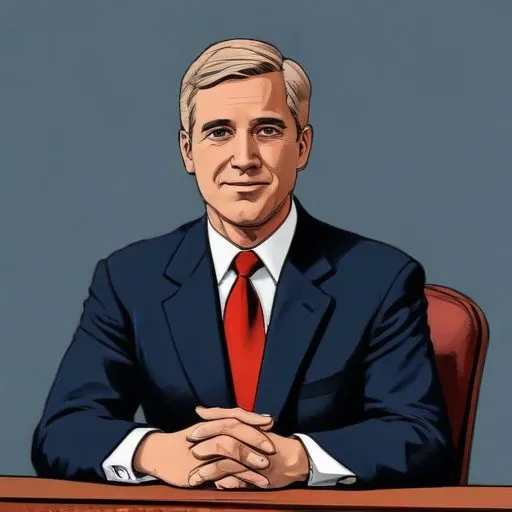
A skilled stenographer who rose to become a prominent politician, serving as Secretary of State and playing a key role in shaping post-WWII foreign policy. He's known for his influential diplomatic efforts during a pivotal moment in world history.
James F. Byrnes is renowned for his remarkable career, spanning multiple branches of government, including the U.S. Congress, the U.S. Supreme Court, and the executive branch, where he served as the 49th U.S. Secretary of State under President Harry S. Truman. As one of the few politicians to have held positions in all three branches, Byrnes left an indelible mark on American politics.
Born on May 2, 1882, in Charleston, South Carolina, Byrnes pursued a legal career with the support of his cousin, Governor Miles Benjamin McSweeney. He won election to the U.S. House of Representatives in 1911, where he served for 14 years, becoming a close ally of President Woodrow Wilson and a protégé of Senator Benjamin Tillman.
Although Byrnes narrowly lost the 1924 Senate election to Coleman Livingston Blease, he later defeated Blease in the 1930 Democratic primary and joined the Senate in 1931. Historian George E. Mowry praised Byrnes as the most influential Southern member of Congress between John Calhoun and Lyndon Johnson.
In the Senate, Byrnes championed the New Deal, advocating for federal investment in South Carolina water projects. He also supported President Franklin D. Roosevelt's foreign policy, calling for a hard line against the Axis powers. Byrnes' influence extended beyond domestic policy, as he played a crucial role in shaping the country's response to the looming threat of World War II.
In 1941, Roosevelt appointed Byrnes to the Supreme Court, where he served for a year before taking on the role of Director of the Office of Economic Stabilization. Byrnes later became the 49th U.S. Secretary of State under President Harry S. Truman, overseeing the post-war reconstruction efforts and playing a key role in shaping the Marshall Plan.
Byrnes' extraordinary career has left a lasting impact on American politics, demonstrating his adaptability and dedication to public service. His influence extends beyond his own accomplishments, as he paved the way for future generations of politicians to pursue careers across multiple branches of government.
Byrnes' remarkable career serves as a testament to his dedication to public service, offering valuable insights into the intricacies of American politics and the importance of bipartisan cooperation.
Through his remarkable career, James F. Byrnes has left an indelible mark on American politics, serving as a testament to the power of dedication and commitment to public service.
Born in 1884
The 33rd President of the United States, a strong leader who made tough decisions, including dropping atomic bombs on Japan and establishing the Marshall Plan to rebuild Europe after WWII.
Born in 1880
A highly decorated military leader and statesman who played a crucial role in shaping post-WWII foreign policy and was awarded the Nobel Peace Prize for his efforts. He's most known for authoring the Marshall Plan, a massive economic aid program that helped rebuild war-torn Europe.
Born in 1893
The 51st United States Secretary of State played a crucial role in shaping post-World War II foreign policy, particularly in the formation of the Marshall Plan and the creation of NATO. He was a key figure in the Cold War era.
Born in 1867
A prominent figure in American politics, serving as Secretary of State and playing a key role in shaping foreign policy during World War II. He's also known for his advocacy of international cooperation and collective security.
Born in 1871
A prominent diplomat who played a crucial role in establishing the United Nations and was awarded the Nobel Peace Prize in 1945 for his efforts to promote international cooperation. He served as Secretary of State from 1933 to 1944, implementing policies that helped shape the post-World War II world order.
Born in 1882
Led the United States through the Great Depression and World War II, implementing a series of reforms known as the New Deal and helping to establish the country as a global superpower.
Born in 1878
The Soviet Union's ruthless leader who ruled with an iron fist, implementing policies that led to widespread famine and purges, while also playing a crucial role in defeating Nazi Germany in World War II.
Born in 1871
Prolific writer of historical novels and adventure stories, also a talented landscape painter.
