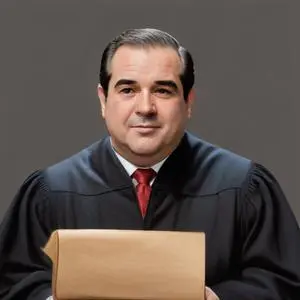
Antonin Scalia: The Intellectual Anchor of Originalism
A Legacy of Conservative Jurisprudence
Antonin Scalia is renowned for being the intellectual anchor of the originalist and textualist position in the U.S. Supreme Court's conservative wing. Throughout his 30-year tenure as an associate justice, he catalyzed an originalist and textualist movement in American law, solidifying his place as one of the most influential jurists of the 20th century.
Early Life and Education
Born on March 11, 1936, in Trenton, New Jersey, Scalia grew up in a devout Catholic family. He attended Xavier High School, a Jesuit institution, before pursuing his undergraduate degree from Georgetown University. Scalia then graduated from Harvard Law School, where he developed a strong foundation in law and jurisprudence.
Career Highlights and Major Works
Scalia's illustrious career spanned across academia, politics, and the judiciary. Notable milestones include:
- Serving as a law professor at the University of Virginia
- Working in the Nixon and Ford administrations, eventually becoming an Assistant Attorney General under President Gerald Ford
- Teaching at the University of Chicago, where he became one of the first faculty advisers of the Federalist Society
- Being appointed as a judge of the U.S. Court of Appeals for the District of Columbia Circuit by President Ronald Reagan in 1982
- Receiving a unanimous confirmation by the U.S. Senate in 1986, becoming the first Italian-American justice of the Supreme Court
Philosophical Contributions and Beliefs
Scalia was a staunch advocate of originalism in constitutional interpretation and textualism in statutory interpretation. He believed in adhering to the original intent of the Constitution's framers and the literal meaning of statutory texts. His philosophical approach had a profound impact on American law, shaping the conservative wing of the Supreme Court.
Influence on Modern Society
Scalia's influence extends beyond the realm of law. He has been credited with inspiring a new generation of conservative thinkers and jurists. His textualist and originalist approach has permeated American politics, influencing policy decisions and judicial appointments.
Quotes and Memorable Sayings
Scalia was known for his wit and persuasive writing style. Some of his notable quotes include:
- "The Constitution is not a living organism, it's a legal document."
- "If we're picking people to draw out of hats to decide what the Constitution means, then you might as well have amonkey."
- "I would think that if you are out to establish the principle that the Constitution is not always an obstacle to what the government wants to do, you're unlikely to succeed."
Awards and Honors
Scalia was posthumously awarded the Presidential Medal of Freedom in 2018. The Antonin Scalia Law School at
George Mason University was named in his honor, a testament to his enduring legacy in American law.
Legacy and Comparative Analysis
Scalia's impact on American jurisprudence is comparable to that of other influential justices, such as
Clarence Thomas and
William Rehnquist. His textualist and originalist approach has left an indelible mark on the Supreme Court, shaping the course of American law and politics for generations to come.
FAQ
What was Antonin Scalias role on the Supreme Court?
Scalia served as an Associate Justice of the Supreme Court from 1986 until his death in 2016, earning a reputation as a conservative originalist and textualist.
What was Antonin Scalias judicial philosophy?
Scalia believed in a strict, literal interpretation of the Constitution and advocated for judicial restraint, arguing that judges should not impose their own policy preferences on the law.
What were Antonin Scalias most notable opinions?
Scalia wrote influential opinions on cases such as Bush v. Gore, District of Columbia v. Heller, and Citizens United v. Federal Election Commission, shaping American jurisprudence on issues like voting rights, gun control, and campaign finance.
What was Antonin Scalias relationship with his colleagues?
Scalia was known for his sharp wit and piercing critiques, often engaging in lively debates and disagreements with his liberal colleagues, particularly Justice Ruth Bader Ginsburg.
What is Antonin Scalias legacy on the Supreme Court?
Scalias legacy is marked by his unwavering commitment to originalism, his incisive writing, and his impact on the Courts jurisprudence, ensuring his influence will be felt for generations to come.