


On a fateful day in July 1803, the American people woke up to an announcement that would change the course of their nation's history forever.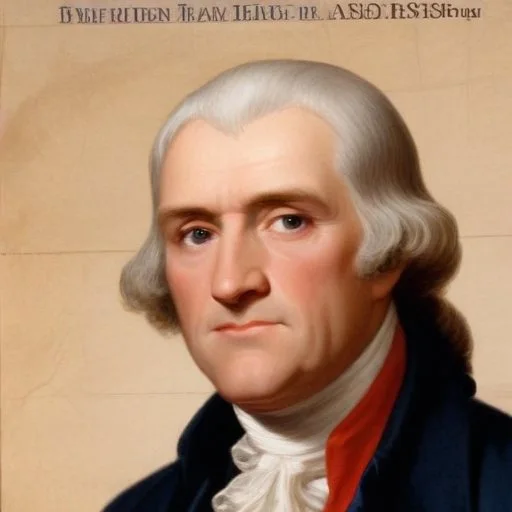
The Louisiana Purchase Treaty, signed, sealed, and delivered, effectively doubled the size of the United States, adding a staggering 828,000 square miles of land west of the Mississippi River to the young nation. This monumental agreement with France marked a significant milestone in America's westward expansion, cementing Thomas Jefferson's legacy as one of the most forward-thinking presidents in American history.
In the early 19th century, the United States was still finding its footing as a sovereign nation. Westward expansion was a topic of heated debate, with some advocating for the acquisition of new territories, while others warned of the risks of overextension. France, meanwhile, was struggling to maintain control over its vast North American territories, and Napoleon's ambitions were shifting towards European conquest.
The negotiations that led to the Louisiana Purchase were marked by intrigue, diplomacy, and a dash of luck. In 1801, Jefferson sent a delegation to France to explore the possibility of purchasing New Orleans, a critical port city. However, the French government, facing financial struggles, surprised the American negotiators by offering to sell the entire Louisiana Territory. After months of tense negotiations, the treaty was signed on April 30, 1803.
The Louisiana Purchase had far-reaching consequences, both immediate and long-term. The acquisition of new land sparked a wave of westward expansion, as Americans began to explore and settle the new territory. The purchase also set a precedent for the country's future expansionist policies, shaping the nation's destiny in ways that would become apparent in the following decades.
The purchase not only doubled the size of the United States but also opened up new economic opportunities, including access to the Mississippi River and the port of New Orleans. The acquisition of new land also fueled the growth of the country's population, as settlers pushed beyond the Appalachian Mountains and into the heart of the continent.
While the Louisiana Purchase was hailed as a triumph by many, it also sparked controversy and criticism. Some argued that the purchase was unconstitutional, while others worried about the potential costs and logistical challenges of governing such a vast territory. Despite these criticisms, the Louisiana Purchase remains one of the most significant events in American history, shaping the nation's destiny in ways that continue to resonate today.
"The Louisiana Purchase is one of those rare events in history that change the fate of a nation. It was a bold move, a stroke of genius, and a testament to the vision and leadership of Thomas Jefferson."
As the American people looked West, they knew that their nation would never be the same. The Louisiana Purchase had set in motion a chain of events that would shape the course of American history, forever changing the nation's trajectory and cementing its place as a global superpower.
Charles Maurice de Talleyrand-Périgord, the French Minister of Foreign Affairs, played a crucial role in negotiating the Louisiana Purchase Treaty. Born in 1754, Talleyrand was a skilled diplomat who had served as a bishop, a politician, and even a spy. He was known for his cunning and diplomatic prowess, which earned him the nickname "the fox."
Talleyrand's role in the Louisiana Purchase was instrumental, as he navigated the complex web of European politics to facilitate the sale of the territory to the United States. His ability to build relationships and find common ground with American negotiators, including Robert Livingston, helped to overcome the obstacles that stalled the negotiations.
Despite his significant contribution to the Louisiana Purchase, Talleyrand's legacy is often overshadowed by that of Napoleon Bonaparte. However, his diplomatic skills and strategic thinking were essential to the success of the treaty, and his role in shaping the course of American history should not be overlooked.

The economic impact of the Louisiana Purchase was immense, with the acquisition of new land opening up new opportunities for trade, commerce, and exploration. The purchase of the territory provided the United States with control over the Mississippi River, which became a vital transportation artery for goods and people.
The acquisition of New Orleans, a critical port city, gave the United States access to the Gulf of Mexico and the Atlantic Ocean, facilitating trade with Europe and the Caribbean. The city's strategic location made it an important hub for commerce, with goods such as cotton, sugar, and furs being shipped through its ports.
The Louisiana Purchase also led to an increase in westward expansion, as settlers pushed beyond the Appalachian Mountains and into the new territory. This expansion led to the growth of new industries, including agriculture, mining, and manufacturing, which contributed to the country's economic growth and development.
The Louisiana Purchase must be understood within the context of the European geopolitical landscape of the early 19th century. The French Revolution had recently ended, and Napoleon Bonaparte was rising to power, with ambitions to conquer Europe.
In this tumultuous environment, the Louisiana Territory was a valuable asset that Napoleon could use to bolster his power and financial resources. The sale of the territory to the United States was, in part, a strategic move to weaken Britain's influence in North America and to secure funding for his European conquests.
The Louisiana Purchase also had significant implications for the balance of power in North America. The acquisition of the territory marked a shift in the balance of power, with the United States emerging as a major player in the region, alongside Britain and France.

The Louisiana Purchase Treaty, signed on April 30, 1803, is a valuable artifact that provides insight into the negotiation and diplomacy of the time. The treaty itself is a testament to the skillful diplomacy of the American and French negotiators, who navigated complex issues of sovereignty, territory, and finance.
The document is also notable for its brevity, consisting of just seven articles that outline the terms of the sale. Article I, which defines the territory being sold, is particularly significant, as it sets the boundaries of the Louisiana Territory and establishes the United States' claim to the land.
The Louisiana Purchase Treaty is now housed at the National Archives in Washington, D.C., where it remains an important artifact of American history, providing a tangible link to a pivotal moment in the country's development.
The Louisiana Purchase had significant implications for the philosophical and ideological debates of the time. The acquisition of new land raised questions about the nature of American identity, the role of government in expansion, and the balance between individual liberty and national power.
The purchase also sparked debates about the Constitution and the limits of federal power. Jefferson's supporters argued that the Constitution granted the federal government the power to acquire new territory, while his critics claimed that the purchase was unconstitutional and exceeded the government's authority.
The Louisiana Purchase also had implications for the concept of Manifest Destiny, which posited that the United States was destined to expand across North America. The acquisition of new land seemed to validate this idea, fueling further expansionist sentiments and shaping American identity in the decades that followed.