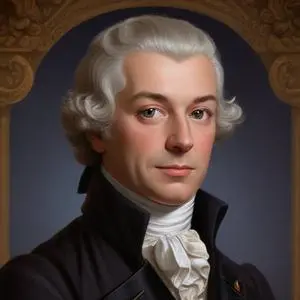
Charles Maurice de Talleyrand-Périgord: The Master of Diplomacy
The Crafty Statesman Behind Napoleon's Rise
Charles Maurice de Talleyrand-Périgord, a French secularized clergyman, statesman, and diplomat extraordinaire, is renowned for his cunning and diplomatic prowess, which earned him a reputation as one of the most skilled politicians of his time. He is known for serving as Napoleon's chief diplomat, navigating the treacherous waters of European politics, and brokering crucial treaties that shaped the course of modern history.
A Life of Intrigue and Politics
Born on February 2, 1754, in Paris, France, Talleyrand-Périgord came from an aristocratic family and was ordained as a priest in 1779. However, his true calling lay in politics, and he soon became embroiled in the complexities of French politics. In 1780, he was appointed Agent-General of the Clergy, followed by his appointment as Bishop of Autun in 1789, just before the French Revolution.
A Career of Deception and Diplomacy
Talleyrand-Périgord's diplomatic career spanned multiple regimes, including those of Louis XVI, Napoleon,
Louis XVIII, and
Louis Philippe I. He worked closely with Napoleon, serving as his foreign minister and diplomat, and was instrumental in securing crucial treaties, including the Treaty of Lunville (1801) and the Treaty of Amiens (1802). However, he also secretly conspired against Napoleon, working with Tsar
Alexander I of Russia and the Austrian minister
Klemens von Metternich to undermine the emperor's plans.
A Master of the Game
Talleyrand-Périgord's remarkable diplomatic skills earned him the reputation as a master of the game. He was known for his ability to navigate complex political landscapes, forge alliances, and broker peace agreements. His philosophical contributions to the field of diplomacy are still studied today, and his quotes, such as "A diplomat who says 'yes' means 'maybe', a diplomat who says 'maybe' means 'no', and a diplomat who says 'no' is no diplomat," continue to inspire and educate.
Personal Milestones and Key Life Events
- 1754: Born in Paris, France
- 1779: Ordained as a priest
- 1780: Appointed Agent-General of the Clergy
- 1789: Appointed Bishop of Autun
- 1801: Secured the Treaty of Lunville
- 1802: Secured the Treaty of Amiens
- 1807: Resigned as foreign minister
- 1814: Supported the Bourbon Restoration
- 1814-1815: Played a key role at the Congress of Vienna
Influence on Modern Society
Talleyrand-Périgord's impact on modern society is profound. He helped shape the course of European history, and his diplomatic legacy continues to inspire and educate policymakers today. His name has become synonymous with cunning and diplomatic prowess, and his quotes and sayings continue to be widely quoted and studied.
Legacy and Controversies
Talleyrand-Périgord's legacy is a complex one, with many regarding him as a hero and others as a villain. He was known for his cunning and duplicity, and his involvement in Napoleon's rise to power has been widely debated. Despite the controversies, however, his impact on modern diplomacy and international relations is undeniable.
Comparative Analysis with Contemporaries
Talleyrand-Périgord's diplomatic prowess is often compared to that of other notable contemporaries, including Klemens von Metternich and Tsar Alexander I of Russia. While each had their own unique style and approach, Talleyrand-Périgord's cunning and adaptability set him apart as a master diplomat.
Visual Timeline and Milestones

Trivia and Fun Facts
- Talleyrand-Périgord was known for his love of fine cuisine and wine.
- He was a skilled linguist, speaking multiple languages fluently.
- He was rumored to have had numerous affairs throughout his life.
A Legacy of Diplomacy and Intrigue
Charles Maurice de Talleyrand-Périgord's remarkable life and career continue to fascinate and educate us today. His diplomatic prowess, cunning, and adaptability have earned him a place in the annals of history as one of the greatest diplomats of all time.
FAQ
What was Charles Maurice de Talleyrand-Périgords role in the French Revolution?
Charles Maurice de Talleyrand-Périgord played a significant role in the French Revolution, serving as a diplomat, politician, and bishop. He was a key negotiator of the Treaty of Paris, which ended the French Revolutionary Wars.
What was Charles Maurice de Talleyrand-Périgords relationship with Napoleon Bonaparte?
Charles Maurice de Talleyrand-Périgord had a complex and often tumultuous relationship with Napoleon Bonaparte, serving as his foreign minister and advisor. Despite their disagreements, Talleyrand remained a key figure in Napoleons government until his eventual fall from power.
What were Charles Maurice de Talleyrand-Périgords accomplishments as Prime Minister of France?
As Prime Minister of France, Charles Maurice de Talleyrand-Périgord oversaw several significant reforms, including the reorganization of the French government, the establishment of the Banque de France, and the promotion of trade and commerce.
What was Charles Maurice de Talleyrand-Périgords early life and education like?
Charles Maurice de Talleyrand-Périgord was born in 1754 in France and came from a noble family. He received his early education at the Sorbonne and later became a priest, before entering politics during the French Revolution.
How did Charles Maurice de Talleyrand-Périgords diplomatic career impact European politics?
Charles Maurice de Talleyrand-Périgords diplomatic career had a significant impact on European politics, as he played a key role in shaping the Treaty of Vienna and the Congress of Vienna, which redrew the map of Europe following Napoleons defeat.