


The Élysée Treaty was the brainchild of two visionary leaders, Charles de Gaulle and Konrad Adenauer. De Gaulle, the charismatic French President, was driven by a deep-seated desire to reassert France's position as a leading European power. Adenauer, the seasoned German Chancellor, was committed to rebuilding his nation and fostering a spirit of reconciliation with France. Their unlikely friendship, forged in the crucible of war and politics, would become a pivotal factor in shaping the treaty's success.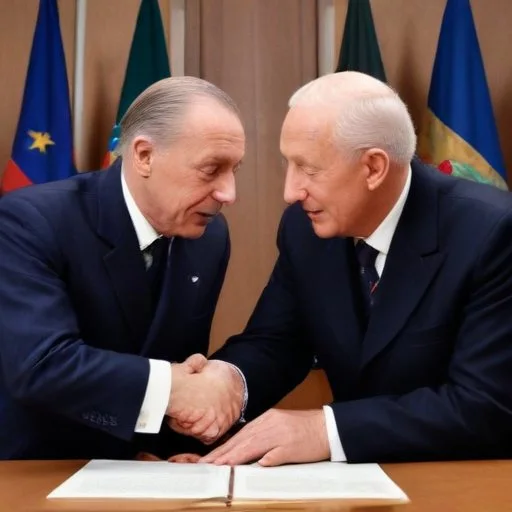
The Élysée Treaty had far-reaching consequences for European politics and beyond. The agreement:
The Élysée Treaty's impact extended beyond the realm of politics, fostering a sense of cultural exchange and understanding between the French and German people. The treaty:
Facilitated the development of cultural institutions, such as the French-German Youth Office, promoting educational exchange programs and cross-cultural understanding.
Not everyone was convinced of the treaty's merits, with some critics arguing that it was a betrayal of France's historical animosity towards Germany. However, the treaty's proponents, including de Gaulle and Adenauer, recognized the imperative of putting the past behind them and forging a new path forward.
"The Élysée Treaty marks a new chapter in the history of our two countries. We are not forgetting the past, but we are looking towards the future." - Charles de Gaulle
The Élysée Treaty's significance extends far beyond its immediate impact on Franco-German relations. It serves as a powerful symbol of the possibility of reconciliation and cooperation, even in the face of bitter historical rivalries. As the European Union continues to evolve, the Élysée Treaty remains a testament to the power of diplomacy and the human spirit, inspiring future generations to strive for a more united and peaceful Europe.
"The Élysée Treaty is a beacon of hope for a united Europe, a shining example of what can be achieved when nations put aside their differences and work towards a common goal." - Konrad Adenauer
Konrad Adenauer was a man of unwavering determination and vision. As the first Chancellor of West Germany, he navigated the treacherous landscape of post-war politics, rebuilding his nation and forging a path of reconciliation with France.
Adenauer's commitment to European integration was rooted in his experiences during World War II. Having witnessed the devastation firsthand, he was resolute in his pursuit of a united Europe, where nations could cooperate and thrive in peace.
His partnership with Charles de Gaulle, though unlikely, proved instrumental in shaping the Élysée Treaty's success. Adenauer's pragmatic approach to politics and his ability to find common ground with his French counterpart laid the foundation for a lasting partnership between their nations.

Historians have long debated the significance of the Élysée Treaty, with some viewing it as a watershed moment in European history, while others argue it was a pragmatic response to the Cold War era.
Recent scholarship has sought to reevaluate the treaty's impact, placing it within the broader context of European integration. This nuanced approach reveals the Élysée Treaty as a crucial stepping stone towards a more unified Europe, rather than a singular event.
By examining the treaty through the lens of historiography, we gain a deeper understanding of the complex forces that shaped European politics during the 1960s and the enduring legacy of the Élysée Treaty.
The Élysée Treaty's impact extended far beyond the realm of politics, fostering a cultural renaissance in France and West Germany. The agreement paved the way for increased cultural exchange, as artists, intellectuals, and musicians from both nations began to collaborate and share ideas.
The treaty also facilitated the development of cultural institutions, such as the French-German Youth Office, which promoted educational exchange programs and cross-cultural understanding. This cultural exchange helped to erase the bitter memories of war, replacing them with a sense of shared European identity.

The Élysée Treaty was forged during a time of great geopolitical upheaval. The Cold War had created an atmosphere of tension and mistrust, with the Soviet Union exerting significant influence over Eastern Europe.
In this context, the treaty represented a bold declaration of independence for France and West Germany, as they sought to carve out a new path in European politics. The agreement marked a significant shift in the balance of power, as the two nations began to assert their influence on the European stage.
The Élysée Treaty had far-reaching economic consequences for France and West Germany, as the two nations began to cooperate on matters of trade and industry.
The agreement led to increased economic integration, with the creation of the European Coal and Steel Community (ECSC) in 1951, a precursor to the modern-day European Union. The treaty also facilitated the development of joint economic projects, such as the construction of the Eurotunnel, which further solidified the economic bond between France and West Germany.