


On a fateful day in August 1985, Major General Muhammadu Buhari, the stern and strict leader of Nigeria, was ousted from power in a bloodless coup, marking a significant turning point in the country's history. Led by Major General Ibrahim Babangida, a group of high-ranking military officers seized control, ending Buhari's 20-month rule and paving the way for a new era of leadership.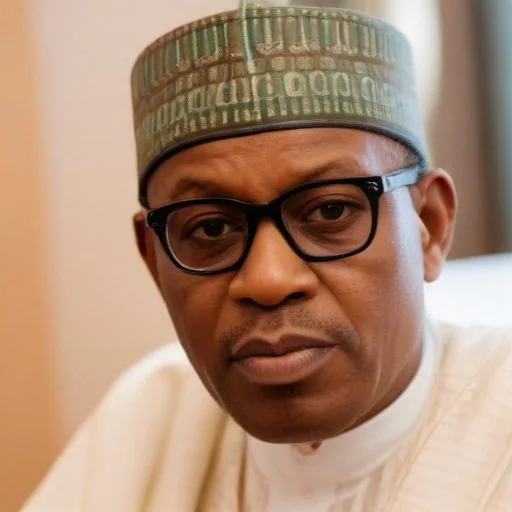
In 1983, Buhari came to power in a military coup that overthrew the democratically elected government of President Shehu Shagari. Buhari's regime was marked by strict laws, human rights abuses, and a struggling economy. His leadership style was often criticized as authoritarian and repressive, leading to growing discontent among Nigerians.
The coup had significant consequences for Nigeria, both domestically and internationally. Babangida's regime promised a more liberal and democratic rule, which led to the relaxation of some of Buhari's strict laws and the release of political prisoners. However, Babangida's rule was also marked by corruption, human rights abuses, and economic mismanagement, which ultimately led to his own downfall in 1993.
The coup and the subsequent regime change had a profound impact on Nigerian culture and society. The transition from a repressive regime to a more liberal one led to an increase in freedom of expression and a thriving artistic scene. However, the legacy of Buhari's rule and the subsequent regimes continued to influence Nigerian politics and society, with many Nigerians still grappling with the consequences of military rule.
"I knew I was in trouble when I heard the sound of tanks outside my window." - Muhammadu Buhari, recalling the day of the coup.
"The coup was a necessary evil. It was the only way to bring about change in Nigeria." - Ibrahim Babangida, justifying the coup.
According to reports, Buhari was caught off guard by the coup and was initially defiant, refusing to surrender. However, he eventually realized the futility of resistance and relinquished power. Babangida, on the other hand, was known for his charm and strategic thinking, using his charisma to win over key military officers and secure their support for the coup.
The coup set a precedent for future military interventions in Nigerian politics, with several other coups and regime changes following in the years to come. It also led to a period of political instability and uncertainty, as Nigerians struggled to come to terms with the consequences of military rule.
The bloodless coup that ousted Buhari and brought Babangida to power marked a significant turning point in Nigerian history. While the coup promised a more liberal and democratic rule, it ultimately led to a period of political instability and uncertainty. Nevertheless, it remains an important event in Nigeria's struggle for democracy and self-determination.
Born on December 17, 1942, in Daura, Katsina State, Nigeria, Muhammadu Buhari was a product of a polygamous family and was raised in a traditional Muslim household. His early life was marked by a strong sense of discipline and a strong work ethic, traits that would later define his leadership style.
Buhari's military career began in 1961, when he joined the Nigerian Army. He quickly rose through the ranks, becoming a Platoon Commander in 1963 and a Brigade Major in 1975. His experience in the military shaped his authoritarian leadership style, which emphasized discipline and order.
Despite his tough exterior, Buhari was known for his simplicity and humility. He lived a modest life, preferring to wear simple clothing and avoiding lavish spending. However, his regime was also marked by widespread human rights abuses and a struggling economy, which ultimately led to his downfall.

In the months leading up to the coup, tensions had been building within the military hierarchy. Buhari's regime had become increasingly unpopular, and many high-ranking officers were dissatisfied with his leadership style. The economy was struggling, and the government's policies were seen as harsh and ineffective.
In July 1985, a group of junior army officers, led by Major Gideon Orkar, attempted a coup against Buhari's regime. Although the coup failed, it highlighted the growing discontent within the military and the vulnerability of Buhari's government.
Babangida, who had been a key ally of Buhari, began to secretly build a coalition of supporters within the military. He capitalized on the growing discontent and eventually launched the successful coup on August 27, 1985.
The bloodless coup that brought Babangida to power had a significant impact on Nigerian culture. The transition from a repressive regime to a more liberal one led to an increase in freedom of expression and a thriving artistic scene.
Many Nigerian artists, writers, and musicians, who had been silenced or exiled during Buhari's regime, began to flourish under Babangida's rule. The relaxation of censorship laws allowed for a proliferation of creative works that critiqued the military government and explored themes of freedom, democracy, and social justice.
The coup also led to a resurgence of traditional Nigerian music, as well as the growth of new genres such as Afrobeat and Highlife. These musical styles became a powerful medium for social commentary and political activism.

Babangida's rise to power was marked by a series of strategic political maneuvers. He capitalized on the growing discontent within the military and exploited the divisions within Buhari's regime to build a powerful coalition of supporters.
After seizing power, Babangida implemented a series of reforms aimed at liberalizing the economy and improving human rights. He released political prisoners, lifted censorship laws, and introduced a new constitution that guaranteed greater freedom of expression and association.
However, Babangida's regime was also marked by corruption, human rights abuses, and economic mismanagement. His political maneuvering was often criticized as Machiavellian, and his legacy remains controversial to this day.
The bloodless coup that ousted Buhari and brought Babangida to power occurred within a complex geopolitical context. The Cold War was still ongoing, and Nigeria was seen as a key player in the global struggle for influence in Africa.
The United States, which had been a key ally of Buhari's regime, initially expressed concern over the coup. However, as Babangida's regime began to implement economic reforms and liberalize the economy, the US began to cozy up to the new government.
The Soviet Union, which had been a prominent supporter of African nationalist movements, was initially cautious in its response to the coup. However, as Babangida's regime began to assert its independence and pursue a more pragmatic foreign policy, the Soviets began to establish closer ties with Nigeria.