


In the heart of Vergina, Greece, lies a monumental archaeological find that has left historians and archaeologists in awe - the tomb of Philip II of Macedon, father of the legendary Alexander the Great. Renowned Greek archaeologist and professor at the Aristotle University of Thessaloniki, Manolis Andronikos, made this groundbreaking discovery in 1977, unlocking the doors to a treasure trove of ancient relics and secrets.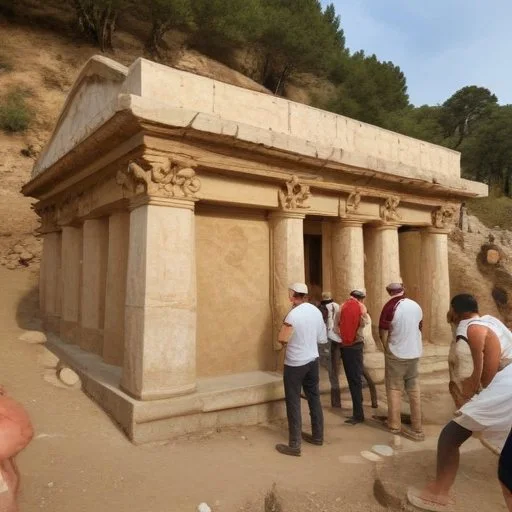
The tomb, buried beneath the earth for centuries, held the remains of Philip II, the king who united the fractious city-states of Greece and paved the way for his son Alexander's conquest of the known world. The discovery provided a fascinating glimpse into the life and reign of Philip II, who ruled Macedon from 359 to 336 BCE.
Andronikos' excavation team carefully unearthed the tomb, which was remarkably well-preserved due to the low oxygen levels and humidity of the site. The team's meticulous excavation revealed a wealth of artifacts, including gold and ivory objects, frescoes, and mysterious relics that shed light on the cultural and social practices of ancient Macedon.
The tomb's artifacts have offered a unique window into the lives of the Macedonian elite, revealing the intricate relationships between politics, art, and culture in ancient Greece. The discovery has also highlighted the significance of Philip II's reign, which laid the foundations for the rise of Alexander the Great and the spread of Greek culture throughout the ancient world.
The discovery of Philip II's tomb can be compared to other significant archaeological finds, such as the tomb of Tutankhamun in Egypt or the Terracotta Army in China. Each of these discoveries has provided a unique glimpse into the lives and cultures of ancient civilizations, highlighting the importance of archaeological exploration in understanding our shared human heritage.
Andronikos, in his book "Vergina: The Royal Tombs," described the moment of discovery as "a dream come true." He recalled the excitement and trepidation of uncovering the tomb, which was initially thought to be a simple burial mound. Andronikos' dedication to the excavation and preservation of the site has inspired generations of archaeologists and historians.
The discovery of Philip II's tomb has set a new standard for archaeological excavations and preservation techniques, paving the way for future discoveries and research in the field. The find has also sparked a renewed interest in the history and culture of ancient Macedon, inspiring new generations of scholars and enthusiasts to explore the region's rich heritage.
Andronikos' discovery and meticulous excavation of the tomb earned him numerous awards and honors, including the Gold Medal of the Archaeological Institute of America and the European Archaeological Heritage Prize.
The discovery of Philip II's tomb has significantly enriched our understanding of ancient Macedonian history and culture, providing valuable insights for scholars, students, and enthusiasts alike. Andronikos' work has inspired new approaches to archaeological excavation and preservation, ensuring that the secrets of the past are protected for future generations.
Manolis Andronikos was a Greek archaeologist and professor at the Aristotle University of Thessaloniki, known for his meticulous and dedicated approach to excavation. Born in 1919, Andronikos developed a passion for archaeology from an early age, which led him to pursue a career in the field. His extensive experience and expertise in archaeology made him the perfect candidate to lead the excavation team that uncovered Philip II's tomb.
Andronikos' dedication to the preservation of cultural heritage was recognized through various awards and honors, including the Gold Medal of the Archaeological Institute of America and the European Archaeological Heritage Prize. His legacy continues to inspire future generations of archaeologists and historians.

The discovery of Philip II's tomb has had a profound impact on our understanding of ancient Macedonian culture. The tomb's artifacts have provided a unique glimpse into the lives of the Macedonian elite, showcasing their artistic, cultural, and economic achievements.
The tomb's frescoes, in particular, have offered valuable insights into the cultural practices of ancient Macedon. The intricate designs and vivid colors have revealed a level of sophistication and refinement that was previously unknown.
The discovery has also highlighted the importance of preserving cultural heritage sites, ensuring that future generations can appreciate the rich history of ancient civilizations.The tomb of Philip II is a treasure trove of artifacts, each providing a fascinating glimpse into the life and reign of the ancient Macedonian king. The golden larnax, adorned with intricate designs and precious gems, is a testament to the wealth and power of the Macedonian kingdom.
The tomb's frescoes, including the famous "Rhomaios" fresco, have been meticulously analyzed to reveal the cultural and artistic practices of ancient Macedon. The frescoes have provided valuable insights into the symbolism and mythology of the time, offering a unique window into the lives of the ancient Macedonians.
The artifacts have been carefully preserved and displayed, allowing visitors to appreciate the grandeur and beauty of ancient Macedonian art.
The discovery of Philip II's tomb has prompted a reevaluation of the king's legacy and significance in ancient Greek history. Historians have long debated the role of Philip II in shaping the course of ancient Greek politics and culture.
The tomb's artifacts have provided new evidence, challenging previous assumptions about Philip II's reign and achievements. The discovery has highlighted the importance of reappraising historical figures and events, ensuring that our understanding of the past remains nuanced and accurate.
The tomb has become a symbol of the ongoing quest for knowledge and understanding, inspiring historians and archaeologists to continue exploring the complexities of ancient Greek history.The discovery of Philip II's tomb has had a profound impact on the field of education, providing a unique opportunity for students and scholars to engage with the ancient past.
The tomb's artifacts have been incorporated into educational curricula, offering a hands-on approach to learning about ancient Greek history and culture. The discovery has also inspired new approaches to teaching archaeology and history, ensuring that students develop a deeper appreciation and understanding of the complexities of the past.
The tomb has become a valuable resource for educators, providing a tangible link to the ancient world and inspiring future generations of historians and archaeologists.