


Marcel Lefebvre, a firebrand archbishop, made headlines in 1988 when he consecrated four bishops without the Vatican's permission, resulting in his excommunication and a significant schism within the Catholic Church. This bold move, condemned by Pope John Paul II, sparked a heated debate about the future of traditional Catholicism.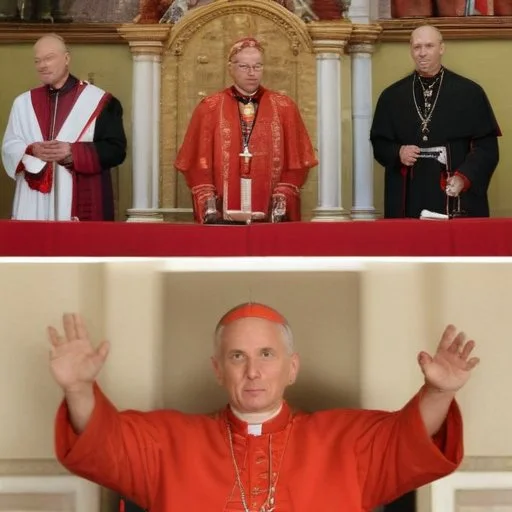
The consecration ceremony, held in Écône, Switzerland, marked a turning point in the already strained relationship between Lefebvre and the Vatican. Lefebvre, a staunch traditionalist, had long been at odds with the modernizing reforms of Vatican II, which he saw as a threat to the Church's traditions and authority.
Lefebvre's Society of St. Pius X (SSPX) had been a thorn in the side of the Vatican since its founding in 1970. The SSPX sought to preserve traditional Catholicism, rejecting the changes introduced by Vatican II, such as the use of vernacular languages in the Mass and the abolition of the Latin Tridentine Mass. Lefebvre saw the consecration of bishops as a necessary step to ensure the continuation of traditional Catholicism.
On June 30, 1988, Lefebvre consecrated four bishops: Bernard Fellay, Alfonso de Galarreta, Bernard Tissier de Mallerais, and Richard Williamson. The ceremony was conducted in secret, with only a handful of guests in attendance. The consecration was seen as a direct challenge to the Vatican's authority, and Pope John Paul II swiftly condemned the move.
In response to the consecration, the Vatican excommunicated Lefebvre and the four newly ordained bishops. The move sparked a wave of controversy, with traditionalists around the world rallying behind Lefebvre and the SSPX. The excommunication also led to a deepening of the schism between the SSPX and the Vatican, with the two sides engaged in a decades-long struggle over the future of traditional Catholicism.
The Lefebvre affair had far-reaching consequences, influencing Catholic traditionalists worldwide. The event galvanized traditionalist groups, inspiring them to take a stand against the modernizing reforms of Vatican II. The consecration also sparked a renewed interest in traditional Catholic practices, such as the Latin Tridentine Mass.
Lefebvre's defiant stance was summed up in his own words: "I am not a rebel, I am a Catholic. I am not against the Pope, I am for the Pope, but I am also for the truth."
The Lefebvre affair paved the way for future tensions between traditionalists and the Vatican. The event showed that traditionalists would not be silenced, and that they would take bold action to defend their beliefs. The consecration also led to a renewed dialogue between the SSPX and the Vatican, with the two sides engaging in on-again, off-again talks aimed at reconciliation.
In 1991, Lefebvre was awarded the title of "Defender of the Faith" by the Catholic traditionalist organization, Una Voce. The award recognized Lefebvre's unwavering commitment to traditional Catholicism.
Lefebvre's bold move inspired traditionalists around the world to take a stand for their beliefs. His unwavering commitment to traditional Catholicism has inspired generations of Catholics to defend their faith.
Marcel Lefebvre's early life and priestly formation played a significant role in shaping his traditionalist views. Born in 1905 in Tourcoing, France, Lefebvre was ordained a priest in 1929. His experiences in the missionary field, particularly in Africa, further solidified his commitment to the traditional Catholic faith.
Lefebvre's rise through the Church hierarchy was marked by his unwavering dedication to orthodoxy and his criticism of modernist tendencies. His appointment as the Archbishop of Dakar in 1947 gave him a platform to promote traditional Catholicism in the face of growing liberalization.
Lefebvre's personality was marked by a strong sense of conviction and a willingness to challenge authority. These traits would serve him well in his later conflicts with the Vatican.

The consecration of bishops without papal approval sparked a cultural phenomenon, with traditionalist Catholics around the world drawing inspiration from Lefebvre's defiance. The event galvanized a movement that sought to preserve traditional Catholic practices, music, and art.
In the years following the consecration, traditionalist groups began to organize and mobilize, leading to the establishment of new religious orders, publications, and cultural institutions. These efforts helped to create a vibrant cultural landscape that celebrated traditional Catholicism.
Lefebvre's bold move also inspired a new generation of Catholic artists, writers, and intellectuals who sought to reclaim their cultural heritage.
The Lefebvre affair highlights the complex and often contentious relationship between the Catholic Church and the modern world. The conflict between traditionalists and modernizers within the Church reflects deeper societal tensions between tradition and progress.
The consecration of bishops without papal approval raises important questions about the nature of authority, obedience, and dissent within religious institutions. Lefebvre's actions challenged the Vatican's authority, leading to a crisis of legitimacy that would have far-reaching consequences.
The political implications of the Lefebvre affair are still felt today, with ongoing debates about the role of the Catholic Church in modern society.

The Lefebvre affair must be understood within the broader context of global Catholicism in the late 20th century. The consecration of bishops without papal approval occurred against the backdrop of growing secularization, urbanization, and cultural shifts.
The event was influenced by the unresolved tensions of Vatican II, which had sought to modernize the Church but also created divisions among Catholics. Lefebvre's actions were, in part, a response to the perceived weaknesses and ambiguities of the Council.
The Lefebvre affair serves as a microcosm for the larger challenges facing the Catholic Church in the modern era.
Historians have debated the significance and motivations behind Lefebvre's bold move. Some have seen it as a reactionary response to the perceived threats of modernity, while others have viewed it as a principled stand against the erosion of Catholic traditions.
The event has been interpreted through various lenses, including the hermeneutic of continuity, which emphasizes the need for balance between tradition and progress. Others have seen it as a manifestation of the "spirit of Vatican II," which emphasized the importance of adapting Catholicism to the modern world.
Regardless of interpretation, the Lefebvre affair remains a pivotal moment in the history of Catholicism, highlighting the ongoing struggles between tradition and modernity.