


Martin Luther King Jr., the prominent civil rights leader, was assassinated on April 4, 1968, on the balcony of the Lorraine Motel in Memphis, Tennessee. This senseless act of violence was carried out by James Earl Ray, a petty criminal and white supremacist, who had been stalking King for weeks.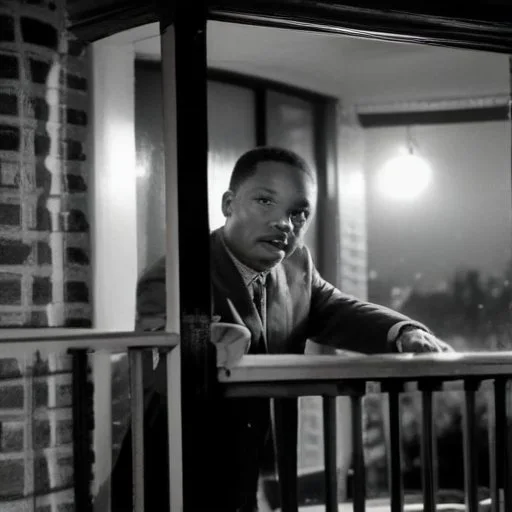
In the months leading up to his assassination, King had been supporting the Memphis sanitation workers' strike, advocating for racial equality and social justice. His presence in Memphis was a beacon of hope for the African American community, who had been facing discrimination and marginalization for centuries.
On April 3, 1968, King delivered a speech at the Mason Temple in Memphis, where he talked about the importance of unity and the need for nonviolent protest. He ended his speech with a sense of foreboding, saying, "I may not get there with you. But I want you to know tonight, that we, as a people, will get to the Promised Land."
The next evening, at around 6:00 p.m., King stepped out onto the balcony of the Lorraine Motel, where he was staying. Ray, who had been waiting in ambush, fired a single shot from his rifle, striking King in the jaw. The bullet severed King's spinal cord, and he was pronounced dead at St. Joseph's Hospital at 7:05 p.m.
The news of King's assassination sparked widespread outrage and grief across the United States. Riots broke out in over 100 cities, with looting, arson, and violence erupting in many urban areas. President Lyndon B. Johnson declared a national day of mourning, and flags were flown at half-staff.
Martin Luther King Jr.'s life and legacy have had a profound impact on American culture and society. He is remembered as a powerful orator, a passionate advocate for civil rights, and a symbol of hope and inspiration for marginalized communities.
"Darkness cannot drive out darkness; only light can do that. Hate cannot drive out hate; only love can do that."
"I have a dream that my four little children will one day live in a nation where they will not be judged by the color of their skin, but by the content of their character."
Ralph Abernathy, King's closest friend and fellow civil rights leader, was with him on the balcony of the Lorraine Motel when he was assassinated. Abernathy wrote, "I remember the sound of the shot, the smell of the gunpowder, and the feeling of my brother's blood on my hands."
The assassination of Martin Luther King Jr. paved the way for the emergence of new leaders in the civil rights movement, including figures like Stokely Carmichael and Huey Newton. It also led to increased radicalization and militancy within the movement.
Martin Luther King Jr. was posthumously awarded the Presidential Medal of Freedom in 1977, and in 1986, he was honored with a federal holiday in his name. He is also featured on the United States Postal Service's Civil Rights commemorative stamp.
The Martin Luther King Jr. Center for Nonviolent Social Change, established by King's wife, Coretta Scott King, continues to promote nonviolent conflict resolution and social justice around the world.
Martin Luther King Jr.'s life and legacy serve as a powerful reminder of the importance of standing up against injustice and fighting for what is right. His message of hope, love, and nonviolent resistance continues to inspire generations to strive for a more perfect union.
Martin Luther King Jr.'s involvement in the civil rights movement began during his graduate studies at Crozer Theological Seminary, where he was exposed to the works of Mahatma Gandhi and the concept of nonviolent resistance.
King's early activism was influenced by his father, Martin Luther King Sr., a prominent minister and civil rights leader in Atlanta.
In 1955, King became the leader of the Montgomery Bus Boycott, a 381-day protest against the segregation of African Americans on public buses in Montgomery, Alabama.

Ralph Abernathy was a close friend and fellow civil rights leader who worked alongside Martin Luther King Jr. throughout the 1950s and 1960s.
Abernathy was a key organizer of the Montgomery Bus Boycott and later became the president of the Southern Christian Leadership Conference (SCLC).
He was with King on the balcony of the Lorraine Motel when he was assassinated and continued to fight for civil rights until his own death in 1990.
The civil rights movement inspired a wealth of music, from gospel hymns to protest songs.
Artists like Sam Cooke, Aretha Franklin, and Nina Simone used their music to express the struggles and hopes of African Americans during the 1950s and 1960s.
Songs like "A Change Is Gonna Come" and "Respect" became anthems of the movement, echoing the sentiment of King's speeches and sermons.
Martin Luther King Jr.'s Christian faith played a significant role in shaping his philosophy of nonviolent resistance.
King's theology emphasized the importance of love and compassion in achieving socialjustice, echoing the teachings of Jesus Christ.
He saw the civil rights movement as a moral imperative, rather than a purely political or social struggle.
The news of Martin Luther King Jr.'s assassination sparked widespread outrage and grief around the world.
Leaders like Nelson Mandela, Pierre Trudeau, and Harold Wilson issued statements condemning the act and expressing solidarity with the American civil rights movement.
In the days following King's death, protests and vigils were held in cities across the globe, from London to Tokyo.